
 Worksheets
Midterm Review Grade 12 SIS 2020-21
Total questions: 27
Worksheet time: 44mins
Smallest repeating unit of crystal lattice
Lattice site
Unit cell
Crystal lattice
Lattice point
In a primitive unit cell atoms are present at the
Corners & Centers of any 2 opposite sides
Corners only
Corners and Body Centre
Corners & Centers of all faces
Number of atoms per unit cell in a Face Centered Cubic lattice
4
1
2
6
Find the boiling point of a solution containing 15.0 g sucrose (molar mass = 342.3g/mol), in 100g of water. (Kb = 0.512 oC/m)
100.2
99.8
0.2
-0.2

Given their standard reduction potentials, which of the species is going to be oxidized?
Cu2+/Cu = 0.34V
Zn2+/Zn = -0.76V
Cu
Zn
CuSO4
ZnSO4
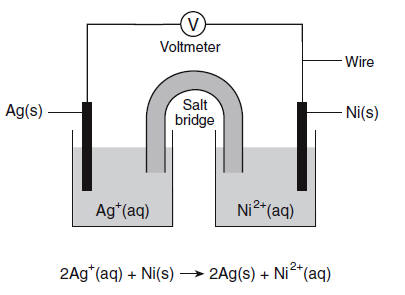
What reaction occurs at the anode?
Ag+/Ag = 0.80V
Ni2+/Ni = -0.25V
Ag+ + e- →Ag
Ag → Ag+ + e-
Ni2+ + 2e- → Ni
Ni → Ni2+ + 2e-
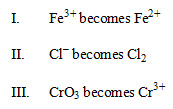
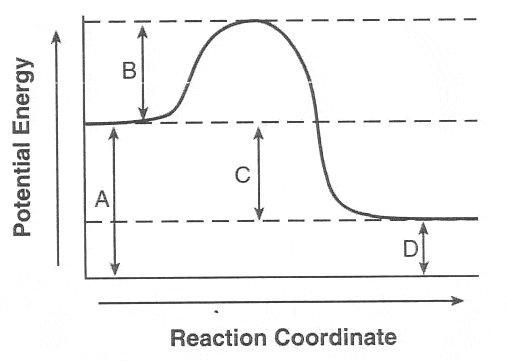

Name the effect
brownian
tyndall
suspension
colloidal
Milk is an example of a
solution
colloid
suspension
solid
The major factor contributing towards the stability of a lyophobic sol is the —— on the colloidal particles
(a)
Nitrogen is chemically inert. Why?
Due to presence of double bond require more energy to break
Due to presence of triple bond require more energy to break
Triple bond requires less energy to break
None of the above
5.The shape of I F 7
T shape
trigonal bipyramidal
linear
pentagonal bipyramidal


The transition metals form a large number of complex
compounds. This is due to
smaller sizes of the metal ions
high ionic charges of the metal ions
availability of d orbitals
All the above
1. The donor sites of (EDTA)4- are ?
O atoms only
N atoms only
Two N and four O atoms
Three N and three O atoms
Among the following ions which one has the highest paramagnetism ?
[Cr(H2O)6]+3
[Fe(H2O)6]+2
[Cu(H2O)6]+2
[Zn(H2O)6]+2
The IUPAC name of the compound [Cu (NH3)4](NO3)2 is :
Cuprammonium nitrate
Tetraammine copper (II) dinitrate
Tetraammine copper (II) nitrate
Tetraammine copper (III) dinitrate
Toluene reacts with a halogen in the presence of iron (III) chloride giving ortho and para halo compounds. The reaction is
Electrophilic elimination reaction
Electrophilic substitution reaction
Free radical addition reaction
Nucleophilic substitution reaction
Which of the following is an example of vic-dihalide?
Dichloromethane
1,2-dichloroethane
Ethylidene chloride
Allyl chloride
A primary alkyl halide would prefer to undergo _____________.
SN1 reaction
SN2 reaction
α–Elimination
Racemisation

