Worksheets
Serengeti Ecology Lesson 2 REVIEW EDITION
Total questions: 17
Worksheet time: 24mins


What is the most common precipitation?
sleet
freezing rain
snow
rain
All conditions surrounding an organism.
adaptation
genes
environment
succession
Struggle of organisms for same limited resources.
succession
genes
quidditch
competition
What is biomass energy?
any organic matter that can be used by burning wood and other plant life.
Radiant energy emitted by the sun.
a combustible black or dark brown rock consisting mainly of carbonized plant matter, found mainly in underground deposits and widely used as fuel.
made by tapping into steam or hot water reservoirs underground; the heat is used to drive an electrical generator.

Is biomass energy a renewable energy source?
Yes, always, because you can grow trees again.
No, it's just like fossil fuels.
It depends, only if the source is not overharvested.
No, because manure is not renewable.
When two different species compete for resources, it is ____________ competition.
interspecific
habitat
symbiosis
intraspecies
When two organisms from the same species compete for resources, it is ______________ competition.
intraspecies
predation
commensalism
interspecific

What is the carrying capacity of the graph?
1000
8000
800
600

What happens if a population grows past its carrying capacity?
The population keeps growing
The population starts to die off
The entire species will go extinct
The carrying capacity just increases

The largest number of individuals that an environment can support long term is...
carrying capacity
emigration
immigration
population density
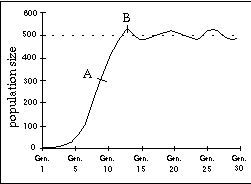
What is the carrying capacity of the graph?
around 500
more than 800
less than 300
around 700