
 Worksheets
PLATE TECTONICS AND EARTH'S STRUCTURE
Total questions: 35
Worksheet time: 26mins
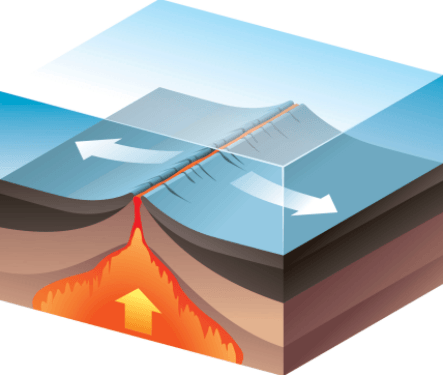
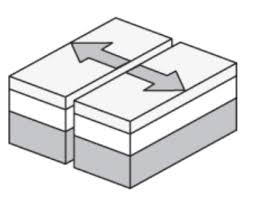
What is formed where these plates are spreading apart?
new ocean floor
earthquakes
volcanoes
mountains
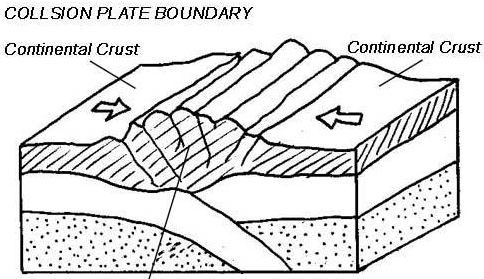
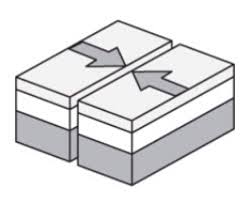
What is formed where 2 CONTINENTAL PLATES COLLIDE?
ocean basin
earthquakes
mountains
volcano
Which is less dense?
Oceanic Crust
Continental crust
Which is more dense?
continental crust
oceanic crust
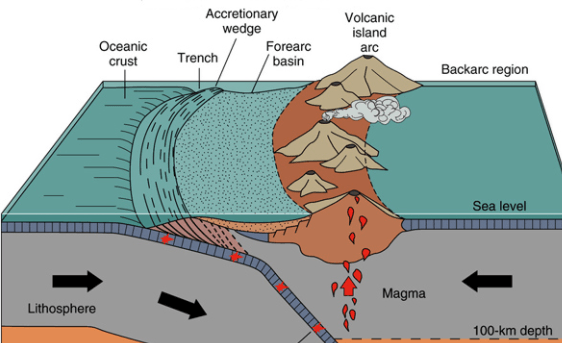
When a continental plate collides with a oceanic plate which plate is subducted (goes under)?
continental
oceanic
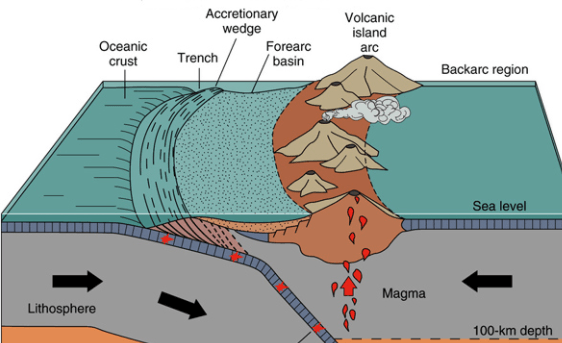
What landform is likely to be created where one plate is forced under another?
Volcano
Earthquake
Ocean Basin
oceanic-oceanic
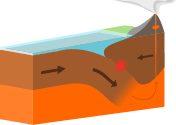
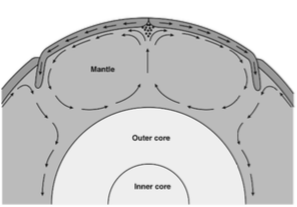
The figure shows part of what scientists think is happening in Earth’s mantle.
What process does the figure show occurring in the mantle?
Hot rock expands, becomes less dense, and rises toward the surface of Earth.
Hot rock expands, becomes more dense, and rises toward the surface of Earth.
Hot rock becomes less dense and moves towards the outer core.
Hot rock becomes more dense and moves towards the lithosphere.
Earth’s physical layers correspond to Earth’s compositional layers. Which part of the mantle is also part
of the lithosphere?
the fluid, hot part
the rigid upper part
the soft moving part
the lower stationary part
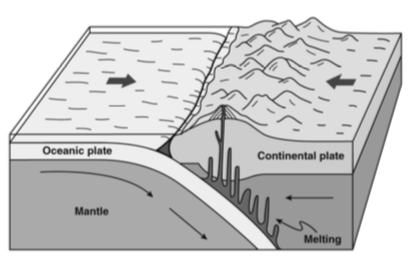
Subduction occurs when one plate slides beneath another plate. The figure below shows the process of subduction. Notice that the oceanic plate slides beneath the continental plate.
What happens when the crustal plates move as shown in the figure?
An ocean forms.
Volcanic mountain ranges form.
Sea-floor spreading occurs as the oceanic plate moves.
A transform boundary forms where the subduction occurs.
The motion of tectonic plates can cause both slow and rapid changes in Earth’s surface. Which is an example of a rapid change?
earthquake
seafloor spreading
mountain range formation
formation of an ocean trench
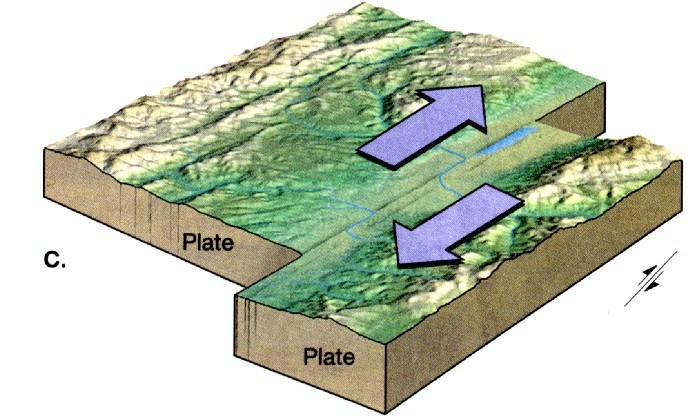
The tectonic plates float on which semi-liquid layer?
Lithosphere
Asthenosphere
Crust
Outer Core
Approximately 225 million years ago, the Earth's continents were grouped into one landmass called:
Atlantis
Thermopylae
Pangaea
Concordia
What is NOT likely to happen at a divergent boundary?
Mountain formation
Seafloor spreading
Rift valley
Volcano formation
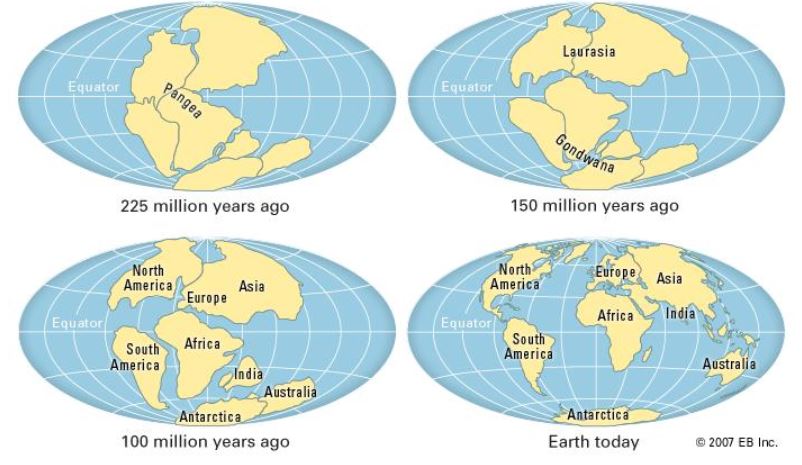
The hypothesis that states that the continents once formed a single landmass, broke up, and drifted to their present locations by floating on the oceanic crust.
Continental Drift
Plate Tectonics
Lithosphere
Pacific Ring of Fire
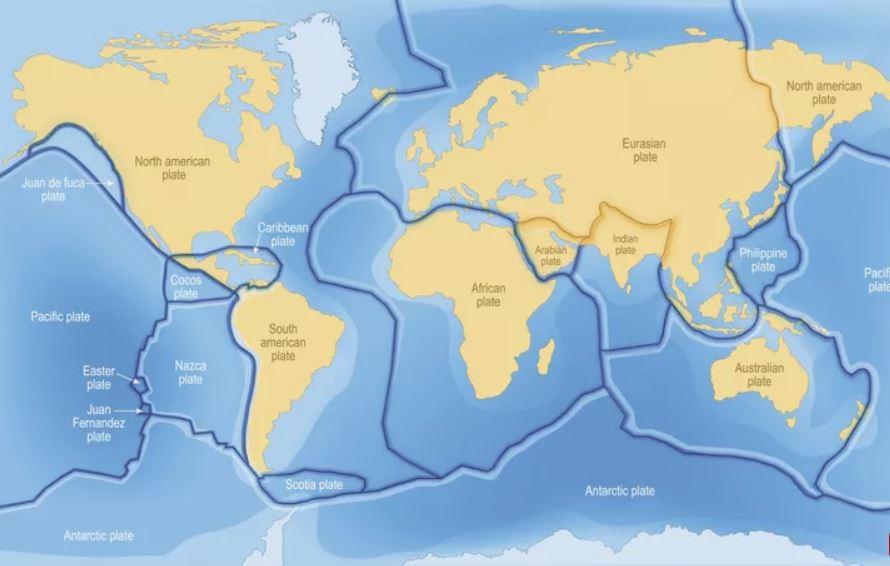
A theory stating that the earth's surface is broken into plates that move due to convection currents, gravity, density, temperature, rock cycle, ridge push, and slab pull.
Subduction Zone
Mariana Trench
Plate Tectonics
Plate Movement
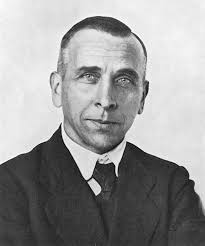
The German scientist who proposed the continental drift hypothesis in 1912.
James Watson
Marie Curie
Albert Einstein
Alfred Wegener
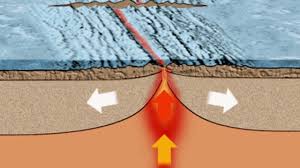
In sea-floor spreading, molten material rises from the mantle and erupts
along the edges of all the continents.
along mid-ocean ridges.
in deep-ocean trenches.
at the north and south poles.
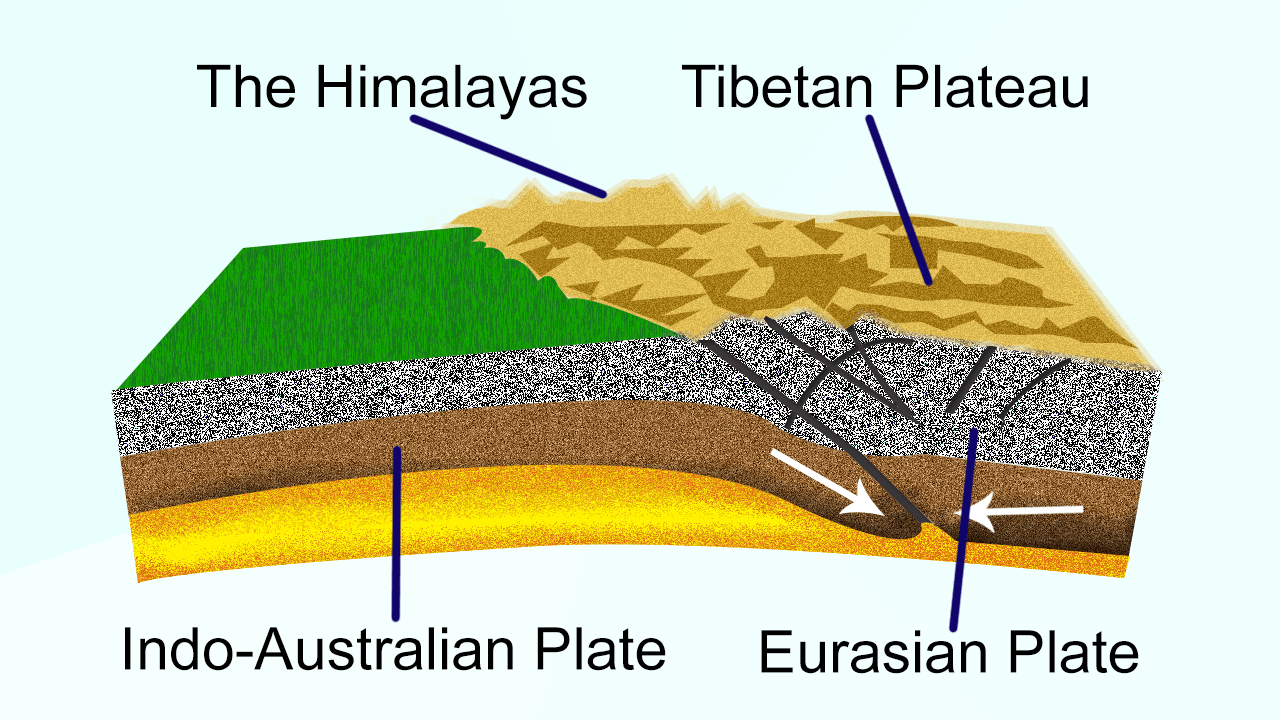
The Himalayan mountains have some of the highest peaks like Mt. Everest, on which type of convergent boundary are they located?
Oceanic/Continental
Oceanic/Oceanic
Continental/Continental
None of the above
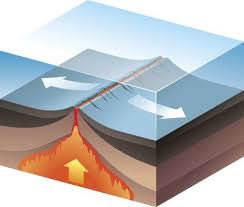
What type of features are associated with a divergent boundary?
Rift valleys
Volcanic mountains
Fold mountains
Fault block mountains
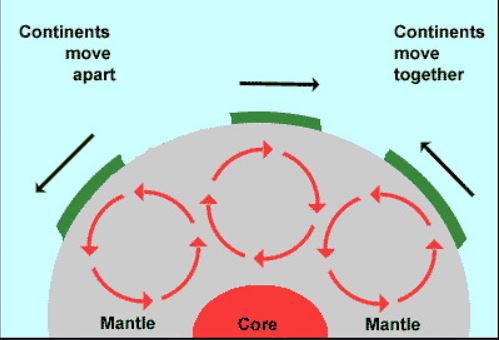
What kind of currents cause heat transfer in the Earth?
convection currents
radiation currents
conduction currents
ocean currents
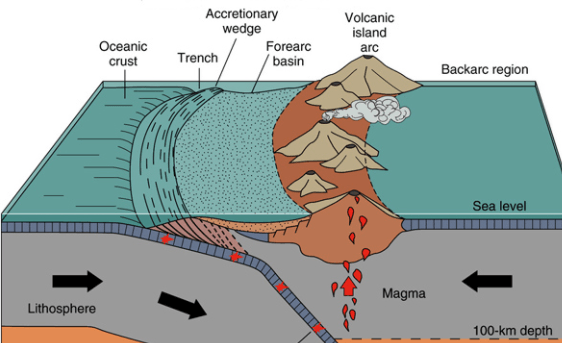
What happens to a plate that is subducted (goes under)?
it melts
it freezes

