
 Worksheets
Plant Structure & Transport
Total questions: 45
Worksheet time: 27mins

Which of the following is NOT a function of the roots?
Store carbs
Absorb water and minerals
Anchor plant to the ground
Photosynthesis
Where in the plant does photosynthesis occur?
Flower
Leaves
Stem
Roots
What type of cells transport water UP the stem?
Xylem cells
Phloem Cells
Epidermal Cells
Root Cells
The thick waxy covering of a leaf that helps prevent water loss is known as the--
Flower
Cuticle
Mitochondria
Chloroplast
Where does gas exchange occur within the plant?
Flower
Leaf
Stem
Roots
Which structure of the plant is responsible for transport?
Flower
Leaf
Stem
Root
Which of the following is NOT a part of the plant's SHOOT system?
Flower
Leaf
Stem
Root
True or False? The products of photosynthesis are the reactants of cellular respiration.
True
False
Photosynthesis occurs in the ______ while cellular respiration occurs in the _____.
Chloroplast; Vacuole
Vacuole; Mitochondria
Mitochondria; Chloroplast
Chloroplast; Mitochondria
An organism who can make their own food from the sun is known as a-
Heterotroph
Eukaryote
Autotroph
Prokaryote
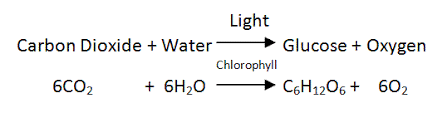
The leaf is known as the ___________.
photogenic organ
Photosynthetic organ
Photographic organ
____________lines the lower area of the leaf.
blade
cuticle
petiole
epidermis
There are ____ types of vascular tissue.
4
5
2
3
The vascular tissues are ____&____.
Xylem and Phlobotemy
Xylemy and Phloemy
Xylemotomy and Phloemotomy
Xylem and Phloem.
Transpiration is a part of____________?
Condensation
Sublimation
Evaporation
Precipitation
What is the effect of increasing light intensity in transpiration?
It decreases transpiration rates
It increases transpiration rates
It doesn't impact the rate of transpiration
Which of the following indicates the pathway of water through a plant?
Stomata=>Root hair cell=>Xylem
Root hair cell=>Xylem=>Stomata
Xylem=>Stomata=>Root hair cell
Kidney shaped cells at the border of the stomata
Lenticels
Cuticle
Guard cells
Hydathodes
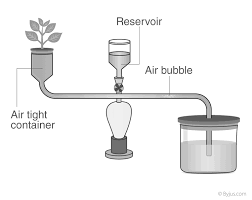
What happens to the movement of air bubble if apparatus is kept in front of a fan
Air bubble does not move
Air bubble moves very little
Air bubble does not change its position
Air bubble moves very fast
The rate of transpiration increases with
High atmospheric CO2 level
Low water content of leaf
Shedding of leaves
Dry air
The rate of transpiration decreases with
high temperature
high water content of leaf
closure of stomata
intensity of sunlight
What is transpiration?
Excess water being released from the aerial parts of plants in the form of water vapor
Excess sugar being released from the leave
The way a plant makes its food
When the plant uses sugar for energy
Water transported from stems to leaves through what?
xylem
phloem
stems
roots
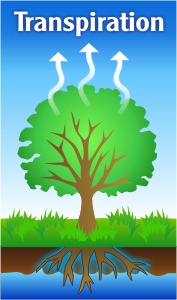
Factors which affect transpiration are (external)
Sunlight
Wind speed
Humidity
Rain
Adaptations in plant to reduce transpiration are -
No of stomata
Thickness of cuticle
Loss of leaves
All of the above

Recall what the pathway of water from roots to leaves is called.
Respiration
Translocation
Transpiration stream
Evaporation

Recall the main funtion of a phloem cell.
To transport nutrients (mainly sucrose) to different parts of a plant.
To transport water to different parts of a plant.
To make energy for the plant via photosynthesis.
To provide structural support to a plant.

Recall which of the following form part of the phloem.
Sieve-tube elements
Trachieds
Vessels
Companion cells
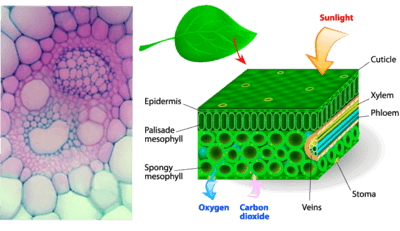
Recall that the movement of food in the phloem is called.
Translocation
Transpiration stream
Evaporation
Respiration
which of the following are vascular bundle
pallisade mesophyll and stoma
xylem and stoma
xylem nad phloem
phloem and epidermis
vascular bundle is a tissue
yes
no

