wayground logo

Free Printable Worksheets

Font size

S
M
L
XL
Worksheets

Properties of Water Review Game

Total questions: 24

Worksheet time: 18mins

Name
Class
Date
1.
Large bodies of water, such as lakes and oceans, do not quickly fluctuate in temperature. What is the reason for this phenomenon?
a)
Water is an acid.
b)
Water is a versatile solvent.
c)
Water has a high heat capacity.
d)
 Water acts as a buffer.
2.
Why does ice stay at the top of oceans instead of sinking to the bottom?
a)
 Ice is colder than liquid water.
b)
Ice is less dense than liquid water.
c)
Ice is more dense than liquid water.
d)
Ice is warmer than liquid water.
3.

Water is often called the "universal solvent" because many substances can be dissolved in water. What property of water allows it to be such a versatile solvent?

a)

purity

b)

polarity

c)

high heat capacity

d)

expansion upon freezing

4.

The makeup of most living things is water. It plays a vital role in maintaining internal conditions, like homeostasis. Which property of water makes it good at regulating temperature of most living organisms?

a)

Water is a good solvent.

b)

Water exhibits strong cohesion.

c)

Water has an unusual crystalline structure.

d)

Water has a high capacity for heat.

5.
Water has a much higher specific heat than most other covalent compounds. What do you predict might happen if water had a low specific heat instead?
a)
Flooding would occur and animals would be forced to migrate
b)
 Harmful organisms living in water would reproduce at a rapid rate
c)
Organisms that are sensitive to changes in temperature would die
d)
Plants would not have enough water to effectively carry out photosynthesis
6.
 Many fish and aquatic plants can survive a cold winter because the layer of ice that forms at the top of the lake insulates the water below and prevents the lake from freezing solid. What unique property of water contributes to this effect? 
a)
Water absorbs heat when it evaporates and forms a gas 
b)
 Water expands and becomes less dense when it freezes.
c)
Water molecules completely separate into ions in solutions.
d)
 Water forms hydrogen bonds with ions and other polar substances. 
7.
molecule in which opposite ends have opposite electric charges
a)
cohesion
b)
polar molecule
c)
hydrogen bond
d)
solution
8.
Attractions between water molecules are called
a)
Covalent bonds
b)
Ionic bonds
c)
Polar bonds
d)
Hydrogen bonds
9.
Water is polar because...
a)
The unequal sharing of electrons gives the water molecule a slight negative charge near its oxygen atom and a slight positive charge near its hydrogen atoms.
b)
The molecule has two poles, at which the it is colder than other regions of the molecule.
c)
The unequal sharing of electrons gives the water molecule a slight negative charge near its hydrogen atoms and a slight positive charge near its oxygen atom.
d)
The water molecule is neutral.
10.

A substance that increases the hydrogen ion (H+) concentration of a solution. On the pH scale: 6.9 or below is considered an

a)

acid

b)

base

c)

neutral substance

d)

concentrated substance

11.
The amount of energy required to raise the temperature 1ºC for every kilogram is called____?
a)
Thermal Energy
b)
Specific Heat
c)
Temperature
d)
Kinetic Energy
12.
What does temperature measure?
a)
Heat
b)
ºC
c)
Kinetic Energy
d)
Thermal Energy
13.

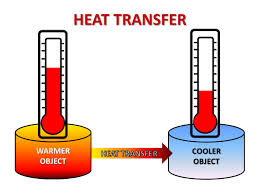
What would be the effect on the particles if more heat is supplied to the system? (a)  
Choose from the below words
They would slow down
They would stop moving
They would speed up
There would be no effect
14.

Heat flows from an area of ​ (a)   temperature to an area of ​ (b)   temperature.

​ ​

Choose from the below words
high
low
15.

A relatively weak bond formed between a partially positive hydrogen atom & a partially negative oxygen, fluorine, or nitrogen atom of an adjacent molecule

a)

Hydrogen bond

b)

Covalent bond

c)

Ionic bond

d)

Compound

16.

The ocean is slow to heat and slow to cool. This is related to a property of water known as

a)

density

b)

high heat capacity

c)

low heat capacity

d)

residence time

e)

boiling point

17.

Which is less dense?

a)

Solid Water

b)

Liquid Water

18.

When salt is dissolved in water, water is the

a)

solvent

b)

solute

c)

solution

d)

reactant

19.

What is the formula for density?

a)

D = M x V

b)

D = M/V

c)

D = V/M

d)

D = M + V

20.

Solve: Mass = 12g Density = 6g/ml Enter your math answer

4 lines
21.

Sometimes salt is used on roads to keep them free of ice. It mixes with water and can flow into nearby lakes, where the salty water sinks to the bottom, reducing the natural mixing of the lake water and resulting in depleted oxygen levels for aquatic life. When the salt first mixes with water, its crystals come apart and are no longer visible. Why does salt react this way in water?

a)

The salt molecules form covalent bonds with the water molecules and lose their crystal form.

b)

The polarized water molecules make the salt crystals become polarized as well.

c)

The heat in the water makes the salt crystals melt so they can't be seen.

d)

The salt molecules are ionically bonded and the polarized water molecules pull them apart.

22.
Why does ice float?
a)
As water freezes, it expands and its density decreases.
b)
As water freezes, it takes up more hydrogen from the atmosphere, causing it to have a greater buoyancy.
c)
As water freezes, air becomes trapped between the hydrogen bonds of water molecules.
d)
As water freezes, it takes up more oxygen from the atmosphere, causing it to have a greater buoyancy.
23.
Which of the following is LEAST likely to dissolve in water?
a)
nonpolar fats and oils
b)
polar sugar molecules
c)
salt made of a positive sodium ion and a negative chloride ion
24.
Large bodies of water, such as lakes and oceans, do not quickly fluctuate in temperature. What is the reason for this phenomenon?
a)
Water is an acid.
b)
Water is a versatile solvent.
c)

Water has a high specific heat

d)
 Water acts as a buffer.