
 Worksheets
matter and it composition
Total questions: 20
Worksheet time: 10mins
Name
Class
Date
1.
A pure substance that cannot be broken down into other substances by chemical or physical means.
a)
compound
b)
atom
c)
mixture
d)
element
2.

This diagram represents a _____.
a)
pure substance that is a compound
b)
mixture of elements
c)
pure substance that is an element
d)
mixture of compounds
3.
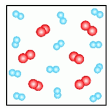
This diagram represents a _____.
a)
pure substance that is a compound
b)
mixture of elements
c)
pure substance that is an element
d)
mixture of compounds
4.
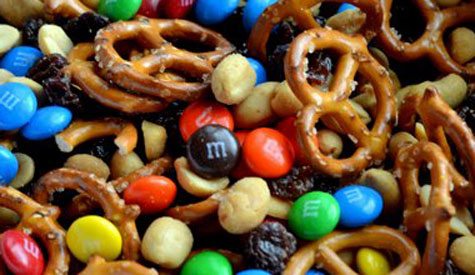
Can a mixture be separated?
a)
No
b)
Yes
c)
Only sometimes
5.
The basic unit of matter is
a)
a mixture
b)
a substance
c)
an atom
d)
a compound
6.
A substance that contains only one type of atom is a(n)
a)
compound
b)
element
c)
heterogeneous mixture
d)
homogeneous mixture
7.

This picture represents which of the following?
a)
Element
b)
Compound
c)
Mixture
8.
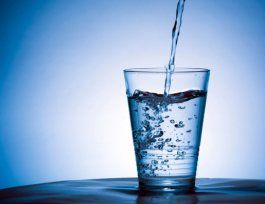
A pure substance...
a)
is an element or a compound
b)
is an element or a mixture
c)
is a compound or a mixture
d)
is a mixture
9.
NaHCO3 is an example of —
a)
an abbreviation
b)
a compound
c)
a mixture
d)
an element
10.
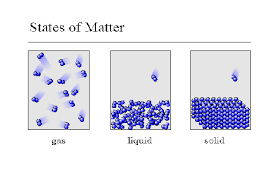
At higher temperatures
a)
particles in an object have less energy
b)
particles in an object move faster
c)
a gas contracts
11.
Particles (molecules) in a ______________________ have more energy than the other states of matter.
a)
gas
b)
solid
c)
liquid
12.
Particles of a liquid
a)
are tightly packed together and stay in a fixed position.
b)
have no viscosity.
c)
decrease in volume with increasing temperature.
d)
are free to move around one another but still touch.
13.
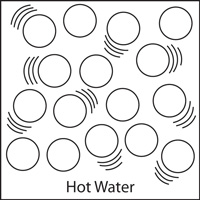
The speed of the molecules determines the _____.
a)
volume
b)
density
c)
pressure
d)
temperature
14.
The slower the particles in a substance move,
a)
the colder it is.
b)
the warmer it is.
c)
the more energy it has.
d)
the less energy it has.
15.
Thermal energy is...
a)
heat energy.
b)
the energy of motion
c)
energy of nuclear processes.
d)
an indication of physical change.
16.

What state of matter is Z?
a)
solid
b)
liquid
c)
gas
d)
supercritical fluid
17.
What change occurs from E to C?
a)
sublimation
b)
freezing
c)
melting
d)
boiling
18.
What is point A?
a)
triple point
b)
critical point
c)
equilibrium point
d)
normal melting point
19.
At 0.10 atm, what phase(s) can exist?
a)
solid, liquid or gas
b)
liquid or gas
c)
solid only
d)
gas only
20.

Which statement is true for carbon dioxide at -60 °C?
a)
All three phases are possible.
b)
It can exist as a solid or a gas, depending on pressure.
c)
It is a solid.
d)
With enough pressure it can be melted.
100 %

