
NEW
Font size
 Worksheets
Q1 Music Theory Review
Total questions: 35
Worksheet time: 18mins
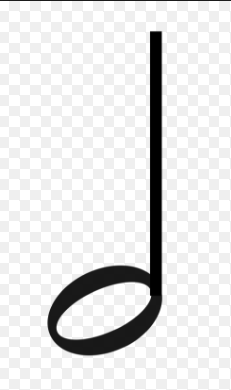
Which note takes 2 to make one beat (lasts 1/2 beat)?
Quarter Note
Eighth Note
Half Note
Whole Note
Musical term referring to loud and soft in music:
Tempo
Melody
Harmony
Dynamics





The distance between two notes is called a/an...
Flat
Sharp
Interval
Ledger Line

What is the name of this symbol, which makes a note sound 1/2 step lower than written?
Flat
Sharp
Natural
Double Sharp

What is the name of this symbol, which makes a note sound 1/2 step higher than written?
Flat
Double Sharp
Sharp
Natural

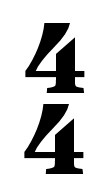
What is the name of the symbol at the beginning of a piece of music that tells us what kind of note is worth one beat, and how many beats are in a measure?
Key Signature
Staff
Time Signature
Treble Clef
Indication at the beginning of a song that tells how many sharps or flats ("black keys") are in it:
time signature
tempo
key signature
pitch
The smallest interval in Western music:
whole step
flat
major second
half step
General term referring to the number of beats per measure in music:
dynamics
a cappella
time signature
meter
Meter in which the beat is divided into three equal parts:
compound
dancing
syncopated
reggae
Type of music which uses compound meter exclusively:
jazz
reggae
country
swing
Two notes that have one note in between them:
fifth
whole step
octave
half step
Pattern of steps used to build a major scale:
W W H, W W W H
W W H, W H W H
W H W H W H W H
H H H, W W W W

Name the note
C
D sharp
E
F

Name the note
G
F
D
A flat

Name the note
A flat
E sharp
D sharp
D flat
Interval from C to E:
second
fifth
octave
third
A series of eight notes occupying the
interval between (and including) two notes,
one having twice or half the frequency
of vibration of the other:
octave
whole step
frequency
scale
Number of keys on a piano:
72
88
61
112
Number of octaves on a piano:
8
11
7
5
The number of individual notes (including sharps and flats) within one octave in Western music:
8
24
5
12
To play a major scale on the piano using all white keys, you would have to start on:
C
F
E
G
If you were to turn off all other sound sources so that you could focus on hearing a song, you would be engaging in ________________ listening.
OCD
serious
active
passive

