wayground logo

Free Printable Worksheets

Font size

S
M
L
XL
Worksheets

Heat

Total questions: 50

Worksheet time: 1hrs 13mins

Name
Class
Date
1.
If an object has greater mass, it has greater
a)
Temperature
b)
Thermal Energy
c)
Heat 
d)
All of the above 
2.
It is cooler outside than inside of my house.  Is an example for which concept?
a)
Thermal Energy
b)
Heat 
c)
Temperature
3.
My hands feel warm because 
a)
The temperature is cold outside
b)
The molecules are moving
c)
The heat is transferring 
4.
Sum of the kinetic and potential energy of the particles 
a)
Thermal Energy
b)
Temperature
c)
Heat
5.
Average of kinetic energy
a)
Thermal Energy
b)
Temperature
c)
Heat
6.
Movement of thermal energy
a)
Thermal Energy
b)
Temperature
c)
Heat
7.
Heat 
a)
Moves from hot to cold
b)
Moves from cold to hot
c)
Always rises up
d)
It depends on the molecules
8.
When heat transfers from warmer to cooler, the molecules
a)
move closer and slow down
b)
move closer and speed up
c)
spread out and slow down
d)
spread out and speed up
9.
what is the meaning of convection?
a)
cold rises heat falls
b)
heat
c)
cold
d)
hot rises cold falls
10.
what is the meaning of conduction
a)
when heat transfers from objects that are not touching
b)
heat rise 
c)
cold fall
d)
when heat transfers from objects that are touching
11.
what kind of heat is happening when the sun heats your body
a)
conduction
b)
convection
c)
density
d)
radiation
12.
heat rises
a)
true
b)
false
13.
heat energy traveling through space is an example of _____
a)
convection
b)
density
c)
radiation
d)
conduction
14.
The sun shines down on this family as the play on the beach.
a)
conduction
b)
convection
c)
radiation
15.
A group of friends gather around a fire to stay warm.
a)
conduction
b)
convection
c)
radiation
16.
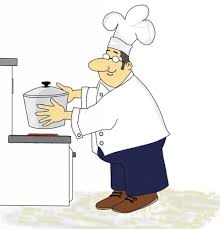
The man goes to take the hot pot off the stove with his bare hands.
a)
conduction
b)
convection
c)
radiation
17.
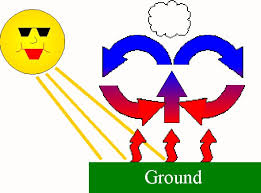
Warm air rises and the cool air sinks.
a)
conduction
b)
convection
c)
radiation
18.
In some cultures, walking on fire is the ultimate sign of strength.
a)
conduction
b)
convection
c)
radiation
19.
In this experiment, the WARM red dye and the COLD blue dye was placed in the water at the same time. The warm red dye rose to the top while the cold blue dye sank to the bottom.
a)
conduction
b)
convection
c)
radiation
20.
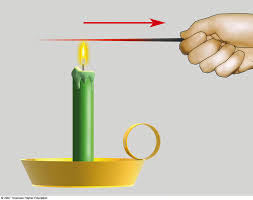
The candle will slowly heat the metal and transfer the heat directly to the mans hand.
a)
conduction
b)
convection
c)
radiation
21.
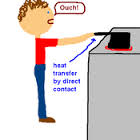
Johnny accidentally grabbed the handle of the hot pot.
a)
conduction
b)
convection
c)
radiation
22.
The chocolate bunny and the iron.
a)
conduction
b)
convection
c)
radiation
23.
Can heat be created or destroyed?
a)
Yes
b)
No
c)
Only when things are cooling off
d)
Only when things are warming up
24.
Hot air ______ while cool air ____
a)
Sinks, Rises
b)
Rises, Rises
c)
Rises, Sinks
d)
Convection, Radiation 
25.
Ironing a shirt is an example of...
a)
condensation
b)
conduction
c)
convection
d)
radiation
26.
What happens when ice cubes melt in a glass?
a)
Heat travels from the ice to the warmer water.
b)
No energy is transferred.
c)
Heat is transferred from the warmer water to the ice cubes.
d)
The water warms up due to the humidity
27.

Name the Main Source of Heat

a)

SUN,ELECTRICITY FIRE

b)

SUN,ELECTRICITY,BULB

c)

LAMP,UNLIGHTED CANDLE,BRICK

d)

ASBESTOS,WOOD,PLASTICS

28.

WHICH OF THE FOLLOWING IS NOT A EFFECT OF HEAT

a)

CHANGE IN TEMPRATURE

b)

CHANGE IN SIZE

c)

CHANGE IN STATE

d)

CHANGE IN COLOUR

29.

SI UNIT OF TEMPRATURE

a)

KELVIN

b)

NEWTON

c)

CELCIUS

d)

FAHERNITE

30.

FUSION IS ALSO KNOWN AS

a)

SOLIDIFICATION

b)

MELTING

c)

BOILING

d)

EVAPORATION

31.

NAME 3 TRANSFER OF HEAT

(a)  

32.

CONDUCTION TAKES PLACE IN (a)  

33.

THE TRANSFER OF HEAT FROM HOT BODY TO COLD BODY DIRECTLY WITHOUT HEATING THE SPACE IN BETWEEN IS KNOWN AS

a)

CONDUCTION

b)

CONVECTION

c)

RADIATION

d)

NONE OF THESE

34.

THERMOS FLASK WAS INVENTED BY (a)  

35.

Heat is a form of _____________.

a)

cycle

b)

energy

c)

diversity

36.

Object that gives off heat is called _______________ of heat.

a)

sources

b)

places

c)

things

37.

________________ is to measure how hot or how cold something is.

a)

tempreture

b)

temparature

c)

temperature

38.

Unit of measurement for temperature.

a)

millilitres

b)

kilometres

c)

kilograms

d)

degree Celcius

39.

_____________ heat is needed if we want to increase the temperature.

a)

more

b)

less

c)

little

40.

Heat always travels from _______________________________.

a)

a colder place to a hotter place until both places reach the same temperature.

b)

a hotter place to a colder place until both places reach the same temperature.

41.

Solid, liquid and gas ___________ when it gains heat.

a)

contract

b)

expand

42.

Metals are ____________ conductor of heat.

a)

best

b)

good

c)

better

43.

Plastic is a _____________ conductor of heat.

a)

poor

b)

bad

44.

The transfer of heat through direct contact

a)

conduction

b)

convection

c)

radiation

d)

temperature

45.

The transfer of heat through energy transmitted through space as waves

a)

conduction

b)

convection

c)

radiation

d)

temperature

46.

The transfer of heat through fluids that cause changes in density and the creation of currents

a)

conduction

b)

convection

c)

radiation

d)

temperature

47.

temperature is .....

a)

the average energy or speed of particles

b)

the movement of energy from hot to cold

c)

a thermometer

d)

a substance that does not easily conduct temperature

48.

a tool for measuring temperature .....

a)

the average energy or speed of particles

b)

the movement of energy from hot to cold

c)

a thermometer

d)

a substance that does not easily conduct temperature

49.

conductor

a)

the average energy or speed of particles

b)

the amount of atoms or matter in an object

c)

a substance that easily transfers heat into or out

d)

a substance that does not easily conduct temperature

50.

insulator

a)

the average energy or speed of particles

b)

the amount of atoms or matter in an object

c)

a substance that easily transfers heat into or out

d)

a substance that does not easily conduct temperature