
NEW
Font size
S
M
L
XL
 Worksheets
Cell Transport
Total questions: 21
Worksheet time: 14mins
Name
Class
Date
1.

This picture represents what type of cell transport?
a)
endocytosis
b)
exocytosis
c)
osmosis
d)
passive transport
2.
Osmosis is the movement of _____ across a membrane.
a)
food
b)
energy
c)
oxygen
d)
water
3.
The movement of molecules across a membrane from high concentration to low concentration is called:
a)
Osmosis
b)
Diffusion
c)
Endocytosis
d)
Active Transport
4.

Active Transport typically uses ______ to transport materials across the cell membrane.
a)
ATP
b)
Glucose
c)
Na+
d)
K+
5.

The red blood cells in solution A are in a ____________ environment
a)
Acidic
b)
Isotonic
c)
Hypotonic
d)
Hypertonic
6.

The red blood cells in solution C are in a ____________ environment
a)
Acidic
b)
Isotonic
c)
Hypotonic
d)
Hypertonic
7.

The Na/K Pump moves Na & K ions across the membrane at a ratio of ___ Na : ___ K.
a)
2:1
b)
3:2
c)
2:3
d)
1:2
8.
A macrophage engulfing and digesting a bacterial cell is an example of:
a)
Exocytosis
b)
Endocytosis
c)
Co-Transport
d)
Osmosis
9.
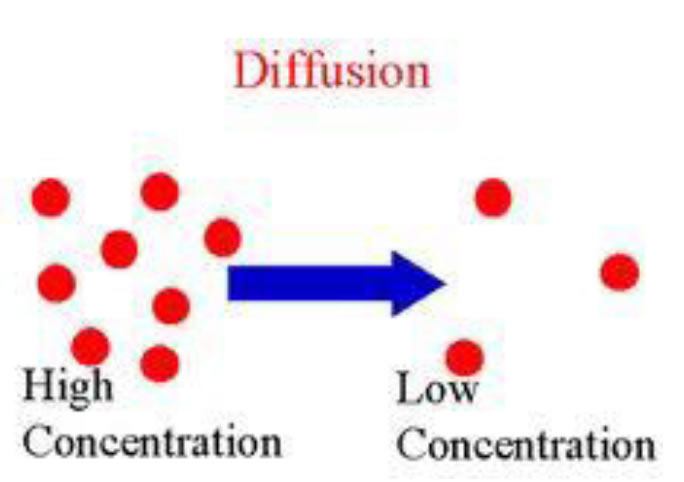
Movement of particles from high to low concentration.
a)
Passive Transport
b)
Active Transport
10.
The concentration of water is higher in the soil than in plant root cells. Water moves into root cells of a plant by...
a)
Facilitated Diffusion
b)
Simple Diffusion
c)
Active Transport
d)
Osmosis
11.
In a nerve cell, ATP energy is used to pump sodium (Na) out of the cell and potassium (K) into the cell. This is an example of...
a)
Facilitated Diffusion
b)
Simple Diffusion
c)
Active Transport
d)
Osmosis
12.
Food is moved into the cell by ________________________.
a)
endocytosis
b)
diffusion
c)
exocytosis
d)
osmosis
13.
This cell organelle helps organisms maintain homeostasis by controlling what substances may enter or leave cells.
a)
vacuole
b)
nucleus
c)
cell membrane
d)
cell wall
14.
A cell in an isotonic solution will
a)
swell
b)
shrink
c)
stay the same size
d)
impossible to tell
15.
When a cell is placed in a hypertonic solution water
a)
moves from the inside of the cell to the solution
b)
moves from the solution to the inside of the cell
c)
moves equally in and out of the cell
d)
none of these
16.
During pinocytosis, the cell takes in liquids.
a)
True
b)
False
17.

What type of transport is this?
a)
facilitated diffusion
b)
active transport
c)
diffusion
d)
osmosis
18.
Active transport requires ______, moves materials from __________________, and goes _______ the concentration gradient.
a)
No energy, low to high, against
b)
ATP, high to low, with
c)
ATP, low to high, with
d)
ATP, low to high, against
19.
A cell will __________________ in a hypotonic solution.
a)
swell and perhaps burst (lyse)
b)
shrink
c)
the size of the cell will not change
d)
the size of the cell will change from large to small and from small to large
20.
The difference in the concentration of a substance from one location to another is called
a)
diffusion
b)
osmosis
c)
concentration gradient
d)
passive transport
21.
What is homeostasis?
a)
How the body releases oxygen
b)
Passive transportation
c)
How the body regulates itself for survival
d)
Active transport
Reset

