
 Worksheets
chemistry- subatomic particles
Total questions: 26
Worksheet time: 20mins

The nucleus of an atom contains which subatomic particles?
protons and electrons
protons and neutrons
electrons and neutrons
protons, electrons, and neutrons
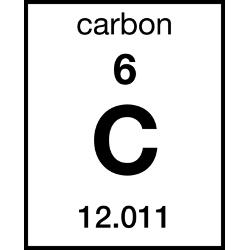
Which subatomic particle is counted to determine the type of element the atom represents?
proton
neutron
electron
boron
Which subatomic particle has a negative charge?
Proton
Neutron
Electron
Atom
Elements with extra neutrons (charge = 0, mass = 1) makes the element change into an...
ion
mixture
isotope
neutral atom
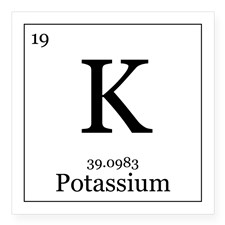
How many neutron are in the atom "K"?
Neutrons = Mass−Protons29
19
58
20

What the mass number of this element?
7
14
1
0

What's the atomic number of this element?
20
40
1
2

A scientist comes across an atom of iodine with 95 neutrons. Based on the information in the atomic symbol shown below, is this iodine atom an isotope?
Yes
No

A scientist comes across a potassium atom with 20 neutrons. Is this potassium atom an isotope? Use the information in the atomic symbol below to figure it out.
Yes
No

Which subatomic particle does the YELLOW(-) circle represent?
proton
neutron
electron
nucleus
Which subatomic particle does the GREEN( ) circle represent?
proton
neutron
electron
nucleus
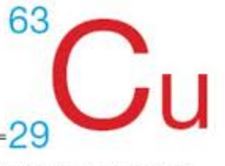

These are isotopes, What answer best explains how these are isotopes?
Same Atomic Numbers
Same Mass Numbers
Same symbols


Calculate the average atomic mass for iron with 15.2% iron-55 and 84.8% iron-56.
55.8 amu
55.9 amu
56.0 amu
56.1 amu
Calculate the average atomic mass for neon given its natural abundance: 90.5% neon-20, 0.3% neon-21, and 9.2% neon-22.
20.18 amu
20.17 amu
20.19 amu
20.20 amu

