Wayground logo

Free Printable Worksheets

Font size

S
M
L
XL
Worksheets

Characteristics of Life and Classification Practice Quiz

Total questions: 33

Worksheet time: 27mins
Name
Class
Date
1.
Living things do all of the following except:
a)
Respond to stimulus
b)
Grow and develop
c)
maintain homeostasis
d)
They do not change
2.
During ___________ conditions inside our body are kept stable (the same)
a)
homeopathic
b)
Homo sapian
c)
homeostasis
d)
homologous
3.
An example of homeostasis includes maintaining :
a)
oxygen level
b)
body temperature
c)
blood sugar level
d)
all of these levels
4.
The scientific name for an organism is made from the:
a)
class and family name
b)
genus and species name
c)
domain and kingdom name
d)
kingdom and phylum name
5.
The correct way to write the scientific name for a red maple tree is....
a)
ACER RUBRUM
b)
Red maple
c)
acer rubrum
d)
Acer rubrum
6.
Which domain contains organisms that are unicellular, prokaryotic, and can cause illness yet also make food such as yogurt.
a)
Eukarya
b)
Archaea
c)
Bacteria
7.
Canis familiaris and Canis lupus belong to the same
a)
family but different genera
b)
genus but are different species
c)
species but are different genera
d)
species but are different varieties
8.
The smallest classification group or level is a
a)
Genus
b)
Species
c)
Class
d)
Kingdom
9.
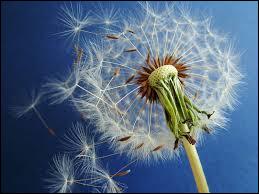
Dandelion, What kingdom does it belongs to?
a)
Plant Kingdom
b)
Animal Kingdom
c)
Fungi Kingdom
d)
Protista Kingdom
10.
Which organisms are most closely related?
a)
Equus caballas (Horse) & Equus burchellii (Zebra)
b)
Cyanea artica (Jellyfish) &
Ctenodiscus crispatus (Mud Starfish)
c)
Naja naja (cobra) & Glycine max (soya bean)
d)
Ophiocomina nigra (black brittle star) & Brassica nigra (black mustard)
11.
The science of describing, classifying, and naming living things is called:
a)
Geology
b)
Biology
c)
Taxonomy
d)
Chemistry
12.
The 8 levels of classification, broadest to most specific.
a)
Domain, Genus, Family, Order, Class, Phylum, Kingdom, Species
b)
Domain, Species, Kingdom, Genus, Phylum, Family, Class, Order
c)
Domain, Kingdom, Phylum, Class, Order, Family, Genus, Species
d)
Order, Kingdom, Species, Domain, Phylum, Family, Class, Genus
13.
An organism made up of more than one cell would be called:
a)
multicellular
b)
unicellular
c)
heterotroph
d)
autotroph
14.
An example of an unicellular organism would be:
a)
monkey
b)
bacteria
c)
spider
d)
human
15.
An illustration and a dichotomous key are given. What is the correct classification for this organism?
a)
Class Insecta
b)
Order Amblygygi
c)
Order Araneae
d)
Order Scorpiones
16.

Which 2 organisms would be able to reproduce and produce fertile offspring?

a)

2 organisms in the same class

b)

2 organisms in the same family

c)

2 organisms in the same genus

d)

2 organisms in the same species

17.

Naming system developed by Linnaeus

a)

Classification

b)

Binominal Nomenclature

c)

Genus

d)

Taxonomy

18.

Thanks to this scientist from the 1700s, we use Latin and ancient Greek to give each species a two word name.

a)

Aristotle

b)

Linnaeus

c)

Robert Hooke

d)

Stephen Hawking

19.

These are the two

prokaryotic domains.

a)

Archaea and Bacteria

b)

Archaea and Eukarya

c)

Bacteria and Eukarya

20.

The following kingdoms belong to what domain? Animalia, Fungi, Plantae, Protista

a)

Archaea

b)

Bacteria

c)

Eukarya

21.

Another word for a living thing is _____.

a)

Organelle

b)

Organism

c)

Organ

d)

Matter

22.

A reaction to a stimulus is called a(n) _____.

a)

organism.

b)

condition.

c)

function.

d)

response.

23.
When using a dichotomous key to identify organisms, what do we look at?
a)
physical features
b)
weather patterns
c)
environment
d)
diet
24.

Which of the following is a stimulus?

a)

removing your hand from a hot stove

b)

swinging a bat at a baseball

c)

screaming when something scares you

d)

a ball moving from the pitching mound to home plate towards a batter

25.

Which of the following is a response?

a)

a flashlight shined into the eye

b)

a rubber band popping your hand

c)

your pupils constricting when exposed to bright light

d)

blood glucose levels drop significantly

26.

Which of the following is asexual reproduction?

a)

two sets of genetic information; unique offspring

b)

one set of genetic information; identical offspring

27.

Which of the following is sexual reproduction?

a)

two sets of genetic information; unique offspring

b)

one set of genetic information; identical offspring

28.

A plant need sunlight to make food for itself.


Which characteristic of life does this refer to?

a)

Living things need energy

b)

Living things are composed of one or more cells

c)

Living things respond to their environment

d)

Living things grow and reproduce

e)

Living things maintain a stable internal environment

29.

Shivering when your cold generate heat to warm your body.


Which characteristic of life does this refer to?

a)

Living things need energy

b)

Living things are composed of one or more cells

c)

Living things respond to their environment

d)

Living things grow and reproduce

e)

Living things maintain a stable internal environment

30.

Heterotrophs are also known as...

a)

producers

b)

consumers

31.

Click all examples of heterotrophs

a)

plants

b)

animals

c)

bacteria

d)

some types of fungi and protists

32.
From where do autotrophs obtain their energy?
a)
The sun
b)
Other organisms
33.

Which domain has organisms that live in harsh environments?

a)

Bacteria

b)

Archaea

c)

Both