

Wayground logo

Free Printable Worksheets

Font size

S
M
L
XL
Worksheets

Light and waves in astronomy

Total questions: 17

Worksheet time: 42mins
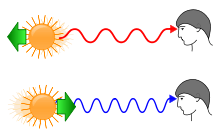
Name
Class
Date
1.
What is the best evidence for the Big Bang theory?
a)
How fast light can travel
b)
The expansion of the Universe
c)
Creation of new planets
2.
In ____shift, the galaxies appear _____ in color b/c they are moving away from us.
a)
blue; red
b)
red; red
c)
red; blue
d)
blue; blue
3.
If a star is being observed from Earth and it's light has shifted towards the blue side of the electromagnetic spectrum it would be...
a)
Moving towards the Earth
b)
Moving away from the Earth
c)
This is a trick question that cannot be answered
d)
It isn't a star, it is a very large blueberry.
4.
The blue section of the wave is measuring _________________.
a)
wavelength
b)
crest
c)
trough
d)
amplitude 
5.
Light is emitted when electrons ...
a)
jump from high to low 
b)
jump from low to high 
c)
either of these
d)
none of these
6.

How can scientists use the color spectrum of individual elements to help determine the composition of stars in our galaxy?

a)

Since each element has its own unique line spectra, it is possible to use a spectrometer to examine the light being emitted by the stars to determine what elements are present?

b)

Since each element does not have its own unique color spectrum, it is impossible to determine what elements make up our starts.

c)

Since the stars are so far away, the light we would be studying can not be trusted to determine their composition.

7.

The unknown emissions spectra belongs to the element

a)

Hydrogen

b)

Mercury

c)

Neon

d)

Helium

8.
A line spectrum is produced when an electron moves from one energy level
a)
into the nucleus.
b)
to another position in the same sublevel.
c)
to a higher energy level.
d)
to a lower energy level.
9.
Every element has its own unique atomic spectra.
a)
True
b)
False
10.
Use the image to identify the motion of the object relative to Earth.  Compare the absorption spectra of the star to what the star would look like if it were not moving at all relative to Earth.
a)
It is not moving
b)
It is moving away from Earth (Redshift)
c)
It is moving towards Earth (Blueshift)
d)
It is moving towards Earth (Redshift)
11.
Use the image to identify the motion of the object relative to Earth.  Compare the absorption spectra of the star to what the star would look like if it were not moving at all relative to Earth.
a)
It is not moving relative to Earth
b)
It is moving away from Earth (Redshift)
c)
It is moving towards Earth (Blueshift)
d)
It is moving towards Earth (Redshift)
12.
Use the image to identify the motion of the object relative to Earth.  Compare the absorption spectra of the star to what the star would look like if it were not moving at all relative to Earth.
a)
It is not moving relative to Earth
b)
It is moving away from Earth (Redshift)
c)
It is moving towards Earth (Blueshift)
d)
It is moving towards Earth (Redshift)
13.

How do scientists know what stars are made of?

a)

The Doppler Effect

b)

Emission Lines

c)

Radio Waves

d)

The Electromagnetic Spectrum

14.

How do scientists know that stars are moving?

a)

The Doppler Effect

b)

Emission Lines

c)

Radio Waves

d)

The Electromagnetic Spectrum

15.
All electromagnetic waves have the same...
a)
frequency
b)
speed
c)
wavelength
d)
energy
16.

Absorption spectra result from ________________ gas.

a)

hot, high-density

b)

hot, low-density

c)

cool, high-density

d)

cool, low-density

17.
This picture is an example of a(n)...
a)
absorption spectrum
b)
emission spectrum
c)
continuous spectrum
d)
black body spectrum
