
 Worksheets
Biodiversity
Total questions: 20
Worksheet time: 39mins
Biodiversity, aka biological diversity, usually refers to
the same species in a general location
the number of different species in a given area
the number of animal species in a given area
the number of plant species in a given area
A population is
a group of similar species in different areas
a group of the same species in the same geographic area.
a group of several species in the same geographic area
a group of several species along with their abiotic factors in a small area.
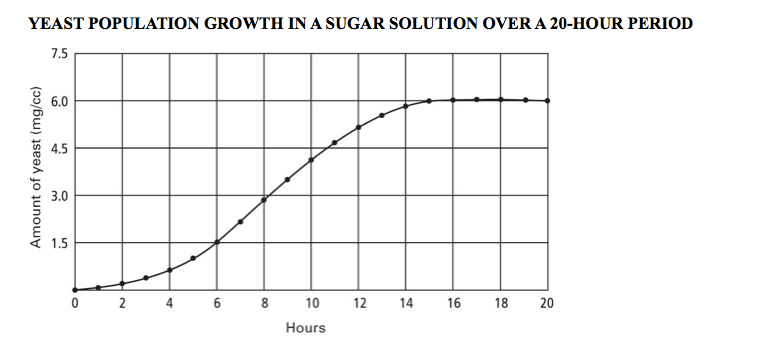
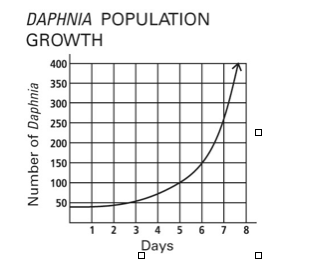
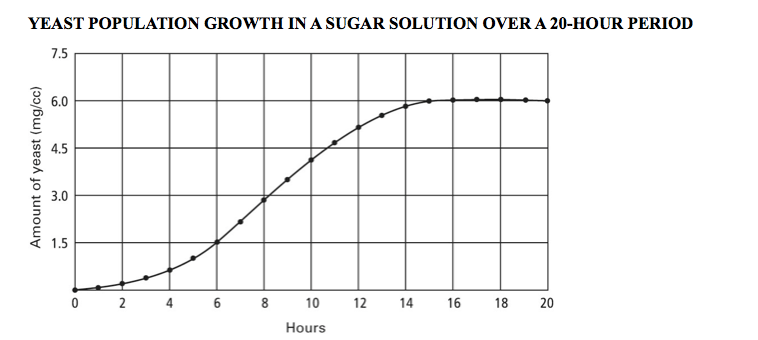

When a population has reached carrying capacity
Births & Immigration are equal to Death & emigration
Births & Immigration are less than Death & emigration
Births & Immigration are greater than Death & emigration
Births are exponential

Estimate the carrying capacity.
100 deer
80 deer
60 deer
40 deer
What does the term carrying capacity describe?
The maximum number of birth rates for a population.
The ability of a population to accept new immigrants.
The ratio of birth rates to death rates in a population.
The population size that the environment can sustain.
Identify which image below is showing a population:


The lionfish is a venomous fish found primarily in the Red Sea and the Indian Ocean. In the 1990s, lionfish were accidentally released into the Atlantic Ocean, where they found abundant resources and favorable environmental conditions. Which of the following scenarios is most likely to result in the lionfish having a major impact on the communities into which they were introduced?
With no natural predators, the lionfish population will become very large.
Some native species of invertebrates will develop a resistance to lionfish venom.
Random mating will allow the lionfish population to reach Hardy-Weinberg equilibrium.
A virus that specifically infects lionfish will become more prevalent.
There is strong evidence that two species of
cliff-dwelling birds have nested in the same
environment and fed in the same water for
thousands of years, with each having stable
population sizes. Based on this information,
which of the following statements is the best
conclusion?
The two birds compete for food.
One species will displace the other.
The two birds have different ecological niches that allow coexistence.
One species eats a more diverse diet than the other does.
An organisms population growth is shaped by its reproductive pattern. Which combination of traits characterizes a rapid life history pattern (r-species)?
short life span, produces many offspring, small body size
short life span, live in more stable environments, small body size
long life span, produces many offspring, grows into adults slowly
long life span, large body size, grows into adults slowly

What factor describes when populations decrease because animals are moving out of a population?
Emigration
Limiting Factors
Immigration
Exponential Growth

