
 Worksheets
9.2 Human and Animal Reproduction
Total questions: 25
Worksheet time: 41mins
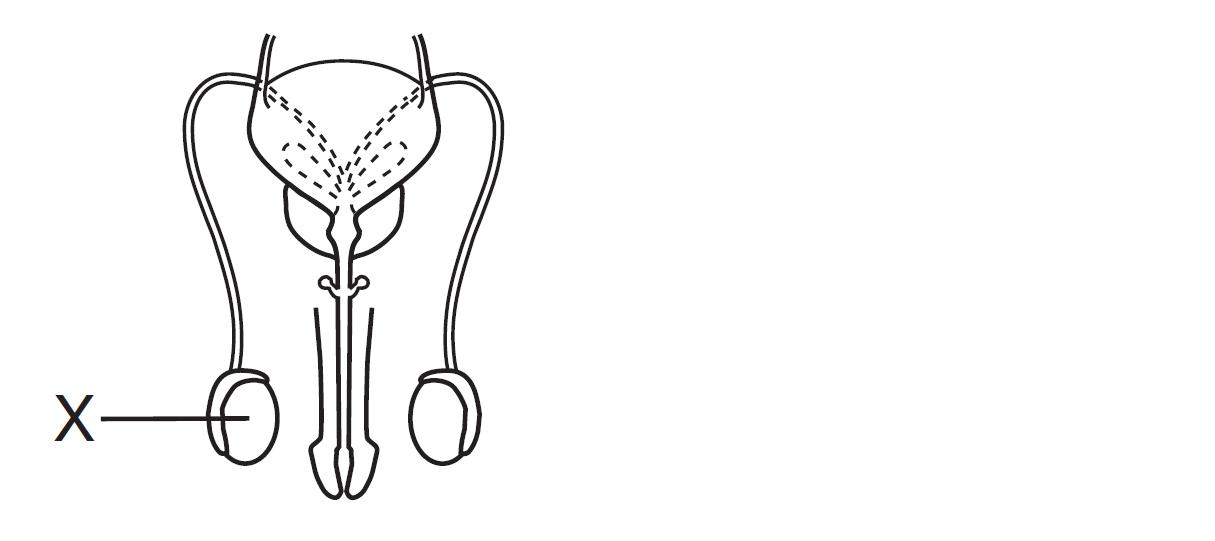
The diagram below represents a system in the human body. The function of structure X is to _____________
produce energy needed for sperm to move
provide food for the sperm to carry to the egg
produce and store urine
produce sperms and male sex hormones
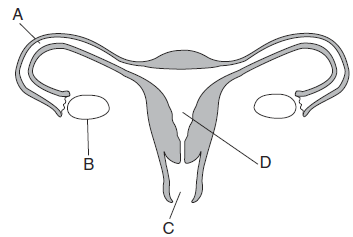
The human female reproductive system is represented below. Where will the embryo attach itself after fertilization?
A
B
C
D
The male reproductive system produces sex hormones called
Estrogen
Progesterone
Testosterone
Andresterone
What is the scrotum?
A pouch of skin surrounding the testes
A fold of skin that protects the penis
An additional gland located at the end of the urethra
Where are spermatozoa stored while they are maturing?
In the prostate
In the epidymis
In the testes
In the seminal vesicle
Which part of the uterus is connected to the vagina?
The fallopian tubes
The cervix
The ovaries
The fallopian tubes connect
the ovaries to the uterus
the uterus to the vagina
the ovaries to the vagina
What is the name of the internal wall of the uterus?
endometrium
exometrium
testometrium
Which form of reproduction, in animals, is the most common on Earth?
Asexual
Sexual
Fragmentation
Vegetative propogation
Which type of reproduction involves two parents?
Asexual
Sexual
Fragmentation
Budding
Which type of reproduction produces the greatest amount of genetic variation in offspring?
Sexual
Asexual
Binary fission
Budding
Asexual reproduction would be the most favorable if the population had an opportunity to grow quickly?
True
False
A benefit of internal fertilization would be that
there is the ability to produce far more offspring
the mother has to use less energy to produce offspring
there is less competition for mates
offspring are better protected during early development
Offspring from asexual reproduction have different DNA than the parents.
true
false
External fertilization usually occurs...
in water
in the female's body
very quickly
with only one parent

Which structure is the vas deferens?
A
B
C
D

Which label indicates the ovary?
d
i
c
h
g

What do we call an organism produced by asexual reproduction?
Offspring
Clone
Progeny
Descendant
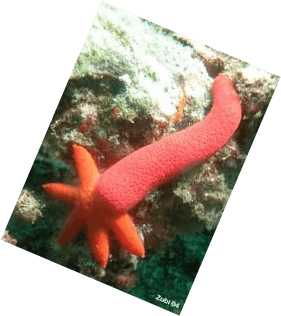
Fishermen work hard to catch and remove all the starfish that get into their favorite shell fishing beds and the “underwater farms” where they raise clams and oysters. In the past, they put the starfish into their boats, cut them up with knives, and then throw the pieces of starfish overboard. They thought this would kill the starfish. What they did not know was that each piece of starfish will grow into a whole new animal.

