Wayground logo

Free Printable Worksheets

Font size

S
M
L
XL
Worksheets

Matter & Energy Review 6th Grade

Total questions: 56

Worksheet time: 2hrs 0mins

Name
Class
Date
1.
What form of matter has a definite shape?
a)
Solid
b)
Liquid
c)
Gas
d)
Square
2.
What can causes ice to transform from a solid to a liquid?
a)
The air.
b)
The cold.
c)
Shape
d)
Heat
3.
This state of matter does not have a definite size or shape.
a)
Gas
b)
Liquid
c)
Solid
d)
Milk
4.

Name the three states of matter most common on Earth:

a)

crystalline, amorphous, solid

b)

solid, liquid, gas

c)

energy, matter, mass

d)

solid, fluid, liquid

5.
Which state of matter has particles that are tightly packed?
a)
liquid
b)
gas
c)
solid
6.
The amount of matter something contains. 
a)
volume
b)
mass
c)
density
d)
measurement 
7.
Molecules are closest together in a 
a)
Solid
b)
Liquid
c)
Gas
d)
plasma
8.
Which state of matter has particles arranged like this?
a)
solid
b)
liquid
c)
gas
9.
Which state of matter has particles arranged like this?
a)
solid
b)
liquid
c)
gas
10.
Which of the following statements describes a liquid?
a)
It has a fixed shape
b)
It takes the shape of it's container
11.
Which of the following statements describes a gas?
a)
It has a fixed shape
b)
It takes the shape of it's container
12.
A chemical change
a)
doesn't really change much.
b)
creates a new substance
c)
is a change in the state of matter
13.

A physical change is...

a)

a change that doesn't change the identity of a substance

b)

a change that makes something new.

c)

a chemical reaction

14.
I am the smallest whole particle of matter. 
a)
atom
b)
compound
c)
molecule
d)
mixture
15.
I am two or more atoms chemically bonded.
a)
atom
b)
compound
c)
molecule
d)
mixture
16.
Which 2 kinds of particles make up the nucleus of an atom?
a)
electrons and neutrons
b)
electrons and nuclei
c)
protons and neutrons
d)
protons and kryptons
17.
Something that takes up space and has mass.
a)
volume
b)
matter
c)
mass
d)
density
18.
A state of matter that has a definite volume and shape.
a)
solid
b)
liquid
c)
gas
d)
matter
19.
The amount of space something takes up
a)
density
b)
volume
c)
mass
d)
matter
20.
A watermelon has more matter than a grape, so it has more
a)
mass
b)
eat
c)
solid
d)
greater
21.
You can measure ______ with grams.
a)
mass
b)
volume
c)
conductivity
d)
melting point
22.
Volume is ______________.
a)
length X width
b)
height X length
c)
length X width X height
d)
width X height
23.

Which example is a compound?

a)

N2

b)

O2

c)

Cu

d)

H2O2

24.

Two or more atoms joined together form a(n)...

a)

Element

b)

Compound

c)

Molecule

d)

Mixture

25.
Salt has a chemical formula of NaCl.  Salt is a...
a)
Compound
b)
Element
c)
Mixture
d)
None of the Above
26.
An element is made up of only one kind of _____.
a)
isotope
b)
plastic
c)
atom
d)
metal
27.

What state of matter has no definite shape or volume and its molecules are spread far apart and active?

a)

gas

b)

liquid

c)

solid

d)

plasma

28.

True of False: The atomic number identifies how many protons OR electrons are found in an element.

a)

True

b)

False

29.
The ability to cause change
a)
Transfer 
b)
Energy
c)
Transform
d)
Kinetic Energy 
30.

The energy of motion.

a)

Potential Energy

b)

Kinetic Energy

c)

Mechanical energy

d)

Transfer

31.
Stored energy
a)
Potential Energy 
b)
Kinetic Energy 
c)
Mechanical energy 
d)
Transfer
32.
Energy an object has due to its position or height.
a)
Potential Energy 
b)
Kinetic  Energy 
c)
Mechanical energy 
d)
Transfer
33.
The sum of the potential and kinetic energy. 
a)
Potential Energy 
b)
Kinetic  Energy 
c)
Mechanical energy 
d)
Transfer
34.
The Law of Conservation of matter states that the total amount of matter ______________ after it undergoes change.
a)
disappears
b)
stays the same
c)
weighs less
d)
explodes
35.

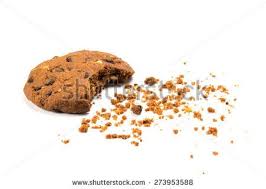
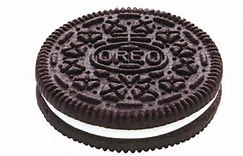
An oreo cookie has a mass of 20 grams. It gets crushed into crumbs for a recipe. How much mass does its crumbs have?

a)

15 grams

b)

25 grams

c)

20 grams

36.

What is the Law of Conservation of Matter(mass)?

a)

Mass is created in a chemical reaction

b)

Mass is created in a physical change

c)

New chemicals formed from a chemical reaction have a larger overall mass than the original reactants

d)

Matter(mass) can not be created or destroyed

37.

Another name for heat is?

a)

thermal energy

b)

electrical energy

c)

sound energy

d)

potential energy

38.

A car at the top of the drop on a roller coaster has ________ energy.

a)

potential

b)

kinetic

c)

chemical

d)

sound

39.

A car rolling down the drop of a roller coaster has ________ energy.

a)

potential

b)

kinetic

c)

chemical

d)

sound

40.

Which of the following is an example of kinetic energy?

a)

A rock at the top of a hill.

b)

Water falling down a waterfall.

c)

A pencil sitting on a desk.

d)

A backpack on the ground.

41.
What is the formula for density?
a)
density = mass x volume
b)
density = mass / volume
c)
density = mass + volume
d)
density = mass - volume
42.
Frank has an eraser. It has a mass of 4g, and a volume of 2cm3. What is its density?
a)
8 g/cm3
b)
2 g/cm3
c)
1/2 g/cm3
d)
24 g/cm3
43.
Jack has a rock. The rock has a mass of 14g and a volume of 2cm3. What is the density of the rock?
a)
7 mL
b)
7 g/cm3
c)
28 g/cm3
d)
1/7 g/cm3
44.
What is the volume of Object X?
a)
10.0 cm3
b)
15.0 cm3
c)
20.0 cm3
d)
25.0 cm3
45.
Frank has a paper clip. It has a mass of 9g and a volume of 3cm3. What is its density?
a)
3 g/cm3
b)
1/3 g/cm3
c)
27 g/cm3
d)
39 g/cm3
46.
Why do some substances float on water?
a)
they are warmer than water
b)
they are cooler than water
c)
they are more dense than water
d)
they are less dense than water
47.
What units are used to measure Density?
a)
cm3/g
b)
g
c)
g/cm3
d)
cm3
48.
A crayon has a mass of 10g and volume of 5 mL. What is the density?
a)
30 g/mL
b)
15 g/mL
c)
1 g/mL
d)
2 g/mL
49.
The central region of an atom where its neutrons and protons are is its 
a)
nucleus 
b)
electron cloud
c)
core 
d)
center 
50.
An atom with atomic number 6 would have how many protons 
a)
6
b)
12
c)
3
d)
cannot be determined 
51.
True or False? Neutrons have a negative charge
a)
True
b)
False
52.
The positive particles of an atom are 
a)
electrons 
b)
positrons 
c)
neutrons 
d)
protons 
53.
electrons have this type of charge?
a)
negative
b)
positive
c)
neutral
54.
Atoms make up, what?
a)
Everything living and nonliving
b)
Energy
55.
A part of the atom that has a negative charge is?
a)
Proton
b)
electron
c)
neutron
56.
The part of the atom that is moving around the nucleus is called?
a)
electron
b)
neutron
c)
proton