wayground logo

Free Printable Worksheets

NEW

Font size

S
M
L
XL
Worksheets

Endosymbiosis, Miller-Urey and Cell Theory

Total questions: 34

Worksheet time: 1hrs 8mins
Name
Class
Date
1.
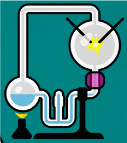
This experiment was conducted by the scientists:
a)
Stanley Miller and Harold Urey
b)
Harold Urey and Albert Einstein
c)
Louis Pasteur and Francesco Redi
d)
James Watson and Francis Crick
2.
Which question were the scientists trying to answer with this experiment?
a)
Where do cells come from?
b)
How did prokaryotes form cell membranes?
c)
How are biomolecules formed?
d)
What gave rise to the Eukaryotic cell?
3.
The apparatus in the experiment was used to mimic what?
a)
Proteins
b)
Present Earth conditions
c)
Early Earth conditions
d)
Nucleic acids (DNA/RNA)
4.
The electrical sparks mimicked?
a)
The Sun's energy
b)
Lightning
c)
Volcanic eruptions
d)
Cosmic radiation
5.
Miller/Urey and other scientists have shown that:
a)
 Life on early Earth required material from space
b)
Cells survived in the primitive atmosphere
c)
Amino acids could be produced from inorganic molecules 
d)
Simple cells can be produced in a laboratory
6.
Which type of cell came first?
a)
Eukaryotic
b)
Prokaryotic
c)
Plant
d)
Both Eukaryotic and Prokaryotic cells evolved around the same time
7.
Based upon the conditions of the early Earth, which forms of live most likely appeared first?
a)
Prokaryotic and aerobic
b)
Prokaryotic and anaerobic 
c)
Eukaryotic and aerobic
d)
Eukaryotic and anaerobic
8.
The idea that Earth's early oceans had organic molecules that became the first life is called the...
a)
Primordial soup hypothesis
b)
Bubble hypothesis
c)
Miller-Urey Experiment
d)
Radioactive dating theory
9.
The theory of Endosymbiosis explains...
a)
The origin of eukaryotes
b)
How species develop
c)
How bacteria evolved
d)
Why cells rely on one another
10.
The Miller-Urey experiment of 1953 was designed to test the hypothesis that lightning supplied the energy needed to turn atmospheric gases into organic molecules such as amino acids. Which of the following describes why the Miller-Urey theory is widely accepted today? 
a)
Amino acids spontaneously form from molecules in the atmosphere today
b)
 Organic molecules are present today in extremely high concentrations
c)
The process of synthesizing organic molecules from a mixture of gases has been successfully modeled in the laboratory
d)
No other alternative hypotheses have been introduced
11.

The 3 parts of the Cell Theory are...?

a)

All living things are composed of cells

Cells are the basic units of structure and function in living things

All cells are produced from other cells

b)

All living things are composed of cells

Cells are the basic units of dance and vibes in living things

All cells are destroyed from other aliens

c)

All living things are composed of Jell-O

Cells are the basic units of structure and function in living things

All cells are produced from factories in Canada

d)

All living things are composed of cells

Cells do karate and practice eating whole pies in their free time

All cells are produced from other cells

12.
Robert Hooke, Anton van Leeuwenhoek, Theodor Schwann, Rudolf Virchow, and Matthias Schliden were all responsible for what theory?
a)
The Theory of Gravity
b)
The Theory of Relativity
c)
The Cell Theory
d)
The Theory of Continental Drift
13.
Which of the following is NOT a cell theory.
a)
All non-living things are made of cells
b)
All cells come from pre-existing cells
c)
Cells are the basic unit of structure and function of all living things
14.
All cells are produced ____________.
a)
From pre-existing and deceased cells
b)
from other pre-existing cells
c)
Cells can come from anywhere, as long as there is the sun.
15.
What is one way in which all living things on Earth are alike?
a)
All living things have hair.
b)
All living things are made of cells and come from other cells.
c)
The cells of all living things have chloroplast.
d)
All living things can move. 
16.
Which of the following scientists concluded that all animals are made of cells?
a)
Rudolf Virchow
b)
Matthais Schleiden
c)
Robert Hooke
d)
Theodor Schwann
17.
Which of the following scientists was the first to observe bacteria under a microscope?
a)
Anton van Leuwenhoek
b)
Matthais Schleiden
c)
Robert Hooke
d)
Theodor Schwann
18.

Who looked at cork and named the cell?

a)

Robert Hooke

b)

Van Leeuwenhoek

c)

Robert Brown

d)

Francesco Redi

19.

What was Schleiden convinced of?

a)

All plants are made of cells

b)

All animals are made of cells

c)

All cells are prokaryotic

d)

None of the above

20.

Who discovered that all cells come from other living cells and had research that lead to the last major principle of cell theory?

a)

Matthias Schleiden

b)

Theodore Schwann

c)

Robert Hooke

d)

Rudolf Virchow

21.
What determines the rate of nutrients and waste are exchanged from the cell and the environment?
a)
surface ratio
b)
volume
c)
surface area
d)
surface area to volume ratio
22.
Which cells are more efficient at obtaining nutrients?
a)
Small Cells
b)
Medium Size Cells
c)
Large Cells
d)
X-Large Cells
23.
Which type of cell will make greater demands for DNA?
a)
small cell
b)
large cell
24.
As a cell becomes larger, its
a)
surface area increases faster than its volume.
b)
volume increases faster than its surface area
25.
How can surface area (SA) be increased? 
a)
Grow larger
b)
Divide into smaller pieces
26.
High Surface area to volume ratio allows cells to do what quickly?
a)
Move materials around inside the cell
b)
Move materials in and out of the cell 
c)
Communicate to other cells
d)
Divide
27.
Shuttles proteins and lipids to various locations such as the Golgi apparatus
a)
Secretory Vesicles
b)
Transport Vesicles
c)
Lysosomes
d)
Peroxisomes
28.
Modifies lipids and proteins from the ER; sorts them and packages them in vesicles
a)
Smooth ER
b)
Rough ER
c)
Nucleolus
d)
Golgi Apparatus
29.
Fuse with the plasma membrane
a)
Golgi Apparatus
b)
Lysosomes
c)
Secretory Vesicles
d)
Transport Vesicles
30.
Site of protein synthesis
a)
Ribosome
b)
Mitochondria
c)
Chloroplast
d)
Nucleolus
31.

What does the smooth ER do?

a)

Transports and modifies proteins

b)

Secretes proteins out the cell

c)

Transports and modifies lipids

d)

Moves proteins around the inside of the cell

32.

Which organelle makes ribosomes?

a)

Nucleus

b)

Nucleolus

c)

Vacuole

d)

Golgi Body

33.

Which structure is not part of the endomembrane system?

a)

nuclear envelope

b)

chloroplast

c)

Golgi apparatus

d)

plasma membrane

34.

What is the most likely pathway taken by a newly synthesized protein that will be secreted by a cell?

a)

ER --> Golgi --> nucleus

b)

Golgi --> ER --> lysosome

c)

nucleus --> ER --> Golgi

d)

ER --> Golgi --> vesicles that fuse with the plasma membrane