
 Worksheets
DCA - Q1 Exam
Total questions: 41
Worksheet time: 36mins
Which best describes the New England colonies?
diverse group of people who were very tolerant of other religious beliefs
Economy was based on farming wheat, rye, and corn; known as the Breadbasket colonies
Agriculture such as tobacco and cotton; Slave labor was a necessity to keep the economy stable
economy was based on whaling, shipbuilding, lumber while life revolved around religion
Which 3 are true about the Middle Colonies?
Known as the Breadbaskets because of the abundance of wheat, rye, and corn produced
Dependent on slave labor and large plantations to grow cash crops such as cotton and tobacco.
Home of the Quakers who were very tolerant of people who were different then them.
The people who lived here were very diverse.
Which describes the economy of the South?
called the breadbasket because of the abundance of wheat, rye, and corn that were grown in the area
gold mining and Native American slave trading
dependent on shipbuilding, lumber whaling and fishing
Plantations that farmed cash crops such as cotton, tobacco, indigo, and rice
What 3 inalienable rights did John Locke believe ALL people were born with?
Life
Liberty
Happiness
Property

Conflict between England and France over land in the Ohio River Valley
Civil War
Revolution
French and Indian War
Ohio River War
What did Britain gain as a result of the French and Indian War?
freedom from King George III
ability to trade with any country they wanted to
all of the land east of the Mississippi River
Florida
What did colonists become responsible for after the French and Indian War?
creating one government for the colonies
paying back the war debt
fighting the Native Americans or order to settle in the Ohio River Valley
colonizing the Ohio River Valley

In Ben Franklin's "Join or Die" cartoon, what do the pieces of the snake represent?
European countries with territory in North America
the Grand Council under the Albany Plan
What will happen if the colonists disobey King George
the 13 colonies
What would the Albany Plan of Union create for the colonies?
a border to keep colonist off of Native American land while still allowing them to be a part of the fur trade
set up a new colonial government with a separate king to rule from the colonies
one government that would be responsible for making laws, raising taxes, and setting up a defense for all of the 13 colonies

Which best explains the Proclamation Line?
Boundary that forbade colonists from settling in Indian Territory. It made colonists angry because colonists were expected to pay for the extra British Troops
asked colonists to house and feed British soldiers in exchange for protection from Native American attacks.
Created as a boundary between the Colonies and French territory to protect colonists. Colonists were grateful for the protection.
Which best explains the Quartering Act?
required colonists to house and feed British soldiers in the colonies
taxed imported goods
forbade colonists from settling west of the Appalachian Mountains
meeting of representatives that decided to go to war with England

required all legal documents to carry a stamp showing that tax had been paid on it
Navigation Act
Quartering Act
Stamp Act
Sugar Act
taxed imported goods such as glass, paper, paint, lead, and tea; as well as established the Writs of Assistance
Townshend Acts
Navigation Acts
Proclamation Line of 1763
Albany Plan of Union

Event where the Son's of Liberty dressed as Mohawks (Native Americans) and dump tea into the Boston harbor to protest the Tea Act .
Boston Massacre
French and Indian War
Boston Tea Party
Navigation Acts
Why did the British Parliament enact the Intolerable Acts?
keep colonists from settling in the Ohio River Valley
punishment for the Boston Tea Party
allowed colonists to trade with France
punishment for the Boston Massacre
Which is TRUE about the the First Continental Congress meet? (choose 2)
met to create a plan of action after the British passed the Navigation Act
met to create one central government for the 13 colonies and to decide on a military plan to defeat the French
met to create a plan of action after the British passed the Intolerable Acts
Petitioned the king asking for the same rights as British citizens in England
In their petition to King George III, what rights did the First Continental Congress say colonists had? (choose all that apply)
life
liberty
assembly
trial by jury
What phrase is Patrick Henry most famous for?
"We hold these truths to be self evident..."
"four score and seven years ago..."
"give me liberty or give me death..."
"We the people..."
allowed tea companies to bypass merchants and sell directly to colonists
Tea Act
Navigation Acts
Intolerable Acts
Quartering Act
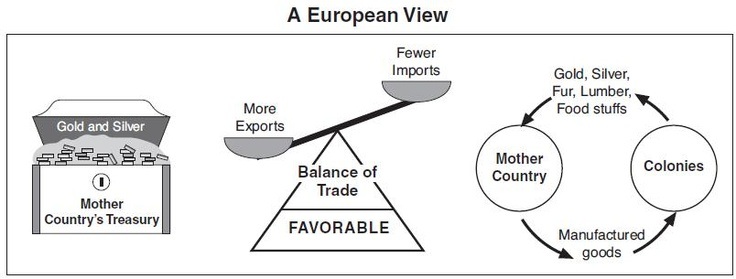
The belief that colonies exist to benefit the Mother Country. And for country to become powerful it has to build up its gold supply and trade.
mercantilism
Navigation Acts
Triangular Trade
African Slave Trade

According to the map, the 13 original colonies were located
along the Pacific Coast of North America
in North and South America
on the Atlantic Coast of North America
on the interior of the North American Continent
Which explains why the Southern Colonies were most successful at farming a variety of cash crops?
The winters were cold and often time snowy
The climate was warm and humid year round
being on the coast allowed for easier trade and transport
slaves provided seeds from their home lands that were not native to America
While the King of England was the ruler of the 13 colonies, he was located across the Atlantic Ocean. So, who was responsible for ruling for the king in the colonies?
colonists voted on their leaders
President of all of the colonies was appointed by the king
A governor for each colony was chosen by the king
A separate king, who lived in the colonies, was given power to rule
Which definition goes with "The Sugar Act"?
law that allowed British Tea Companies to bypass colonial tea merchants and sell directly to the colonists
law that put a new tax on imported goods like molasses
taxed good such as glass, paper, paint and tea
required colonists to provide housing and food to British troops in the colonies

Why was the event in Boston described by colonists as a "massacre?"
many colonists were killed by the British soldiers
it was a bloody event
it was a way for colonists to protest the Intolerable Acts
to stir up colonial fury and unite the colonists
What event does this image represent?
Boston Tea Party
French and Indian War
Boston Massacre
Lexington & Concord
Which Revolutionary leader became head of the Continental Amy?
John Adams
George Washington
Benjamin Franklin
Patrick Henry
This man was a Continental Congress delegate from Philadelphia.
George Washington
John Adams
Benjamin Franklin
Patrick Henry
Leading delegate at the Continental Congress who supported independence early on
George Washington
John Adams
Benjamin Franklin
Patrick Henry
What document officially ended the French and Indian War?
Treaty of Paris
Treaty of England
Declaration of Independence
Albany Plan of Union
How did colonists react to the Proclamation Line?
most ignored it and moved west anyway - fighting with the Natives continued
most obeyed the law and stayed in the 13 Colonies
colonists made friends with Natives in order to learn the fur trade
colonists used guerrilla warfare to wipe out Natives in the Ohio River Valley

Which best explains how territory in North America changed because of the French and Indian War?
France was completely pushed out of North America
Britain gained all of the land east of the Mississippi River
Spain gained more territory in North America
France took over North America
How did colonists react to British Acts and Taxes like the stamp act, sugar act, townshend acts?
They obeyed the new laws and taxes
Tarred and feathered tax collector to scare them away
They protested
They boycotted British products
Under the Intolerable Acts, how long would the Boston Harbor be closed?
until the tea destroyed in the Boston Tea Party was paid for
until the Treaty of Paris was signed
until someone admitted to the Boston Massacre
until all 13 colonies agreed to the Albany Plan of Union
How did the Committee of Correspondence spread information throughout the colonies?
newspaper articles
letters
social media
World News Tonight
What did Patrick Henry believe it was time for the colonies to do?
break away from England and create their own government
pay the taxes established by King George III
leave the colonies and return to England
pay back the money for the tea that was thrown into the harbor
Why were the British headed to Concord?
arrest John Hancock and Sam Adams
to destroy weapons colonists were hiding
to start the Revolutionary War
to spread the word about the Boston Massacre
What was significant about the shot fired on on Lexington Green?
it destroyed the colonial weapons
proved that the minutemen were no match for the Redcoats
it was the first shot of the Revolutionary War
led to the Intolerable Acts
Choose the answer that puts the events leading up to the Revolutionary war in Chronological order.
- Shot Heard 'round the World
- French & Indian War
- Proclamation Line
- Boston Massacre
- Boston Tea Party
- Boston Massacre
- Proclamation Line
- Shot Heard 'round the World
- French & Indian War
- Boston Tea Party
- French & Indian War
- Proclamation Line
- Boston Massacre
- Boston Tea Party
- Shot Heard 'round the World

How does this artwork show BIAS?
It shows BIAS by portraying the British as evil and the Colonist as innocent.
It All Started in Boston Massachusetts
Because I Am Slanted
It was called the Bloody Massacre

