
NEW
Font size
S
M
L
XL
 Worksheets
Rocks and Minerals
Total questions: 31
Worksheet time: 43mins
Name
Class
Date
1.

What type of rock forms from cementation and compaction close to or on earth's surface?
a)
Sedimentary
b)
Metamorphic
c)
Igneous
2.

What type of rock forms from heat and pressure deep inside earth's surface?
a)
Sedimentary
b)
Metamorphic
c)
Igneous
3.

What type of rock forms from lava that has cooled at or near earth's surface?
a)
Sedimentary
b)
Metamorphic
c)
Igneous
4.

What is the geological process by which rocks are formed, destroyed, or altered?
a)
continental drift
b)
plate tectonics
c)
water cycle
d)
rock cycle
5.

Which of the following is a physical property of minerals?
a)
luster
b)
reactivity
c)
oxidation
d)
flammability
6.

Fossils are sometimes found in which type of rock? (Fossils can only survive this rock's process of formation.)
a)
intrusive igneous
b)
extrusive igneous
c)
metamorphic
d)
sedimentary
7.

The property of luster means..
a)
the hardness of a mineral
b)
the color of the mineral
c)
the streak the mineral leaves
d)
how the mineral reflects light
8.

What type of rock is formed from melted materials that cook and then harden?
a)
Sedimentary rocks
b)
Metamorphic rocks
c)
Igneous Rocks
9.

Hardness, color, and luster are examples of a mineral's ___________.
a)
price
b)
weight
c)
property
d)
name
10.

What mineral can be identified by bubbles when tested in vinegar?
a)
feldspar
b)
calcite
c)
talc
d)
quartz
11.

What type of rock is pictured?
a)
Igneous
b)
Metamorphic
c)
Sedimentary
12.

What are the three types of rocks?
a)
lava, metamorphic, and sedimentary
b)
igneous, sedimentary, and mineral
c)
metamorphic, lava, and igneous
d)
igneous, sedimentary, and metamorphic
13.
What mineral is the softest?
a)
quartz (7)
b)
mica (2)
c)
feldspar (6)
d)
talc (1)
14.
What was the purpose of the scratch test?
a)
to find if the rock contained calcite
b)
to find the hardness of the mineral
c)
to find the color
15.

A rock is...
a)
made of 2 or more minerals
b)
something found in nature
c)
something that can be broken with a hammer or chisel
d)
all answers
16.
Which type of rock results from melting and cooling of magma?
a)
Igneous
b)
Metamorphic
c)
Sedimentary
d)
Extrusive
17.
Which type of rock forms from extreme heat and pressure?
a)
Igneous
b)
Sedimentary
c)
Organic
d)
Metamorphic
18.

A metamorphic rock changes into an igneous rock by what two processes?
a)
Melting and cooling
b)
Extreme heat and pressure
c)
Compaction and cementation
d)
Weathering and erosion
19.
Wind, water, and ice breaking down rock is called
a)
Erosion
b)
Deposition
c)
Compaction
d)
Weathering
20.
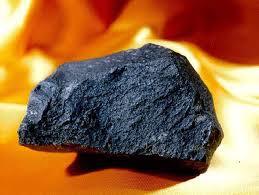
This rock was found near the mouth of a volcano. What type of rock is this?
a)
Sedimentary
b)
Igneous
c)
Metamorphic
21.

When sediments are pressed together tightly, this is called ____________.
a)
Compaction
b)
Cementation
c)
Weathering
d)
Erosion
22.
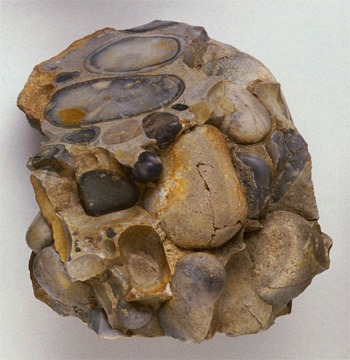
This rock was formed by smaller pieces of rock that settled at the bottom of a lake millions of years ago. What type of rock is this?
a)
Sedimentary
b)
Igneous
c)
Metamorphic
23.

This rock started as lava that cooled and then was heated and put under pressure over time. What type of rock is this?
a)
Sedimentar
b)
Igneous
c)
Metamorphic
24.
The color of a mineral in powder form is called the mineral's
a)
hardness
b)
specific gravity
c)
luster
d)
streak
25.
How light reflects off of a mineral is called the mineral's
a)
luster
b)
streak
c)
cleavage
d)
fracture
26.
Diamond has a hardness of ___ on Mohs Hardness Scale.
a)
1
b)
5
c)
8
d)
10
27.

By definition, a mineral has which of the following characteristic(s)?
a)
definite chemical composition
b)
crystal structure
c)
naturally occuring
d)
all of the above
28.

Which minerals would all scratch apatite?
a)
diamond, topaz, quartz
b)
quartz, calcite, gypsum
c)
fluorite, talc, calcite
d)
diamond, fluorite, corundum
29.

Which mineral would scratch calcite but not scratch apatite?
a)
fluorite
b)
gypsum
c)
talc
d)
topaz
30.

Which mineral is number 6 on the hardness scale?
a)
Conrundum
b)
Topaz
c)
Quartz
d)
Orthoclase
31.

When determining the color of a minerals powder, what tool would you need?
a)
streak plate
b)
hand lens
c)
microscope
d)
triple-beam balance
Reset

