wayground logo

Free Printable Worksheets

Font size

S
M
L
XL
Worksheets

Plant structures and tropisms

Total questions: 20

Worksheet time: 10mins

Name
Class
Date
1.
Tony wanted to see if he could make the roots of a plant grow up instead of down. After several tries, he found that the roots always grew down. Nothing he or his teacher did made the roots grow up. What keeps the roots from growing up?
a)
The roots need water.
b)
Sunlight hits the plants.
c)
Gravity pulls on the roots.
d)
There is plant food in the soil.
2.
What type of tropism response to light? 
a)
Gravitropism
b)
Thigmotropism
c)
Phototropism
d)
Hydrotropism
3.
What type of tropism response to water? 
a)
Hydrotropism
b)
Gravitropism
c)
Thigmotropism
d)
Phototropism
4.
A sunflower turns toward the sun, what type of tropism would this be? 
a)
Hypothyroidism 
b)
Phototropism
c)
Thigmotropism
d)
Gravitropism
5.
What type of tropism response to touch? 
a)
Gravitropism
b)
Phototropism
c)
Thigmotropism
d)
Hydrotropism
6.
The venus fly trap will close if a fly touches two hairs on the leaves. Which of the following Tropism does this show?
a)
Phototropism
b)
Gravitropism
c)
Thigmotropism
d)
Hydrotropism
7.
Small grains that contain a plant's male reproductive cells.
a)
stamen
b)
pollen
c)
anther
d)
stigma
8.
The transfer of pollen, containing the sperm cells, to the female part of the flower. 
a)
seed disperal
b)
pollination 
c)
germination
d)
fertilization
9.

Stomata are made of specialized cells called ______ which surround a tiny pore/opening

a)

stoma

b)

guard cells

c)

dermal cells

d)

diffusion channels

10.

The main function of stomata is to

a)

capture sunlight

b)

protect leaves from insects

c)

allow gases to move rapidly in/out of leaves

d)

release sugars into the atmosphere

11.
what is the function of xylem tissue?
a)
transports water and minerals salt 
b)
control the opening and closing of stoma
c)
carry out photosynthesis
d)
provide support for young plant
12.
What type of vascular tissue is responsible for transporting the sugars made in photosynthesis from the leaves to the roots?
a)
Cuticle
b)
Phloem
c)
Stomata
d)
Xylem
13.
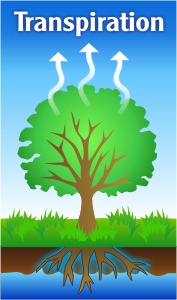
Transpiration is
a)
the movement of water through a plant from the roots up the stem
b)
the loss of water from the leaves of a plant by the process of evaporation
c)
the flow of water into plant roots by osmosis from the soil
d)
the process of minerals and sugars moving through plant veins
14.

What are angiosperms?

a)

Flowering plants

b)

Plants with cones

15.

Which of these parts of a flower are NOT considered the "male" parts?

a)

anther

b)

stamen

c)

pistil

d)

filament

16.

Which of these parts of a flower are NOT "female" parts?

a)

pistil

b)

stamen

c)

stigma

d)

style

17.

Which of these are examples of pollinators?

a)

hummingbird

b)

butterflies

c)

cactus

d)

rocks

e)

bees

18.

How do pollinators contribute to reproduction?

a)

They help plants to reproduce by transporting pollen from one plant to another.

b)

They help plants to reproduce by getting rid of the pollen so it won't contaminate other plants.

c)

They help plants to reproduce by joining the egg with the sperm cell.

19.

Which of these are methods for helping a seed to travel far distances from its parent plant?

a)

the seeds sticking to animal fur

b)

the seeds being stepped on by animals

c)

the seeds being carried by wind

d)

the seeds being eaten and pooped out by animals

e)

the seeds jumping off the plant and rolling away from it

20.

Which is the male reproductive system in a flower?

a)

Carpel

b)

Receptacle

c)

Stamen

d)

Stem