
 Worksheets
Energy, Forces, and Motion Review
Total questions: 30
Worksheet time: 40mins
Which of the following is NOT a difference between speed and velocity?
Velocity includes the direction of the object while speed does not.
Velocity = displacement/time, Speed = distance/time
Speed includes the direction of the object while velocity does not.
How far away and in what direction an object is from its starting position is called the object's
distance
displacement
speed
velocity
The length of the path an object travels between two points is the object's
distance
displacement
speed
velocity

Joey rides his bike from Tree A to House B and stopped at Tree C. What distance did he travel in total for his bike ride?
5 m
7 m
12 m
20 m
Joey rides his bike from Tree A to House B and stopped at Tree C. Tree C is northeast of Tree A. What was Joey's total displacement?
5 m NE
7 m NE
5 m
7 m
It takes a marble 2 seconds to roll a distance of 6 meters across the floor. What is the marble's average speed?
0.33 m/s
2 m/s
3 m/s
12 m/s

Describe the motion of an object given by this Position-time graph.
speeding up
slowing down
constant speed
not moving

Describe the motion of an object given by this Position-time graph.
not moving then moving backward
moving forward then not moving
moving backward then not moving
moving forward then backward

Given the Position-time graph below, which way is the object moving at 3 seconds?
forward
backward
not moving

For the graph of "A student is walking home from school and stops to talk to a friend. While talking, he realizes that he forgot his bike at school and goes back to get it. He then rides his bike home", line 1 matches which motion?
walking home from school
stops to talk to a friend
goes back to school
rides bike home
None of the answers
For the graph of "A student is walking home from school and stops to talk to a friend. While talking, he realizes that he forgot his bike at school and goes back to get it. He then rides his bike home", line 2 matches which motion?
walking home from school
stops to talk to a friend
goes back to school
rides bike home
None of the answers
For the graph of "A student is walking home from school and stops to talk to a friend. While talking, he realizes that he forgot his bike at school and goes back to get it. He then rides his bike home", line 3 matches which motion?
walking home from school
stops to talk to a friend
goes back to school
rides bike home
None of the answers
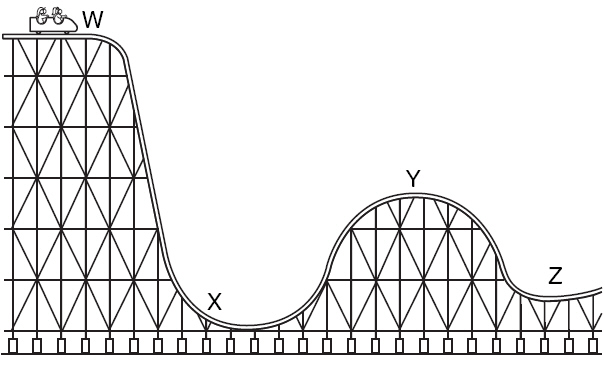

Time, budget, and safety are almost always considered to be ________________.
Trade-offs
Criteria
Constraints
Prototypes
Identified limitations to the design of a product or system are the
1. Prototypes
2. Criteria
3. Constraints
4. Trade-offs
Desired elements and features of a product or project are called...
Criteria
Constraints
Trade off
Research
Problem Statement
"The vehicle needs to be able to move itself" is an example of...
Criteria
Constraints
"We only have certain tools that we can use" is an example of...
Criteria
Constraints

What step does every scientific experiment begin with?
hypothesis
question/problem
procedures
conclusion
What is a hypothesis?
An educated prediction or answer to a testable question
A random guess
An observation based on feelings or emotions

Steve wanted to see if the type of fertilizer made sunflowers grow larger. What should be the controlled variable?
Type of fertilizer
Size of sunflower
Type of sunflower

