

wayground logo

Free Printable Worksheets

Font size

S
M
L
XL
Worksheets

Test 2 Review

Total questions: 53

Worksheet time: 32mins

Name
Class
Date
1.
The top surface of an epithelial tissue
a)
Apical Suface
b)
Basement membrane
2.
Which tissue is this?
a)
Simple Squamous
b)
Stratified Squamous
c)
Simple cuboidal
d)
Pseudostratified columnar
3.
Which tissue is this?
a)
Simple squamous
b)
simple columnar
c)
transitional
d)
simple cuboidal
4.
which tissue is this?
a)
Pseudostratified columnar
b)
Stratified Squamous
c)
Simple Columnar
d)
Transitional
5.
Which type of epithelial tissue would allow oxygen to quickly pass through it?
a)
Simple Squamous
b)
Simple Cuboidal
c)
Simple Columnar
d)
Transitional
6.
Which type of muscle tissue would line the intestines?
a)
Smooth
b)
Cardiac
c)
Skeletal
d)
Transitional
7.
What type of Connective tissue is found at the ends of bones to reduce friction?
a)
Cartilage
b)
Dense connective tissue
c)
Adipose Tissue
d)
Loose connective tissue
8.
What type of tissue SIGNALS the intestines to move food along?
a)
Nervous Tissue
b)
Blood Tissue
c)
Smooth muscle tissue
d)
Skeletal Muscle Tissue
9.
Salivary glands are 
a)
Endocrine Glands
b)
Exocrine Glands
10.
What is the MATRIX of Blood tissue?
a)
Collagen
b)
Calcium and Salts
c)
Plasma
d)
Fat
11.
What type of muscle tissue is VOLUNTARILY controlled
a)
Skeletal Only
b)
Skeletal and Cardiac
c)
Smooth and Cardiac
d)
Cardiac Only
12.
Which type of epithelial tissue stretches and is found in the bladder and other urinary organs?
a)
Transitional
b)
Simple Cuboidal
c)
Stratified Squamous
d)
Stratified Columnar
13.
What  type of connective tissue has a hard matrix of calcium and salts?
a)
Osseous
b)
Adipose
c)
Blood
d)
Dense Connective
14.

What feature found on the surface of this epithelial layer greatly increases the surface area for absorption?

a)

cilia

b)

microvilli

c)

endoplasmic reticulum

d)

multiple nuclei

15.

A single layer of tall, skinny epithelial cells would be best described as

a)

simple cuboidal epithelium

b)

simple columnar epithelium

c)

simple squamous epithelium

d)

stratified columnar epithelium

16.

The principal difference between simple and stratified epithelium is in the number of

a)

Microvilli

b)

Cell layers

c)

Free surfaces

d)

Nuclei per cell

17.

Define tissue with regards to anatomy

a)

Multiple sheets of thin paper used to clean your nose

b)

The smallest structural and functional unit of an organism

c)

A series of different cells in the same area

d)

A group of structurally and functionally related cells that come together to perform common functions
18.
What is the function of epithelial cells?
a)
Act as barriers between the external environment, or between organs and fluidfilled cavities
b)
Provide movement by pulling on bones
c)
Provide secretions which help to digest food
d)
Act as the messaging pathway between different areas of the body
19.
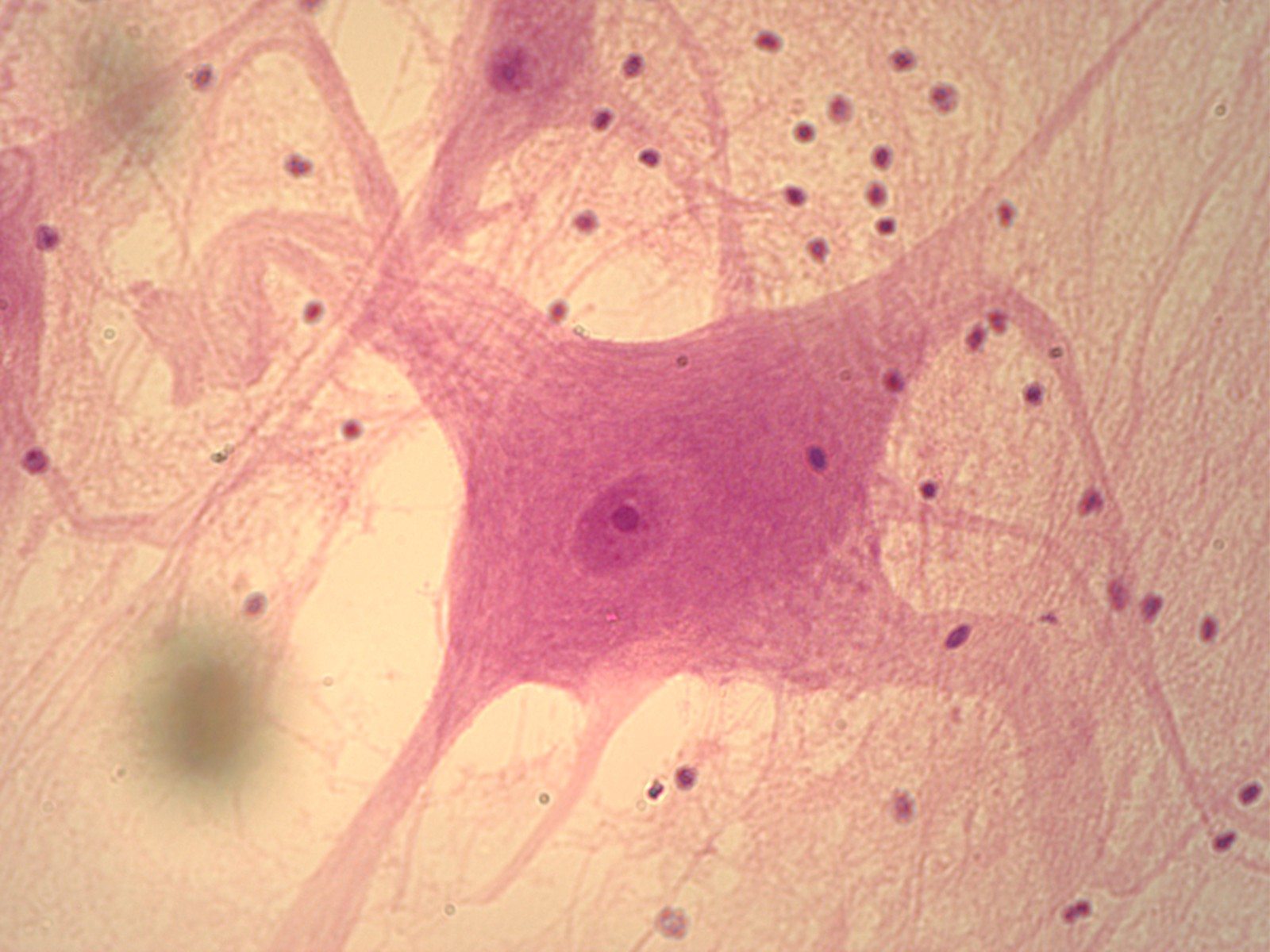
What tissue type is this?
a)
Nervous tissue
b)
Cardiac muscle
c)
Smooth muscle
d)
Connective tissue proper
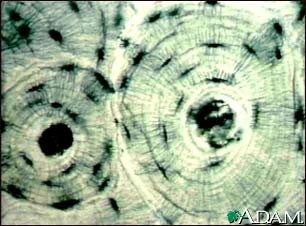
20.
a)
smooth muscle
b)
bone
c)
nerve
d)
blood
21.
What are the four main tissues found in the body?
a)
Epithelial, Connective, Bone, Blood
b)
Muscle, Connective, Blood, Epithelial
c)
Nervous, Muscle, Connective, Epithelial
d)
Nervous, Muscle, Connective, Bone
22.

Collagen is a protein that is particularly abundant in

a)

covering and lining epithelium

b)

dense regular connective tissue

c)

smooth muscle

d)

adipose tissue

23.

the simplest combination of tissues in the body that divides the body regions or organs, lines internal surfaces and anchors organs is a/an

a)

organ

b)

system

c)

membrane

d)

body cavity

24.

Fibers that form a thick protein matting in a dense irregular connective tissue include

a)

collagen fibers

b)

recticular fibers

c)

elastic fibers

d)

cartilage fibers

25.

Chondrocytes secrete an intercellular material that contains thickened ground substance in which type of tissue

a)

compact bone

b)

dense connective tissue

c)

cartilage

d)

skeletal muscle

26.
Name this tissue
a)
Bone
b)
Cartilage
c)
Blood
d)
Adipose
27.
The top layer of the skin is called the _________________.
a)
dermis
b)
oil gland
c)
nerve
d)
epidermis
28.
The oldest cells of the epidermis will be found here
a)
Stratum Corneum
b)
Stratum Basale
c)
Stratum Spinosum
d)
Stratum Granulosum
29.
What layer of epidermis does mitotic division occur?
a)
stratum lucidum
b)
stratum basale
c)
stratum granulosum
d)
stratum corneum
30.
What cell produces the pigment melanin?
a)
Keratinocytes
b)
Melanocytes
c)
Merkel (Tactile) Cells
d)
Langerhans (dendritic) cell
31.
What layer of the skin is avascular?
a)
Dermis
b)
Subcutaneous/Hypodermis
c)
Epidermis
32.
Which vitamin is synthesized by the skin?
a)
A
b)
E
c)
K
d)
D
33.
Fatty tissue found below the dermis is:
a)
papillae
b)
Cortex
c)
Epidermis
d)
subcutaneous tissue
34.
The dermis layer is made up of two layers, which are the:
a)
papillary and reticular
b)
Cortex
c)
dermal and tactile
d)
tactile and reticular
35.
What is the middle layer of the hair called?
a)
Medulla 
b)
Cortex
c)
Cuticle 
d)
Hair shaft 
36.
The part of the hair that reaches the outside surface of the skin is the
a)
Hair follicle
b)
Cortex
c)
Arrector pilli muscle 
d)
Hair root 
37.
The pocket or tube-like depression in the scalp or skin that contains the hair root is the:
a)
cortex
b)
folicle
c)
shaft
d)
dermal
38.
The substance secreted by the sebaceous glands is called:
a)
 sebum
b)
sudoriferous
c)
sulfur
d)
lymph
39.
 The part of the nail plate that extends over the tip of the finger:
a)
cuticle
b)
matrix
c)
nail bed
d)
free edge
40.
The small band of smooth muscle cells that pull hair upright and cause "goose bumps."
a)
arrector pili
b)
follicles
c)
papilla
d)
sebum
41.
What are hair and nails made of?
a)
Keratin
b)
Collagen
c)
Sebum
d)
Melanin
42.
This is moon shaped and is the visible part of your nail root.
a)
Matrix
b)
Lunula
c)
Free Edge
d)
Cuticle 
43.
Which type of burn destroys not only the dermis and epidermis, but also most nerve endings?
a)
1st degree
b)
2nd degree
c)
3rd degree
d)
none of these
44.
Layer of skin ONLY found in areas of thick skin, which are found on the palms of the hands and the soles of the feet.
a)
Cornium
b)
Lucidum
c)
Granulosum
d)
Spinosum 
45.
It is the largest organ of the body.
a)
muscles
b)
brain 
c)
bones
d)
skin
46.
Which of the following function of the skin regulates the temperature of the skin?
a)
thermoregulator
b)
protection
c)
absorption
d)
excretion
47.
which of the following function of the skin refers to the production and discharge of substance in the body such as sebum or oil from oil glands.
a)
secretion
b)
absorption
c)
excretion
d)
protection
48.

Which is NOT an epithelial membrane?

a)

cutaneous membrane

b)

mucous membrane

c)

synovial membrane

d)

serous membrane

49.

Serosa includes what between its layers?

a)

serous fluid

b)

fibroblasts

c)

macrophages

d)

blood

50.

Region in the dermis that is responsible for the fingerprints you possess.

a)

papillary layer

b)

reticular layer

c)

basal layer

d)

projection layer

51.

What is the deepest skin layer that contains blood vessels, sweat glands, and oil glands?

a)

epidermis layer

b)

reticular layer

c)

papillary layer

d)

hypodermis layer

52.

What does "avascular" mean?

a)

high blood supply

b)

no blood supply of its own

c)

high blood pressure

d)

low blood pressure

53.

What do you want to ask or tell the instructor? (she would tell you she wants to give you a high palmar region, stratum lucidum 5 and keep it up!)

4 lines