
 Worksheets
Plants
Total questions: 24
Worksheet time: 25mins
Plants use sunlight to convert carbon dioxide and water into sugar in a process called_________.
Photosynthesis
Respiration
Fertilisation
Pollination
What part of a plant traps sunlight?
seed
root
leaf
stem

Which is a function of the flower?
attract insects and produce seeds for reproduction
to make food through photosynthesis
to be pretty
to absorb nutrients from the soil


What is the main role of photosynthesis?
to make a plant green
to make food for the plant
to produce seed for the plant
to attract insects for pollination

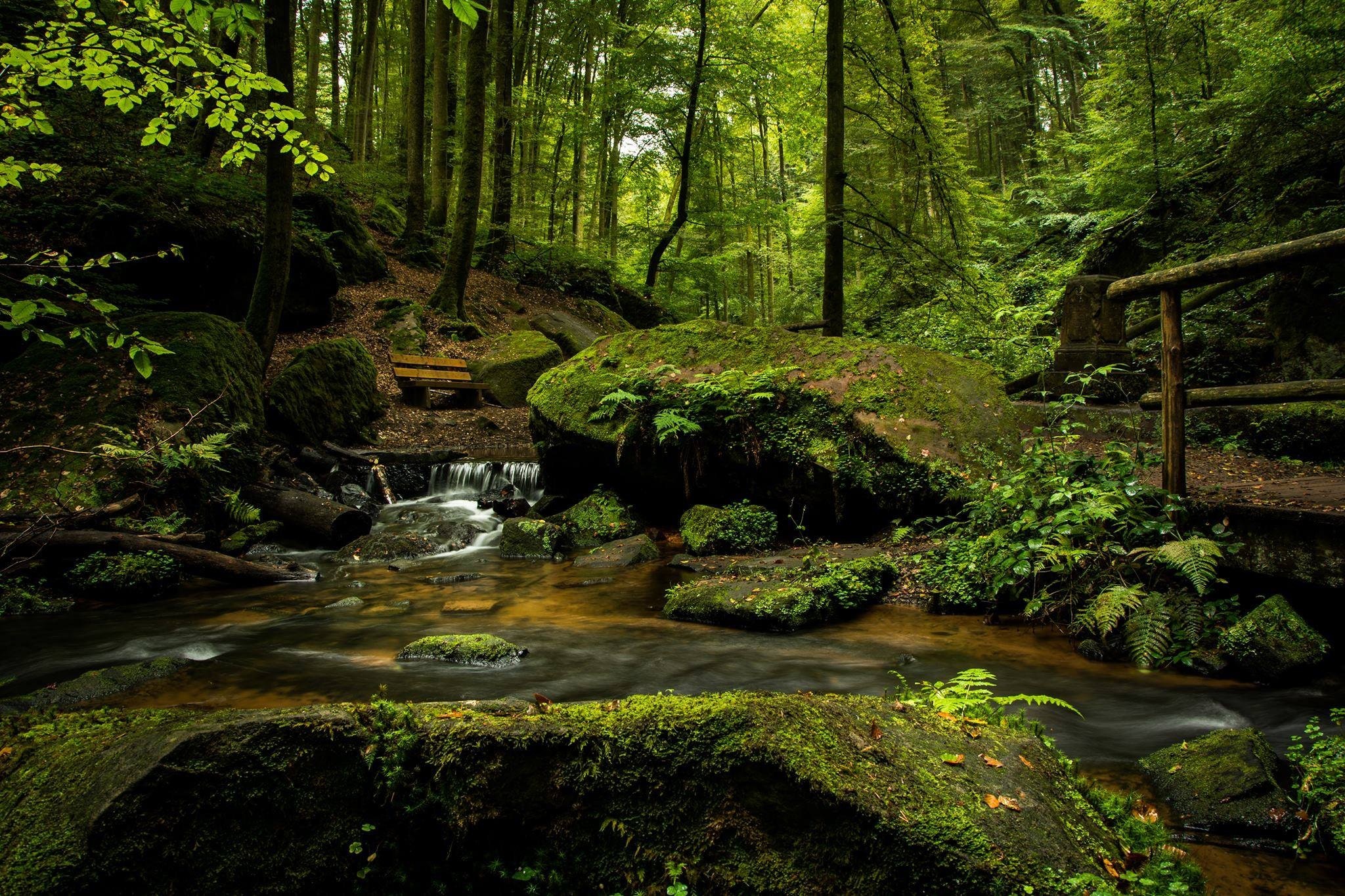
Does the moss in this picture reproduce using seeds?
yes
no

Is a fern classified as a seed or non-seed plant?
seed plant
non-seed plant
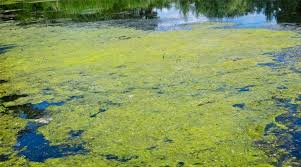
Algea
Flowering
Non Flowering
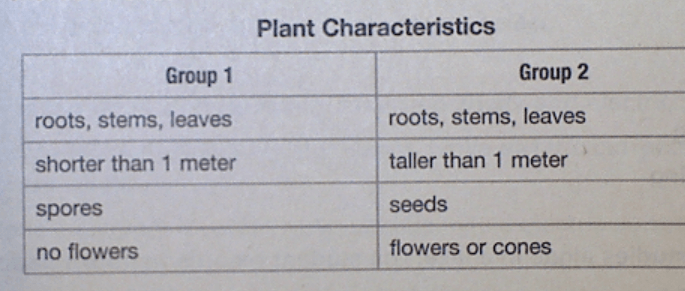
A student researches several plants. She then groups them according to their characteristics.
Which are MOST LIKELY the names of the plant groups.
ferns, trees
mosses, flowering plants
spore producers, seed producers
flowering plants, coniferous plants
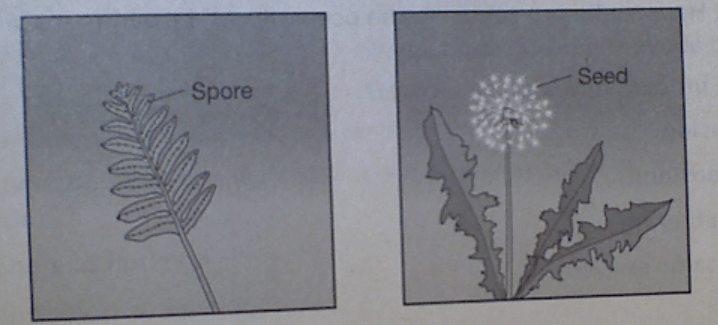
A student draws two plants. How do the plants compare.
Select 3 answers.
They are both coniferous plants.
They both have stems and leaves.
They reproduce in different ways.
They get energy in different ways.
They both use photosynthesis to make food.
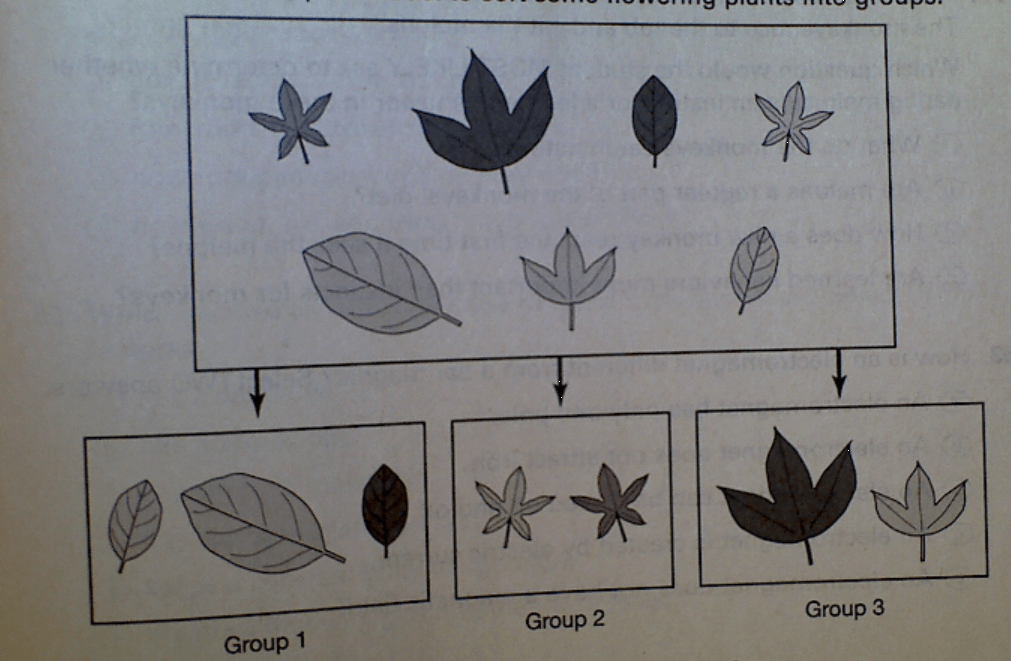
A student develops a model to sort some flowering plants into groups.
How does the student most likely sort the plants?
by leaf size
by leaf shape
by plant height
by whether the plants produce spores or seeds
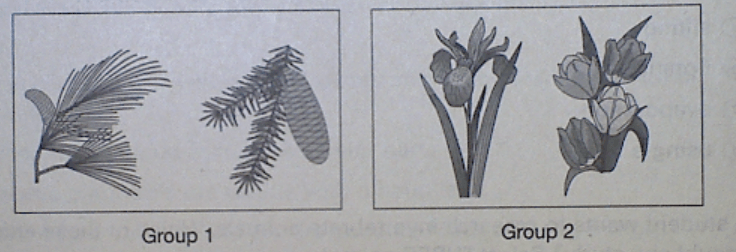
A student researches four plants that are in the same group. He sorts the plants into two smaller groups.
How does the student MOST LIKELY sort the plants?
by seed size
by flower shape
by whether they have cones or flowers
by whether they produce seeds or spores

Using water from the soil, carbon dioxide from the air, and energy from the sun to make food
pollination
respiration
photosynthesis
fertilisation
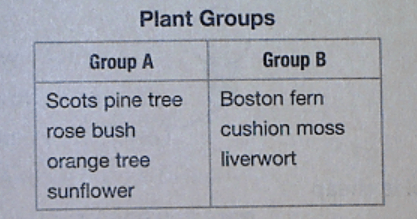
A scientist classifies some plants into two groups.
Which are MOST LIKELY the names of the groups?
trees, ferns
seed producers, spore producers
deciduous trees, coniferous trees
flowering plants, coniferous plants
Does the moss in this picture reproduce using seeds?
yes
no
Scientists classify plants in order to...
Study them more easily
Collect them more easily
Earn more money
Fight insects that damage them more easily


