
NEW
Font size
S
M
L
XL
 Worksheets
Q1 S2: Periodic Trends
Total questions: 16
Worksheet time: 1hrs 20mins
Name
Class
Date
1.
Which element has the largest atomic radii?
a)
H
b)
Na
c)
Li
d)
K
2.
Which element has the largest ionization energy?
a)
C
b)
F
c)
N
d)
O
3.
Which element has the largest electronegativity?
a)
F
b)
Br
c)
Cl
d)
I
4.
When an atom becomes a negatively charged ion, does the radius get bigger or smaller?
a)
Bigger
b)
Smaller
5.
Which atom has the smallest radius?
a)
Se
b)
S
c)
O
d)
Te
6.
Ionization energy is the...
a)
energy needed to remove the outermost electron.
b)
ability of an atom to attract electrons from another atom.
7.
Electronegativity is the...
a)
energy needed to remove the outermost electron.
b)
ability of an atom to attract electrons from another atom.
8.
As you move down a group, atomic radius increases because -
a)
you add more and more neutrons
b)
you add more and more protons
c)
you add more and more shells (energy levels)
d)
you add more atomic mass
9.
As you move across the periodic table from left to right, the atomic radius decreases. This is because -
a)
the number of protons increases, so attraction to electrons increases
b)
the number of energy levels increases
c)
the number of electrons increases
d)
the atomic mass increases
10.

What electron configuration matches an oxygen atom?
a)
1s22s22p63s2, 3p64s23d104p5
b)
1s22s22p4
c)
1s22s22p6
d)
1s22s22p63s23p64s23d1
11.
The electron configuration of an atom is 1s22s22p6. The number of electrons in the atom is
a)
3
b)
6
c)
8
d)
10
12.

Which electron configuration belongs to Chlorine (Cl)?
a)
1s2 2s2 2p6 3s2 3p5
b)
1s2 2s2 2p6 3s2 3p6
c)
1s2 2s2 2p6 3s2 3p7
13.
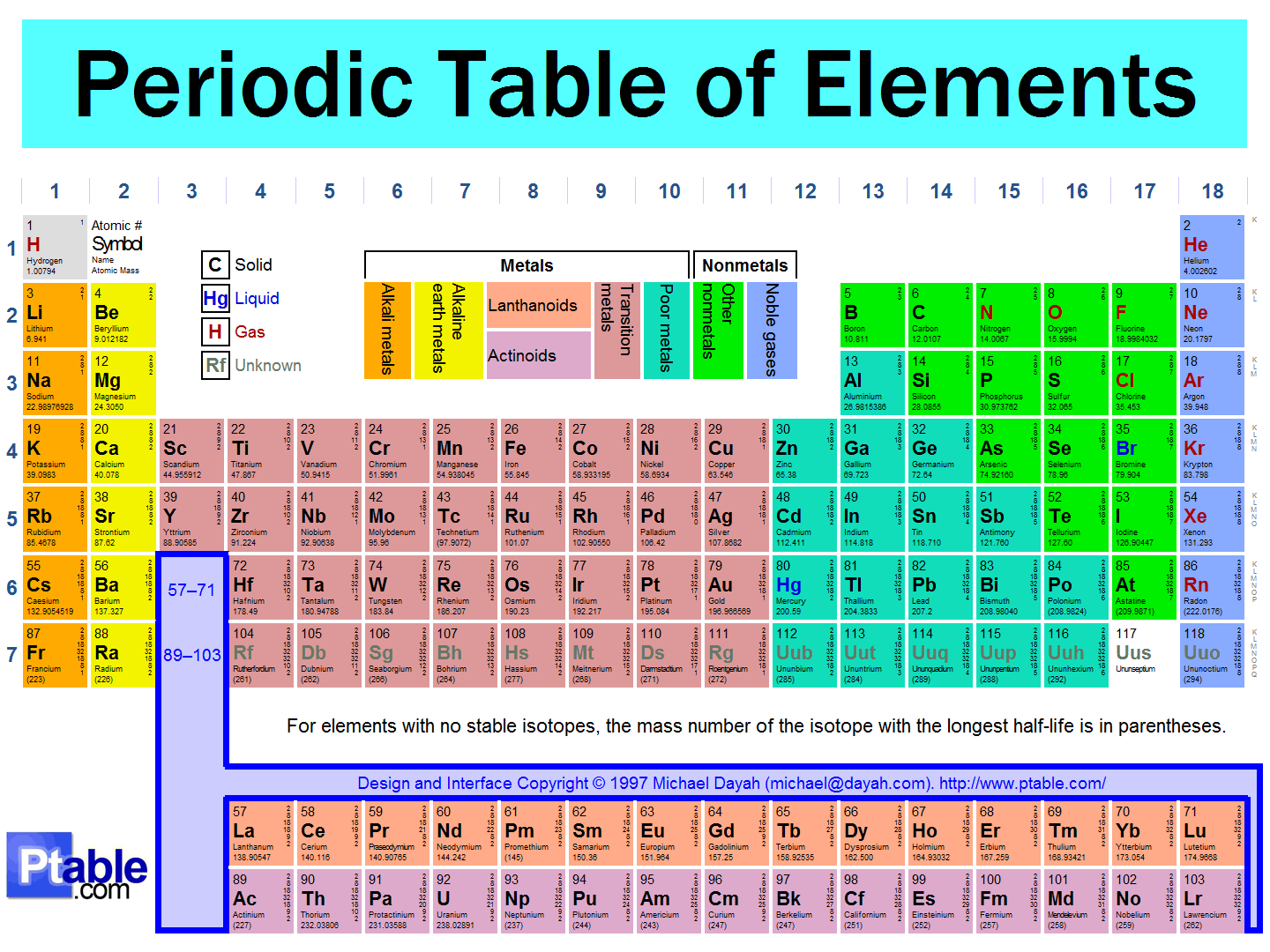
The horizontal row on the periodic table is called a
a)
group
b)
family
c)
period
d)
atomic number
14.
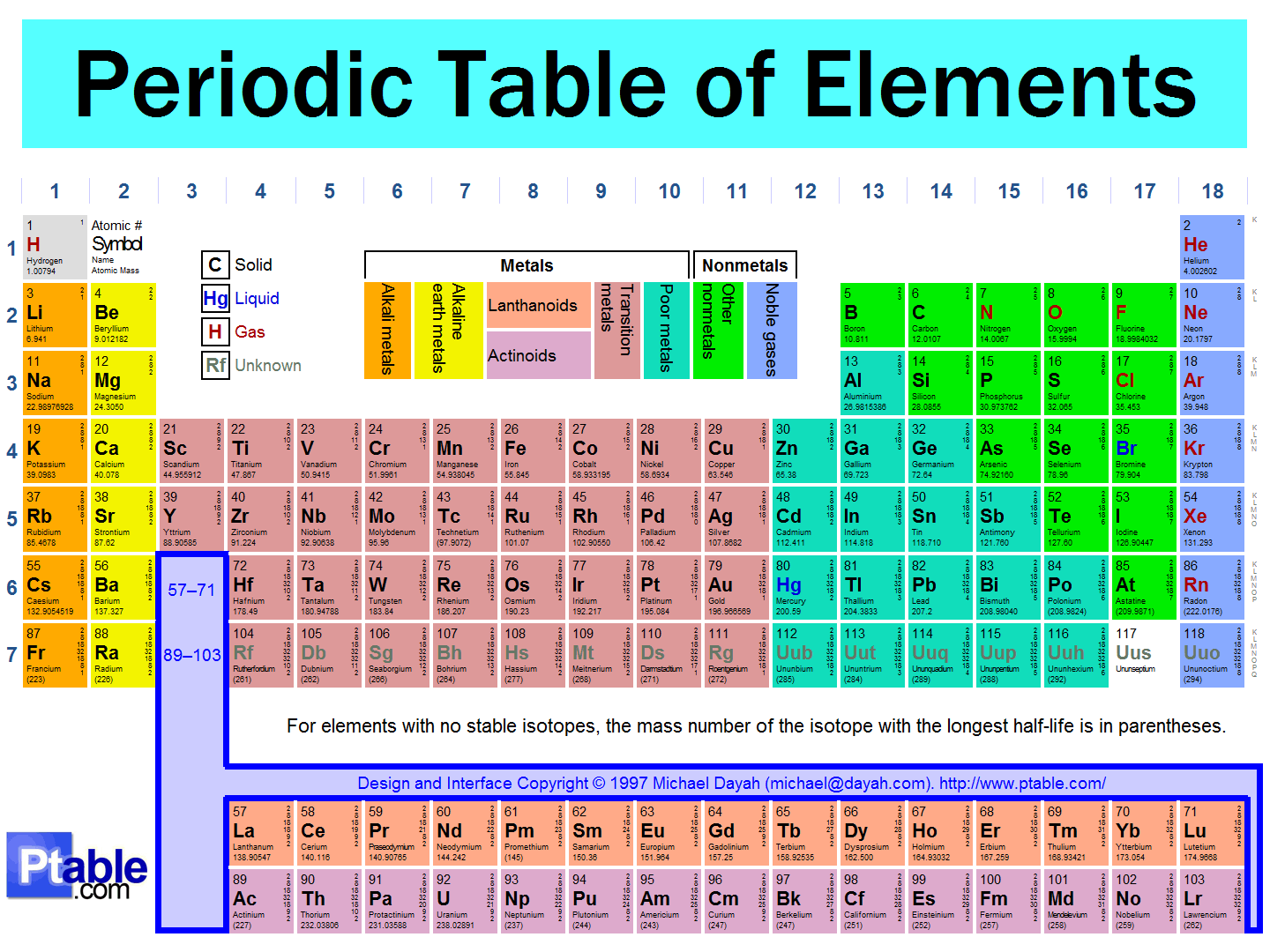
A vertical column is called...
a)
group
b)
tower
c)
period
d)
crew
15.

Most of the elements on the periodic table are classified as _____.
a)
Metals
b)
Nonmetals
c)
Metalloids
d)
Periods
16.
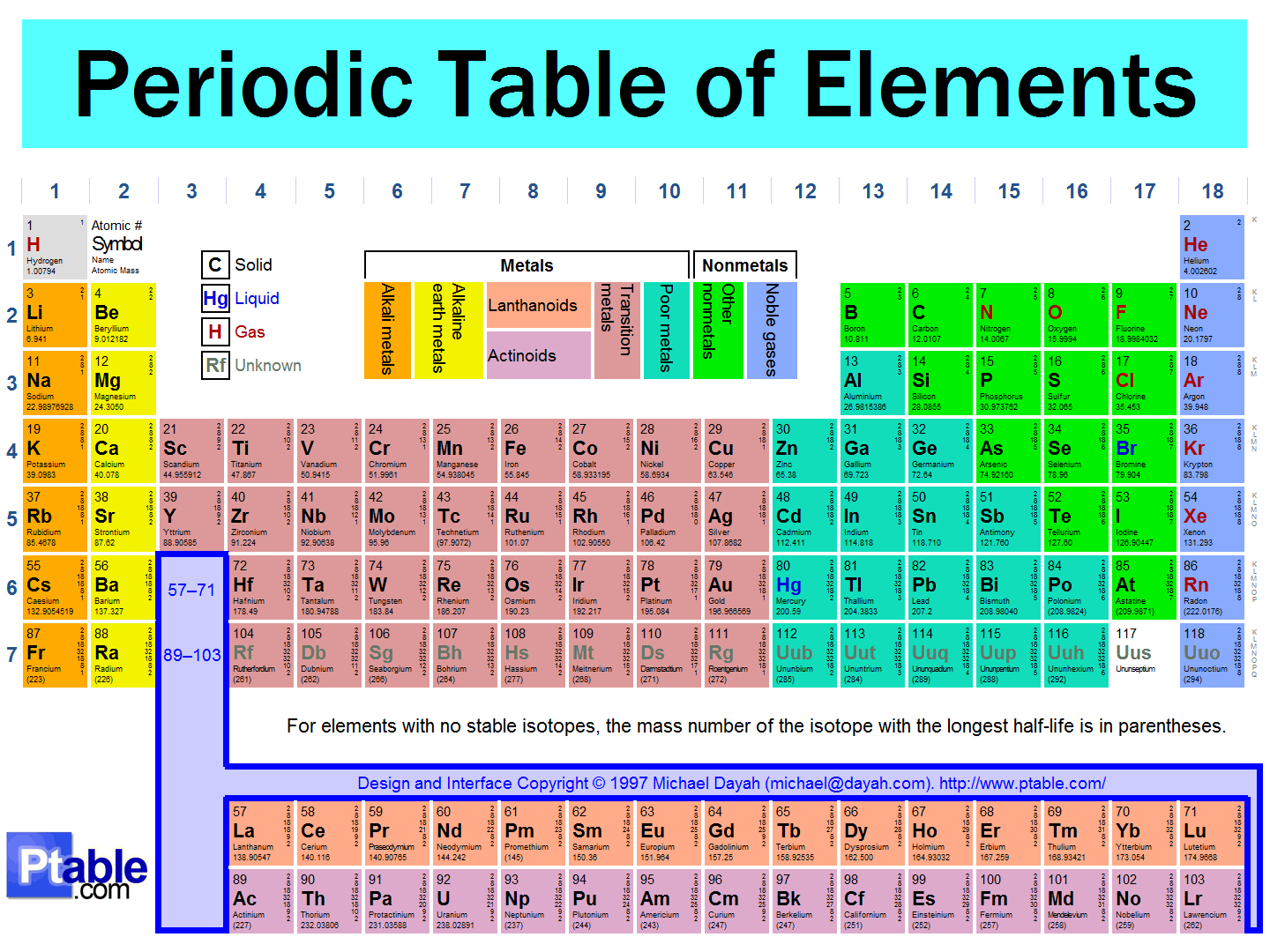
This class of elements are sometimes called "semiconductors."
a)
Metals
b)
Nonmetals
c)
Metalloids
d)
Groups
Reset

