
 Worksheets
2020 WCO Test
Total questions: 35
Worksheet time: 37mins

The Jet Stream is a global pattern of atmospheric movement that influences patterns in local weather. Based on the information provided in the weather map, which city shown will likely see a drop in temperature in the near future?
Albany
Bismarck
Nashville
San Diego
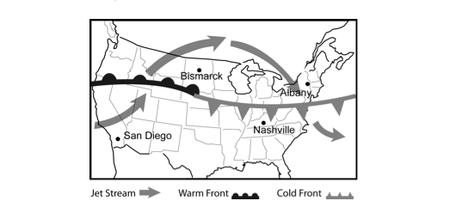
The Jet Stream is a global pattern of atmospheric movement that influences patterns in local weather. Based on the information provided in the weather map, which city shown most recently experienced a drop in temperature?
Albany
Bismarck
Nashville
San Diego

The Jet Stream is a global pattern of atmospheric movement that influences patterns in local weather. Rain and even severe thunderstorms are often associated with the passage of a cold front. Based on this information, and that provided in the weather map, which city shown will most likely experience precipitation in the next few days?
Albany
Bismarck
Nashville
San Diego
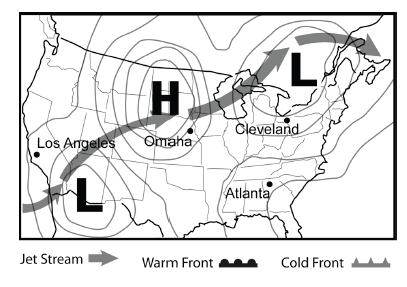
The Jet Stream is a global pattern of atmospheric movement that influences patterns in local weather. In general, one can expect clear skies with a high pressure area and cloudier conditions in areas of low pressure. Based on this information, and that provided in the weather map, which city shown most likely is currently experiencing clouds but will see clearer skies in the near future?
Atlanta
Cleveland
Omaha
Los Angeles

The Jet Stream is a global pattern of atmospheric movement that influences patterns in local weather. Based on the information provided in the weather map, which city shown most recently saw a rise in temperature?
Boise
Denver
Louisville
Shreveport

Which two cities are most likely to experience clear, dry weather?
Seattle & San Francisco
Chicago & Minneapolis
Chicago & Nashville
Dallas & Houston
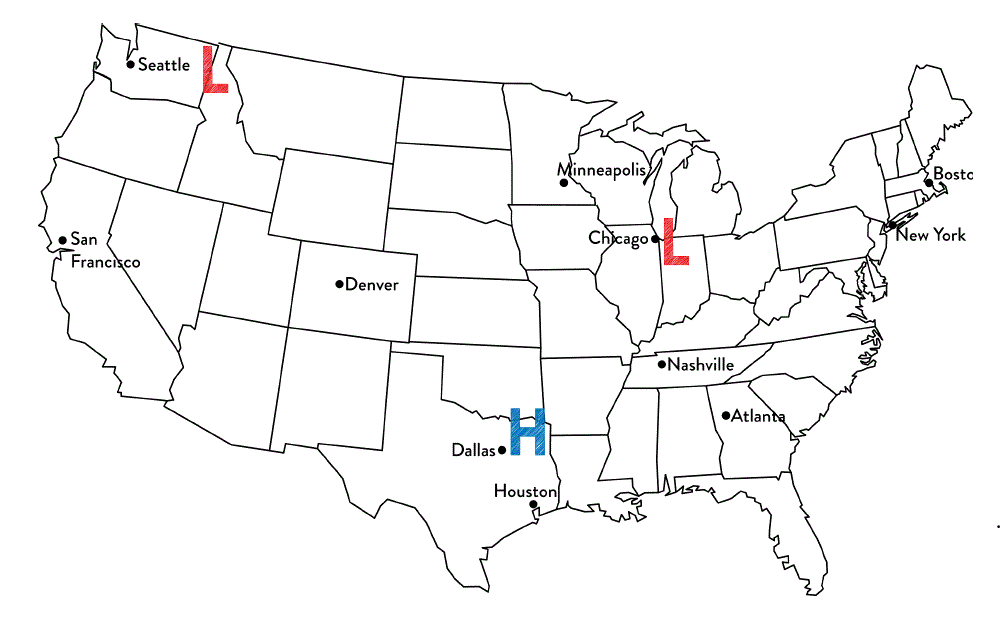
Tim said that Chicago is most likely to experience rainy weather. Jennifer thinks that Dallas is most likely to experience rainy weather.
Which student is correct?
Tim because Chicago is the closest to a low pressure system and it will produce precipitation.
Jennifer because high pressure systems produce precipitation
Both students are correct because all systems produce precipitation
Neither of the students are correct because the cities are not close enough to the system.

When this symbol is present on a weather map, it represents
a cold air mass has taken over a warm air mass
a warm air mass has taken over a cold air mass
a cold air mass and warm air mass meet but neither have enough force to move each other
two cold fronts have collided and a warm air mass is pushing it upwards

What type of weather is generally associated with a low pressure system?
fair-weather, beautiful clear skies
Cloudy skies, some moist air, possible precipitation, stormy weather
cloudy skies, dry air
cloudy with a chance of meatballs

Should the "?" be replaced with an "H" or an "L"?
"L" because the fronts near this location do not create precipitation and low pressure systems bring precipitation.
"L" because the fronts near the location produce precipitation and low pressure systems bring precipitation
"H" because the fronts near this location create precipitation and high pressure systems bring precipitation.
"H" because the fronts near this location create precipitation and high pressure systems do not bring precipitation.

The three diagrams represent three frontal boundaries with the surface locations of the fronts labeled A, B, and C. Arrows indicate direction of air movement. Which table correctly matches each letter with the type of frontal boundary it represents?


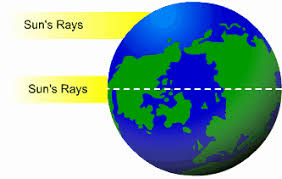
Most differences in air pressure are caused by _______________ heating of the atmosphere.
some
equal
unequal
great

A city near the ocean experiences thunderstorms on a frequent basis. Which of these is the BEST explanation for this?
The cold fronts that only form over coastal areas cause thunderstorms.
The tidal variations in coastal areas causes thunderstorms.
The uneven heating of land and water in coastal areas creates fronts that cause thunderstorms.
The interactions of the waves with the landmass change the air pressure to cause thunderstorms.

In some years there are more hurricanes than usual. This is probably because
the ocean is warmer than usual.
the ozone layer is very thin.
there are more windy days than usual.
the gravitational pull of the Moon is stronger.

As a hurricane moves through warm waters, the water evaporates and the storm intensifies. What is the most likely effect as a hurricane moves inland?
The hurricane gains moisture.
The hurricane gains wind speed.
The hurricane becomes weaker.
The hurricane becomes stronger.

The sun warms a large area of an ocean. This causes a large amount of water to evaporate into the air. Which weather event might occur?
Tornado
Hurricane
Tidal Wave
Freezing rain

When air particles gain energy and rise into the atmosphere, how does this affect the air pressure on the earth's surface?
It causes the air pressure to rise creating high pressure.
It does not affect the air pressure on the earth's surface.
It causes 6th grade students to forget to do their homework.
It causes the air pressure to drop creating low pressure
Which statement correctly defines wind?
The movement of air from areas of low pressure to areas of high pressure
The movement of air to a colder area in the atmosphere.
The movement of air from areas of high pressure to areas of low pressure.
The movement of air pushed around and bouncing off Earth's surface.
What is the initial source for global winds and convection in the atmosphere?
heat from the Earth's core
the rotation of the Earth
Moon's gravity
unequal heating of the Earth by the sun


A narrow belt of high speed winds that blow from west to east, between 7 km and 16 km above Earth’s surface is called
a jet stream
the doldrums
the Coriolis effect
global winds

Which best describes a characteristic of the jet stream?
It forms a boundary between a cold air mass and a warm air mass.
It creates the high winds around the eye of a hurricane.
It forces the hot air along the equator to rise to areas in North
America.
It causes high pressure air masses to rotate clockwise.

Which best explains what type of weather the Gulf Stream usually brings
to North Carolina?
increased wind speed
increased air pressure
increased temperature
increased evaporation

Which best describes the Gulf Stream?
an ocean current which originates near the Gulf of Mexico and causes warm water to travel up the east coast of the United States
an ocean current which originates near the Gulf of Mexico and causes cool water to travel up the east coast of the United States
an ocean current which originates near the Gulf of Mexico and causes warm water to travel down the east coast of Mexico
an ocean current which originates near the Gulf of Mexico and causes cool water to travel down the east coast of Mexico

How does the Gulf Stream impact hurricane development off the coast of the southeastern United States?
Colder water from the Gulf Stream increases the speed and intensity of the hurricane.
Colder water from the Gulf Stream decreases the speed and intensity of the hurricane.
Warmer water from the Gulf Stream increases the speed and intensity of the hurricane.
Warmer water from the Gulf Stream decreases the speed and intensity of the hurricane.
If you were in a plane traveling from west to east, you would get there ________ than if you travel from east to west.
faster
slower
in the same amount of time
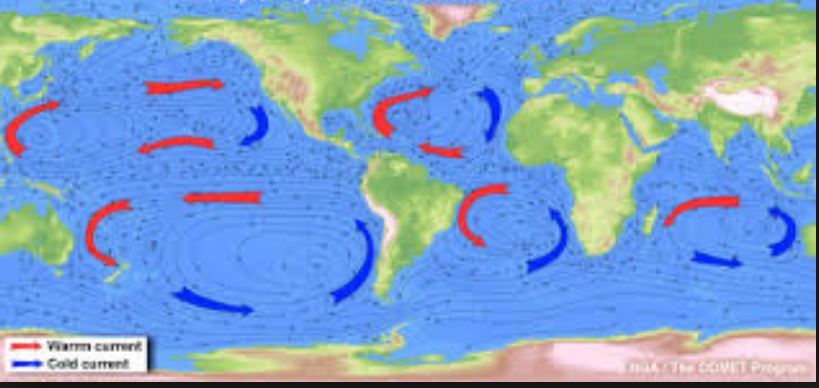

Why is it warmer in Charleston than it is in San Diego even though they are the same distance from the Equator?

