
 Worksheets
EXAM REVIEW FOR GRADE 10
Total questions: 45
Worksheet time: 47mins
Where do most of the active volcanoes located?
Mid-continents
Eastern coastline of the Continents
Equatorial Ocean Floor
Edges of the Tectonic Plates
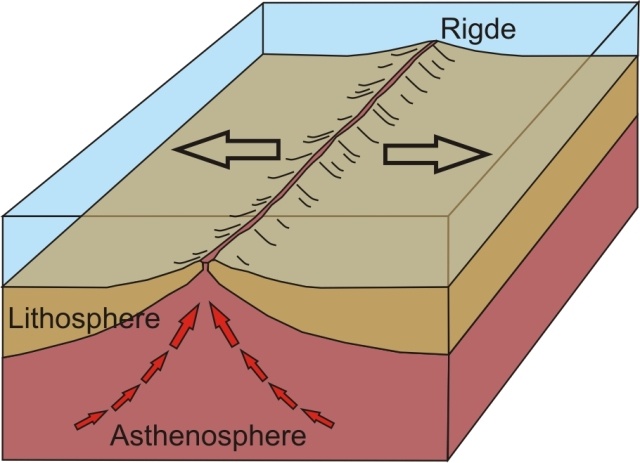
Divergent Plate boundaries forms from the pulling away of plates from each other. When this process happens on land, where is the volcano form?
Rift Valley
Hotspot
Mid -Ocean Ridge
Parallel to the trench
Which of the following theories was proposed by Alfred Wegener?
Continental Drift Theory
Theory of Evolution
Seafloor Spreading
Magnetic Reversals
How is the concept of seafloor spreading being stated?
Seafloor is created at the mid-ocean ridges and destroyed at deep ocean trenches.
Sea level is rising.
The earth is expanding.
Earthquakes occur underwater.
Which type of wave arrives first during an earthquake?
Primary (p-wave) waves
Secondary (s-wave) waves
Rayleigh Waves
Love Waves
Main type of seismic waves that can only travel through the surface of the Earth.
seismic waves
surface waves
body waves
primary waves
This is considered as the fastest kind of seismic waves.
Love waves
Body waves
Primary waves
Secondary waves
It can travel through solids only
Love waves
Rayleigh waves
Primary waves
Secondary waves



Electromagnetic waves vary in
the speed they travel in a vacuum.
wavelength and frequency.
the way they reflect.
the orientation of their electric and magnetic fields.
To calculate the frequency of an electromagnetic wave, you need to know the speed of the wave and its
wavelength.
intensity.
refraction.
amplitude.
Light acts like
a wave.
a particle.
Both a wave and a particle
neither a wave nor a particle.
Infrared rays have a shorter wavelength than
Ultraviolet ray.
X-rays.
radar waves.
gamma rays
The full range of frequencies of electromagnetic radiation is called
visible light.
radio waves.
the electromagnetic spectrum.
invisible radiation.
The waves with the longest wavelengths in the electromagnetic spectrum are
Infrared rays.
radio waves
gamma rays
X-rays
The visible light spectrum ranges between
radar waves and X-rays.
television waves and infrared rays.
infrared rays and ultraviolet rays.
ultraviolet rays and gamma rays.
Newton’s prism experiments showed that white sunlight is made up of
the full electromagnetic spectrum.
only blue light.
all the colors of the visible spectrum.
only the longest wavelengths.


It is a type of wave which can transfer energy through a vacuum.
Electromagnetic
Mechanical
Sound
Water
Which of the following shows increasing energy of electromagnetic waves?
Gamma Rays, X-rays, Ultraviolet, Visible Light, Infrared, Microwave and Radio wave.
Gamma rays, Ultraviolet, X-rays, Visible light, Infrared, Microwave and Radio wave
Radio wave, Microwave, Infrared, Visible light, Ultraviolet, X-rays and Gamma rays.
Radio wave, Microwave, Infrared, Visible light, X-rays, Ultraviolet and Gamma rays
How are the types of waves arranged on the Electromagnetic Spectrum?
Alphabetically arranged
Increasing frequency
Decreasing frequency
Number of atoms
In the visible spectrum, which color has the longest wavelength?
Blue
Green
Red
Violet


The place where an earthquake originates inside the Earth's surface is called...
Epicenter
Focus
Underground
Crust

The place on the Earth's surface, above the origin of the earthquake.
Epicenter
Focus
Surface
Crust

Which wave is the most destructive and travels on the surface?
Secondary Wave
Primary Wave
Long Wave
5. Which type of wave travels the fastest?
Primary Wave
Secondary Wave
Long Wave
This is created by earthquakes that occur on the ocean floor.
longshore current
gulf stream
tsunamis
high tide

How do scientists know that the outer core is a liquid?
P waves do not travel through the outer core but S waves do.
S waves do not travel through the outer core but P waves do.
P waves and S waves do not travel through the outer core.
P waves and S waves travel through the outer core.

