wayground logo

Free Printable Worksheets

Font size

S
M
L
XL
Worksheets

Chapter 2 Test

Total questions: 52

Worksheet time: 39mins

Name
Class
Date
1.
Early man migrated from what area to populate the world?
a)
Africa
b)
Europe
c)
Asia
d)
Ameria
2.
The very first tools for Paleolithic man were?
a)
Shovels
b)
Plows
c)
Bones
d)
Sticks & Rocks
3.
What made the Neolithic Age different from the Paleolithic Age?
a)
Settled communities
b)
Increased Agriculture
c)
Pottery & Weaving skills
d)
All of the above
4.

The Earliest Humans lived by?

a)

Farming

b)

Hunting & Gathering

c)

Cooking Rice

d)

Making Soup

5.
By studying cave art, archaeologists determine - 
a)
How people lived
b)
Interpret written records
c)
Understand spoken language
d)
Study farming techniques
6.
What development enabled man to live as farmers?
a)
Warm clothing
b)
Domestication of plants & animals
c)
Pottery
d)
Wheel
7.
Scientists that study artifacts and past cultures are known as -
a)
Archaeologist
b)
Anthropologists
c)
Paleontologists
d)
Sociologists
8.
To adapt an animal to living with humans for the advantage of humans (tame)
a)
era
b)
technology
c)
domestication
d)
species
9.
Paleolithic Era is also known as the
a)
Old Stone Age
b)
New Stone Age
c)
Middle Stone Age
d)
Flintstone Age
10.
Neolithic Era is also known as
a)
Old Stone Age
b)
New Stone Age
c)
Middle Stone Age
d)
Flintstone Age
11.
What revolutionary change took place during the Neolithic Age?
a)
swimming
b)
using stone tools
c)
hibernation
d)
farming/agriculture
12.
As the weather grew colder, man made clothing out of ___________________ to stay warm.
a)
leaves
b)
animal skins
c)
cotton material
d)
different plants
13.
Something that helps a person perform or accomplish a task to help them survive is considered ...
a)
Device
b)
Technology
c)
Hand tools
d)
Stones
14.
As a result of constant food supply (domesticated plants and animals), the size of Neolithic populations ...
a)
Increased
b)
Decreased
c)
Stayed the same
d)
Disappeared
15.
Which best describes the nomadic lifestyle of the Paleolithic people?
a)
They lived in large villages, where they raised crops and livestock.
b)
They migrated from place to place
c)
They stayed in one place, living in caves and under rock shelters
d)
They lived in small villages and farmed the land
16.
How did the Paleolithic people explain their stories?
a)
Wrote a book
b)
Wrote in the dirt
c)
Wrote on cave walls
d)
Used sign language 
17.
A group of people who live with each other and share the same ways of living
a)
Technology
b)
Society
c)
Neolithic Era
d)
Community
18.
Which of these was not a use of domesticated animals in the Neolithic Era?
a)
Wool for cloth
b)
Milk
c)
Animal skins for clothing
d)
Food
19.

Who is the anthropologist that found a skeleton of a new species of Australopithecus that he named Lucy?

a)

Donald Johanson

b)

Tim White

c)

Louis Leakey and Richard Leakey

d)

Mary Leakey

20.

Describe the features and traits of Homo Erectus

a)

They are some of the oldest bones dating to 4.4 million years.

b)

They walked fully upright and the name means upright human.

c)

The name means wise human.

d)

They migrated to North and South America.

21.

Homo sapiens were the most advanced that is why they were named __________ humans.

a)

Upright

b)

Southern

c)

Noble

d)

Wise

22.

What word means "to move"?

a)

land bridge

b)

migrate

c)

develop

d)

distribute

23.

What is a period of freezing cold weather that ended 10,000 years ago?

a)

Neolithic age

b)

ice ages

c)

Paleolithic age

d)

Mesolithic age

24.

This is known to be the most important human discovery.

a)

waffles

b)

gold

c)

farming

d)

hunting and gathering

25.

Which term refers to the transition (change) of human societies from nomadic/ hunting and gathering to farming?

a)

Paleolithic Revolution

b)

Agricultural Revolution

c)

Industrial Revolution

d)

Neolithic Revolution

26.
Which statement best explains the greatest effect the emergence of agriculture had on early societies?
a)
The population steadily decreased.
b)
People were not able to specialize in just one trade. 
c)
Agriculture made it harder to find food. 
d)
The population steadily increased. 
27.
Scientists believe that the earliest humans evolved in and migrated from which continent? 
a)
Europe 
b)
North America 
c)
Asia 
d)
Africa 
28.
What was the most common reason in which ancient people chose to migrate, or move from place to place?
a)
They needed to find employment and an income
b)
To find resources such as food and shelter
c)
To explore the world.
d)
They needed to find better transportation.
29.

The land bridge theory says humans arrived in North America from what continent?

a)

Asia

b)

Africa

c)

South America

30.
Which continent was the LAST to be inhabited (lived in) by humans?
a)
Asia
b)
Africa
c)
South America
d)
Europe
31.

Where did early humans first begin to settle?

a)

Mountains

b)

Valleys

c)

Plains

d)

Rivers

32.
The period of time before written history is known as
a)
B.C.
b)
ancient history
c)
prehistory
d)
B.C.E.
33.
The eras of the Stone Age occurred in which order? (from earliest to latest)
a)
Mesolithic -> Paleolithic -> Neolithic
b)
Neolithic -> Mesolithic -> Paleolithic
c)
Paleolithic -> Neolithic -> Mesolithic
d)
Paleolithic -> Mesolithic -> Neolithic
34.

What is Paleolithic ?

a)

The New Stone Age between 8000 and 5000 B.C.E.; period in which adaptation of sedentary agriculture occurred; domestication of plants and animals accomplished

b)

The Old Stone Age ending in 12,000 B.C.E.; typified by use of evolving stone tools and hunting and gathering for subsistence

35.

A period of time where humans invented and primarily used stone tools

a)
Stone Age
b)
Iron Age
c)
Bronze Age
d)
Neolithic Age
36.
What species of hominid are we?
a)
Homo Sapien
b)
Homo Neanderthalensis
c)
Sahalenthropis Tchadensis
d)
Homo Erectus
37.
True for false: "There are many different hominid species alive today."
a)
True
b)
False
38.
Which continent is in the Northern Hemisphere?
a)
Africa
b)
Antarctica
c)
Australia
d)
Europe
39.
Which continent is in the Southern Hemisphere?
a)
North America
b)
Europe
c)
Australia
d)
Asia
40.
Which continent is in the Western Hemisphere?
a)
North America
b)
Europe
c)
Australia
d)
Asia
41.
Which continent is in the Eastern Hemisphere?
a)
North America
b)
South America
c)
Antarctica
d)
Asia
42.
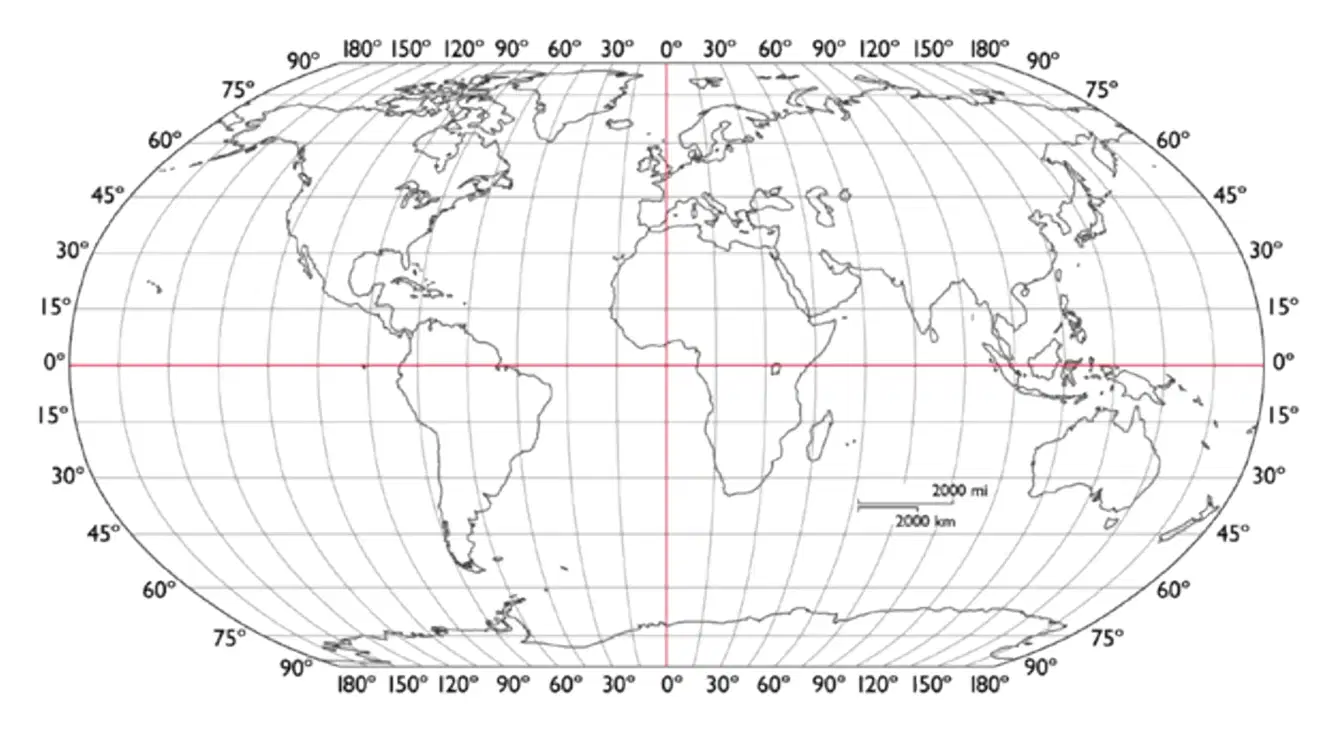
Which ocean is at 45°N  45°W ?
a)
Atlantic
b)
Pacific
c)
Indian
d)
Zabel
43.
Which ocean is at 0°  75°E ?
a)
Atlantic
b)
Pacific
c)
Indian
d)
Zabel
44.
Which continent at is 45°N 105°W ?
a)
North America
b)
South America
c)
Asia
d)
Australia
45.
Which continent at is 30°S 60°W ?
a)
North America
b)
South America
c)
Asia
d)
Australia
46.

Which continent at is 50°N 15°E ?

a)

Europe

b)

Africa

c)

Antarctica

d)

North Pole

47.

Which feature of the grid system is identified on the map in RED?

a)

The equator

b)

The prime meridian

c)

The southern hemisphere

d)

The eastern hemisphere

48.

Which feature of the grid system is identified on the map in YELLOW?

a)

The equator

b)

The prime meridian

c)

The southern hemisphere

d)

The eastern hemisphere

49.

Location H is located at which coordinates?

a)

60oN, 120oE

b)

90oN, 30oE

c)

10oS, 40oW

d)

30oN, 90oE

50.

Location E is located at which coordinates?

a)

30oS, 30oE

b)

30oS, 30oW

c)

10oS, 40oW

d)

30oN, 90oE

51.
What country occurs at approximately N 15E 1200
a)
The Phillipines
b)
Zaire
c)
Ireland
d)
New Zealand
52.
What is the approximate location of letter B?
a)
80oN, 0o
b)
0o, 80oW
c)
80oS, 0o
d)
0o, 80oE