wayground logo

Free Printable Worksheets

Font size

S
M
L
XL
Worksheets

Physical properties and physical change

Total questions: 30

Worksheet time: 11mins

Name
Class
Date
1.

Which of the following is NOT an example of matter?

a)

sun

b)

air

c)

snow

d)

light

2.
Which of the following is an example of MATTER?
a)
light
b)
air
c)
gravity
d)
sound
3.
Which box has a higher density?  
a)
Box A
b)
Box B
c)
cannot be determined
d)
they are the same
4.
What is the definition of Solid
a)
definite shape and size
b)
the ability of a substance to dissolve in another substance, such as sugar dissolving in water
c)
a type of mixture in which the particles of one or more substances are dissolved (uniformly dispersed throughout) in another substance
d)
the forms matter can take, such as solid, liquid, and gas; sometimes called phases of matter
e)
energy related to the temperature of an object or a substance
5.
What is the definition of Melting / freezing point
a)
the temperature at which a substance changes from a liquid to a solid or a solid to a liquid by the loss or addition of heat; for water this temperature is 0°C
b)
the decimal measuring system based on the meter, liter, and gram as units of length, volume (capacity), and weight or mass
c)
a combination of two or more substances that can be easily separated in some physical way
d)
properties of matter that can be observed, measured, or changed without changing the matter itself
e)
floating or sinking when compared to water
6.
Which physical property will change if you visit the moon?
a)
mass
b)
volume
c)
density
d)
weight
7.
Why is the volume of a liquid easy to measure?
a)
you can pour it
b)
it takes the shape of the container
c)
no one really knows
d)
it will evaporate
8.
What is calculated by multiplying
 l x w x h?
a)
mass
b)
weight
c)
volume
d)
grades
9.
What is the volume of Object X?
a)
10.0 cm3
b)
15.0 cm3
c)
20.0 cm3
d)
25.0 cm3
10.
Which units of measurement are used for volume?
a)
grams
b)
centimeters
c)
grams/milliliter
d)
milliliter
11.

Which statement describes the components of a mixture?

a)

Each component gains new properties.

b)

Each component loses its original properties

c)

The proportions of components can vary.

d)

The proportion of components cannot vary

12.

What is represented by the chemical formula PbCl2?

a)

pure substance

b)

solution

c)

homogeneous mixture

d)

heterogeneous mixture

13.
Shanna and Ryan were comparing two brands of motor oil. They put a drop of each brand on one end of a glass slide and then tipped the slide. They measured how long it took each drop to reach the bottom of the slide. What were they testing?
a)
physical property
b)
chemical property
c)
physical change 
d)
chemical change
14.
One cup of water is left outside for two days when it was checked there was only half a cup left. What happened?
a)
evaporation; chemical change
b)
condensation; physical change 
c)
evaporation; physical change
d)
condensation; chemical change
15.
Which of the following is NOT an example of a physical change?
a)
crumpled paper
b)
pencil sharpening
c)
shrunken clothing
d)
sour milk
16.
In each investigation scientists combined 2 liquids under a vent hood & recorded their observations. In which investigation is a chemical change least likely?
a)
1
b)
2
c)
3
d)
4
17.

Which statement describes a chemical property of water?

a)

The melting point of water is 0°C.

b)

Water will dissolve sodium chloride, or table salt.

c)

Water forms beads on a waxy surface.

d)

a. Under the proper conditions, water will break apart into hydrogen and oxygen gas.

18.

What are sublimation and decomposition?Choose all that apply!

a)

A subconscious suggestion and rotting

b)

Chemical changes in matter that bypass the liquid state

c)

Physical changes in matter that are solid to gas and gas to solid bypassing the liquid state

d)

Physical changes in matter that happen in subzero temperatures that can happen in your freezer and other very cold places.

19.

Intensive properties are

a)

properties that become amplified

b)

properties that focus internally on a substance

c)

properties that directly measure a substance

d)

properties that do not change because of mass

20.

What is one difference between physical and intensive properties?

a)

Physical: Texture, Luster and conductivity

Intensive: Boiling point, Melting point, and pressure

b)

Physical: radioactivity, pressure, and melting point

Intensive: electrical conductivity, color, and mass

c)

Physical: texture, color, and name

Intensive: density, pressure, and luster

d)

physical: mass, volume, temperature

Intensive: rhythm, toxicity, and foundation

21.

Which instrument is used to measure an intensive property?

a)
b)
c)
d)
22.

You have a large pot of water boiling at 1000C and a cup of water boiling at 1000C. Which one has more energy?

a)

a large pot with an intensive property

b)

a cup with an intensive property

c)

both are the same with an intensive property

d)

a large pot with an extensive property

e)

a cup with an extensive property

23.

What does it mean for a material to be ductile?

a)

can be hit with a mallet and not be broken

b)

can be easily bent

c)

can be drawn out into a wire

d)

shrinks when wet

24.

What happens to the atoms of a substance in a physical change?

a)

Atoms get bigger

b)

Atoms change their arrangement and motion

c)

Atoms get smaller

d)

Atoms bond together differently

25.

Which of the following is an intensive property of matter?

a)

volume

b)

mass

c)

energy content

d)

density

26.

The taste of each substance is an example of what type of property?

a)

Physical/Intensive

b)

Physical/Extensive

c)

Chemical/Intensive

d)

Chemical/Extensive

27.

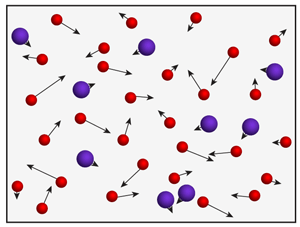
A balloon filled with only helium gas, H2. The balloon contains a _____.

a)

Homogeneous mixture

b)

Heterogeneous mixture

c)

Pure substance

d)

Solution

28.

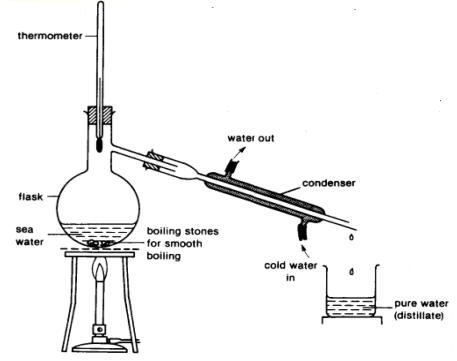
What is the name of this separation technique?

a)

Simple distillation

b)

Fractional distillation

c)

Boiling

d)

Evaporation

29.

What is the physical property on which fractional distillation depends?

a)

different boiling points

b)

different melting points

c)

different solubilities

d)

different densities

30.
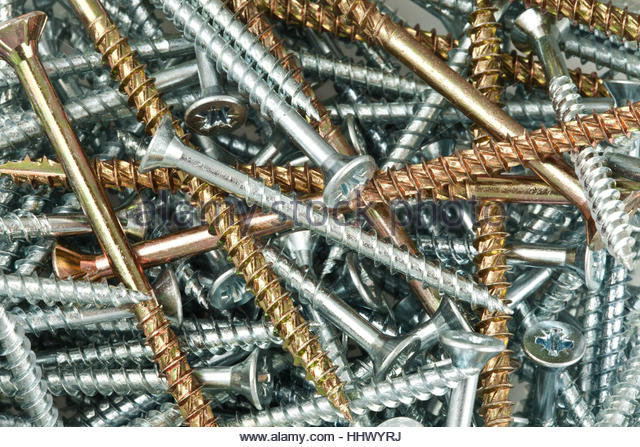
Iron and copper screws could be separated using a magnet because
a)
iron is magnetic, copper is not
b)
copper is magnetic, iron is not
c)
neither metal is magnetic
d)
copper screws are heavier than iron and fall off the magnet