Wayground logo

Free Printable Worksheets

Font size

S
M
L
XL
Worksheets

Science Form 2_Chap 2 Ecosystem

Total questions: 35

Worksheet time: 18mins

Name
Class
Date
1.

Look at the diagram of the food web. The arrows means “eaten by.”


What will happen if the number of snakes goes down?

a)

The owl will eat the grass

b)

The number of frogs will go down

c)

The hawk and owl will have less food

d)

The number of mice and grasshoppers will go up.

2.

The transfer of energy from one organism to the next in an ecosystem begins with a producer. A producer is an organism that produces its own food. A consumer is an organism in a food chain that obtains energy from producers or other consumers; consumers may be herbivores or carnivores.


Which food chain correctly describes the flow of energy in an ecosystem?

a)

grass → grasshopper → fish → human

b)

grasshopper → fish → human

c)

human → fish → grasshopper

d)

human → grasshopper → fish → grass

3.

What happens to the amount of available energy in the pyramid as it moves up through the different levels?

a)

it increases

b)

it decreases

c)

it remains the same

d)

it decreases, then increases

4.
An organism that can make its own food is called?
a)
Consumer
b)
Producer
c)
Decomposer
d)
Herbivore
5.
All food chains begin with a ____________.
a)
primary consumer
b)
secondary consumer
c)
producers
d)
scavengers
6.
A consumer gets energy by doing what?
a)
Making it themselves.
b)
Breaking down biotic wastes and dead organisms and returning raw materials to the ecosystem.
c)
Soaking it up from the ground.
d)
Feeding on other organisms.
7.
An organism that lives by breaking apart dead organic matter into simpler parts is...
a)
scavenger
b)
consumer
c)
decomposer
d)
carnivore
8.
An animal that eats other animals is a....
a)
carnivore
b)
omnivore
c)
herbivore
d)
decomposer
9.

In any food web, the organisms that are responsible for converting raw energy into usable chemical energy are collectively called ________ while organisms that recycle the nutrients trapped in dead organisms are collectively called ________.

a)

producers;consumers

b)

producers; decomposers

c)

heterotrophs; consumers

d)

heterotrophs;autotrophs

10.
This is the branch of biology that deals with the relations of organisms to one another and to their physical surroundings.
a)
Physics
b)
Ecology
c)
Chemistry
d)
Psychology
11.
When a plant is eaten by a grasshopper, the grasshopper is called
a)
Producer
b)
Primary consumer
c)
Secondary consumer
d)
Tertiary consumer
12.
When a plant is eaten by a caterpillar and the caterpillar is eaten by a frog, the frog belongs to
a)
Producer
b)
Primary consumer
c)
Secondary consumer
d)
Tertiary consumer
13.
When a plant is eaten by a caterpillar and the caterpillar is eaten by a frog, and the frog is eaten by a snake, the snake belongs to
a)
Producer
b)
Primary consumer
c)
Secondary consumer
d)
Tertiary consumer
14.
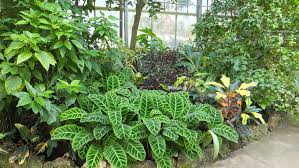
What does the picture show?
a)
A Food Web
b)
An Ecosystem
c)
A Food Chain
d)
A nice scenery
15.

Which symbiotic relationship is when one organism benefits and the other is not impacted (positively or negatively)?

a)

Predation

b)

Mutualism

c)

Commensalism

d)

Parasitism

16.
The place where an organism lives is its _________.
a)
habitat
b)
abiotic
c)
ecosystem
d)
community
17.
All of the nonliving parts of an ecosystem are _______.
a)
biography
b)
biotic
c)
abiotic
d)
biology
18.
All of the living and nonliving things in an area that interact with each other are called a/an ______.
a)
community
b)
habitat
c)
population
d)
ecosystem
19.
A group of bunnies living in the forest is an example of a __________.
a)
Population
b)
Ecosystem
c)
Individual
d)
Community
20.
A bird hitches a free, safe ride on the back of a grey elephant. The elephant doesn't seem to mind and barely notices the bird. Which type of relationship is this?
a)
mutualism
b)
commensalism
c)
parasitism
21.
A relationship where one organism benefits and one organism is harmed is called __________.
a)
mutualism
b)
commensalism
c)
parasitism
22.
A relationship where both organisms benefit is called __________.
a)
mutualism
b)
commensalism
c)
parasitism
23.
________ are consumers that eat plants and meat.
a)
Herbivore
b)
Omnivore
c)
Carnivore
24.
Which of the following food chains shows the correct energy flow from left to right. 
a)
rabbit--owl--grass
b)
grass--rabbit--owl
c)
owl--rabbit--grass
d)
grass--owl--rabbit
25.
Which of the following would have a negative impact on an ecosystem
a)
constructing highways
b)
planting trees
c)
recycling paper
26.
In the energy pyramid here, which organisms have the most energy available?
a)
Producers
b)
Carnivores
c)
Herbivores
d)
Top Predator
27.
Hawks and owls eat the same thing. That relationship is called ___________.
a)
adaptation
b)
competition
c)
parasitism
d)
mutualism
28.
The relationship between a clown fish and a sea anemone is ______.
a)
predatory
b)
parasitic
c)
mutualistic
d)
commensalistic
29.
The direction of the arrows in a food web show _______.
a)
parasitic relationships
b)
symbiosis
c)
energy flow
d)
predator and prey
30.

Which of the following is NOT a symbiotic relationship?

a)

Competition

b)

Commensalism

c)

Mutualism

d)

Parasitism

31.

A crab is protected from fish when an anemone rides on its shell. The anemone gets more food.

a)

Commensalism

b)

Competition

c)

Predation

d)

Mutualism

32.

When the population of predators gets too high...

a)

Prey pop. will increase--> predator pop. will increase

b)

Prey pop. will decrease--> predator pop. will increase

c)

Prey pop. will decrease--> predator pop. will decrease

d)

It depends on the biome

33.
In this picture, the ZEBRA is the __________________
a)
predator
b)
prey
34.
Lion and Zebra - The lion hunts and kills the zebra for its food. This is an example of? 
a)
predator-prey
b)
mutualism
c)
commensalism
d)
parasitism 
35.

An animal that hunts other animals for food

a)

omnivore

b)

consumer

c)

predator

d)

prey