
 Worksheets
Classifying Organisms Practice Quiz
Total questions: 40
Worksheet time: 26mins
What comes after Domain in the classification system?
Kingdom
Phylum
Class
Order
Which list is in the correct order from most general to specific?
Kingdom, class, phylum, order, genus, family, species
Kingdom, phylum, class, order, family, genus, species
Class, phylum, kingdom, order, species, family, genus
Kingdom, phylum, class, order, genus, family, species
Why do scientists use dichotomous (taxonomic) keys?
to open doors
to celebrate
to identify organisms
to trick their friends

What is the MOST specific classification that humans and tigers have in common?
Class
Kingdom
Order
Phylum

In the chart, the missing classification term is...
domain
species
specimen
common name

The Morpho rhetenor butterfly is shown above. The name Morpho refers to the butterfly's __________.
class
family
genus
species

The scientific name for the dog is Canis lupus. The scientific name for the domesticated cat is Felis catus. Dogs and cats live together, play together, but they do not have offspring together. A cat and a dog can not produce fertile offspring because they are not the same...
class.
domain.
phylum.
species.
Which term is not the name of a classification level?
allele
kingdom
order
phylum

Which is the correct format for the scientific name for the African lion shown here?
Panthera Leo.
Panthera leo.
Panthera Leo.
Panthera leo.
Scientists use the binomial nomenclature to identify and name organisms. All BUT one statement is true about the binomial system of classification. Which statement is false?
The family and species name make up the scientific name.
It is a system devised by Carolus Linnaeus.
The name of the organism is written in Latin.
The system is universally accepted so an organism has the same name to all biologists.
The lion's scientific name is Panthera leo. The leopard's scientific name is Panthera pardus. The tiger's is Panthera tigris. Which statement is true?
All 3 animals share a genus.
All 3 animals share a species.
The 3 animals are genetically identical.
The 3 animals share no genetic information.

What is the phrase the represents the order of classification?
Dear Spaghetti Came Over For Good King Phillip
Dear King Phillip Came Over For Green Soup
Good King Phillip Came Over For Dear Soup
Good King Soup Came Over for Dear Phillip

The image shows the classification of a fox. Using the image, determine the scientific name for a fox.
Vulpes vulpes
Carnivora canidae
Eukarya vulpes
Mammalia vulpes
What is true about the rules to writing a scientific name?
Must be italicized or underlined
The first word must always be capitalized
The second word must always be lower-cased
All answer choices are important.

the scientific study of describing, naming, and classifying organisms is called...
taxonomy
classification
scientific name
dichotomous key
the most specific level of classification: includes only one specific type of organism
kingdom
genus
species
family
system for naming organisms in which each organism is given a unique, two-part scientific name consisting of genus and species
binomial nomenclature
genus
species
taxonomy
The highest (or broadest) level of classification of living things is called
domain
taxonomy
classification
kingdom
Which Scientist is important to the study of Natural Selection and helping us to understand how species evolve?
Bill Nye
Charles Darwin
Carrolous Linnaeus
Albert Einstein


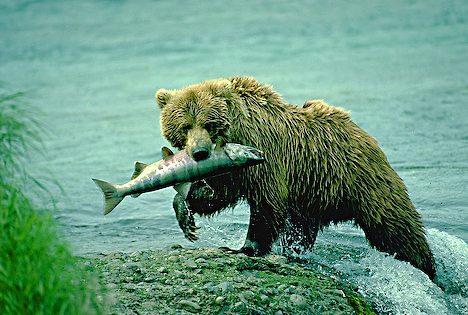
A grizzly bear survives because he is well-adapted to his environment. When he reproduces he passes on those traits to his offspring. This process is called
Natural Selection
Selective Breeding
Random mutations
Variations in a species

The peppered moth's color camouflaged it on the light colored tree bark, giving it an advantage. It's color was an example of a/n
Variation
Dominant trait
Recessive trait
Adaptation

If Easter eggs were living species of organisms, their different colors would be considered:
Adaptations
Variations
Different species
Extinct species

Changes in inherited characteristics can cause a species to change into a new one. This change over time is called?
Graduation
Selective Breeding
Revolution
Evolution
Natural Selection is driven by a change in the environment and survival of the
Earth
Fastest
Fittest
Biggest
The more classification levels that two organisms share, the...
easier it is to tell them apart
more characteristics they have in common
more distantly they are related
longer they have been living
The present classification system today uses __________ to determine the evolutionary history of a species in addition to comparisons of physical/structural traits.
comparison of locations of organisms
comparisons of chemical make-up (DNA)
comparisons of movement between organisms
The newest way scientists get information about the evolutionary history of species is by...
comparing the chemical make-up (DNA) of their cells
observing where organisms live
observing what organisms eat
studying how organisms move
What makes the Galapagos islands (Darwin visited in early 1800's) unique and important when studying the idea of Natural Selection?
small size
isolation
young age
large size

