
Font size
 Worksheets
JUST Brain Parts
Total questions: 30
Worksheet time: 20mins

How many main parts of the brain are there?
5
4
3
2

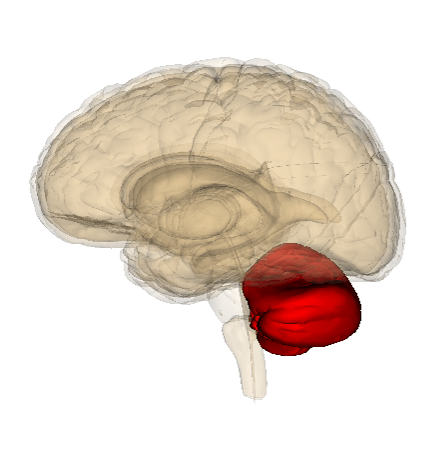


What part of the brain is Letter E pointing to?
Temporal Lobe
Cerebellum
Brain Stem
Parietal Lobe

What lobe is bright pink in this picture?
Parietal
Frontal
Occipital
Temporal

What structure is GREY in this picture?
Cerebrum
Cerebellum
Brainstem
Pons


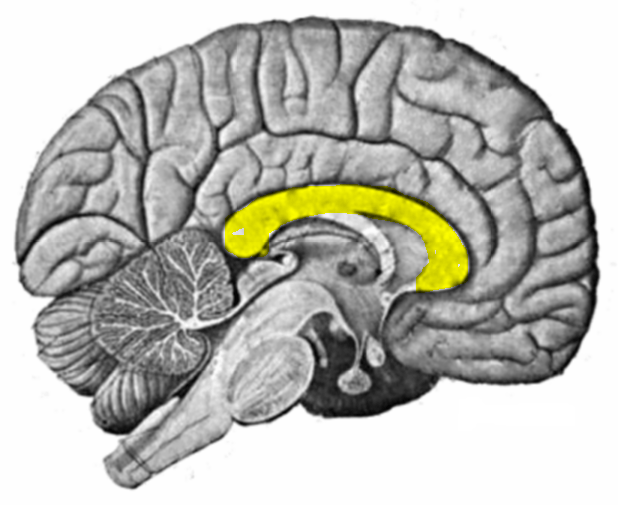


the YELLOW section is the (a) lobe.

The center trunk of the brain that continues downward to form the spinal cord.
brain stem
corpus callosum
occipital lobe
cerebellum

A broad band of nerves that connects the left and right hemispheres of the cerebrum.
corpus callosum
cerebrum
occipital lobe
temporal lobe

Responsible for sensing touch, spatial processing (being able to tell where objects are in space), language, and memory.
parietal lobe
frontal lobe
occipital lobe
visual cortex

play a large role in your behavior and personality, such as planning, voluntary muscle movements, mood, emotions, social interactions, and attention, and are also involved in memory retrieval and storage.
parietal lobes
frontal lobes
occipital lobes

The part of the cerebral cortex that receives and processes sensory nerve input from the eyes.
optic chiasm
temporal lobe
optic nerve
visual cortex

A pair of nerves transmitting input signals to the brain from the retina at the back of the eye.
optic nerve
visual cortex
temporal lobe
olfactory bulb

The X-shaped structure formed at the point below the brain where the two optic nerves cross over each other.
visual cortex
optic nerve
optic chiasm
cerebral hemisphere

The structure in the front of the brain responsible for receiving and processing smells.
optic nerve
olfactory bulbs
frontal lobe
brain stem

Either of two masses of gray matter lying between the cerebral hemispheres, relaying sensory information and acting as a center for pain perception
thalamus
hypothalamus
occipital lobe
temporal love

A tiny organ that serves as the primary gland for the body, producing several hormones and activating other glands to produce hormones
occipital lobe
pituitary gland
parietal lobe
thalamus

All four lobes
frontal lobe
cerebrum
temporal love
brain stem

The part of the brain at the back of the skull in vertebrates. Its function is to coordinate and regulate muscular activity.
cerebrum
frontal lobe
occipital lobe
cerebellum
The center trunk of the brain that continues downward to form the spinal cord.
brain stem
corpus callosum
occipital lobe
cerebellum

Primarily responsible for visual perception and are involved in some forms of visual, short-term memory.
parietal lobe
brain stem
occipital lobe
thalamus

