
 Worksheets
Cell Transport Quiz
Total questions: 20
Worksheet time: 20mins
During osmosis
water moves from high to low concentration
large or oddly shaped molecules move across a cell membrane
water moves when energy is used
proteins are built
Endocytosis and exocytosis are forms of ______ because they require energy.
passive transport
active transport

What cell transport is shown in the picture?
Facilitated Diffusion
Active Transport
Diffusion
Osmosis
Osmosis is the movement of _____ across a membrane.
food
energy
oxygen
water
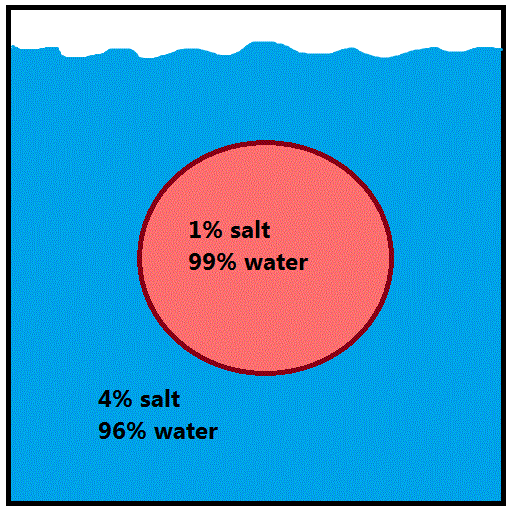
Where will the water go?
Into the cell
Out of the cell
Equally in & out - it's isotonic
There is no water
Which type of cellular transport moves molecules from low concentrations to high concentrations using ATP?
Osmosis
Diffusion
Passive Transport
Active Transport
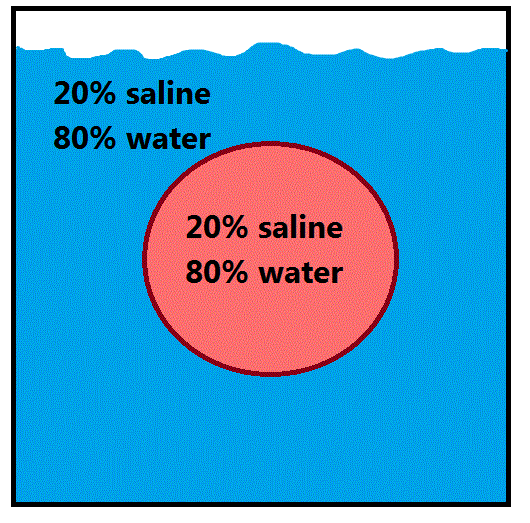
A blood cell is placed into the jar, as seen. Where will the water go?
Into the cell
Out of the cell
Equally in & out
The water will not move

Bilayer of phospholipids that forms a boundary between a cell and the surrounding environment and controls the passage of materials into and out of a cell.
Isotonic
Passive Transport
Cell Membrane
Semipermeable

Which describes an isotonic environment?
Too much water in the cell will cause the cell to burst - the percentage of water is higher outside the cell than inside the cell
Too little water in the cell will cause the cell to shrink - the percentage of water is lower outside the cell than inside the cell
Concentrations of water are equal inside and outside the cell

Which describes a hypertonic environment?
Too much water in the cell will cause the cell to burst - the percentage of water is higher outside the cell than inside the cell
Too little water in the cell will cause the cell to shrink - the percentage of water is lower outside the cell than inside the cell
Concentrations of water are equal inside and outside the cell

Which describes a hypotonic environment?
Too much water in the cell will cause the cell to burst - the percentage of water is higher outside the cell than inside the cell
Too little water in the cell will cause the cell to shrink - the percentage of water is lower outside the cell than inside the cell
Concentrations of water are equal inside and outside the cell
Passive Transport means
Energy is used
No energy is used
Energy is created

