
 Worksheets
Unit Exam: Sensation and Perception
Total questions: 49
Worksheet time: 40mins
If a dog hears a whistle that a person cannot hear, this suggests that dogs and humans have different
kinesthesis systems.
Gestalt ratios.
absolute thresholds
vestibular systems.
If we did not have cones in our eyes, we would not see
colors
shapes
sizes
distant objects
Damage to the olfactory nerve might prevent a person from
seeing a traffic light change.
hearing birds chirp.
smelling freshly baked bread.
feeling the texture of
a curtain.
Sensation
opening in the iris that regulates the amount of light entering the eye
the tendency to perceive certain objects the same way despite changing conditions
what occurs when a stimulus activates a receptor
contains light-sensitive receptor cells
Absolute Threshold
the weakest amount of a stimulus that a person can detect half the time
filling in the gaps in what our senses tell us
what occurs when a stimulus activates a receptor
organization of sensory information

Which of the following statements is incorrect?
Taste is referred to as the gustatory sense.
Taste is referred to as the olfactory sense.
There are five primary tastes.
Taste buds are specialised to be more sensitive to one of the primary tastes.

Several senses are involved in our perception of
flavor; the two senses most involved are:
taste and vision
touch and taste
taste and smell
vision and smell

Which of the following can affect our perception
of flavor?
the appearance of the food
our prior experience of food
our genetic makeup
all answers are correct
The bottom-up process by which our senses, like vision, hearing, and smell, receive and relay outside information
Sensation
Perception
ESP
Signal Detection Theory
The top-down way our brains organize and interpret that information and put it into context
Sensation
Perception
Difference Threshold
Absolute Threshold
An example of Signal Detection Theory is
Parents may notice their baby’s tiny whimper but not notice the passing of a train
Being overwhelmed by all of the noises in the house
A baby refuses to crawl closer to the edge of the stairs
A baby willingly crawls to the edge of the stairs without fear
The difference between being able to notice two things is based on a % difference rather than an absolute difference
Difference Threshold
Sensory Adaptation
Absolute Threshold
Color cones of red, green, and blue activate to see all the different shades of color
Trichromatic Color Vision Theory
Opponent-Process Color Vision Theory
Receptor cells are stimulated by certain colors and inhibited by others
Trichromatic Color Vision Theory
Opponent-Process Theory

Your brain detects the features of a clown chasing you and does so all at the same time
Sensory adaptation and perception
Features detectors and
parallel processing
Parallel Processing and signal detection theory

An ambiguous picture of the duck/bunny will be perceived as either depending on which was cued to the viewer first
Perceptual Set
Sensory Set
Cognative Set

This is an example of what type of relationship?
Figure-Ground
Proximity
Continuity
Retinal Disparity
Binocular cues are depth perception cues that depend on the use of both eyes and include:
Retinal Disparity
Closure
Relative Size
Stroboscopic Motion
One example of motion perception could be
viewing photos in stroboscopic motion
closing one eye
looking at the top of a mountain in the fog
using polarized sunglasses on a sunny day.
How many lobes are in your brain?
1
2
3
4
The neuron is a ______ cell.
body
muscle
blood
brain
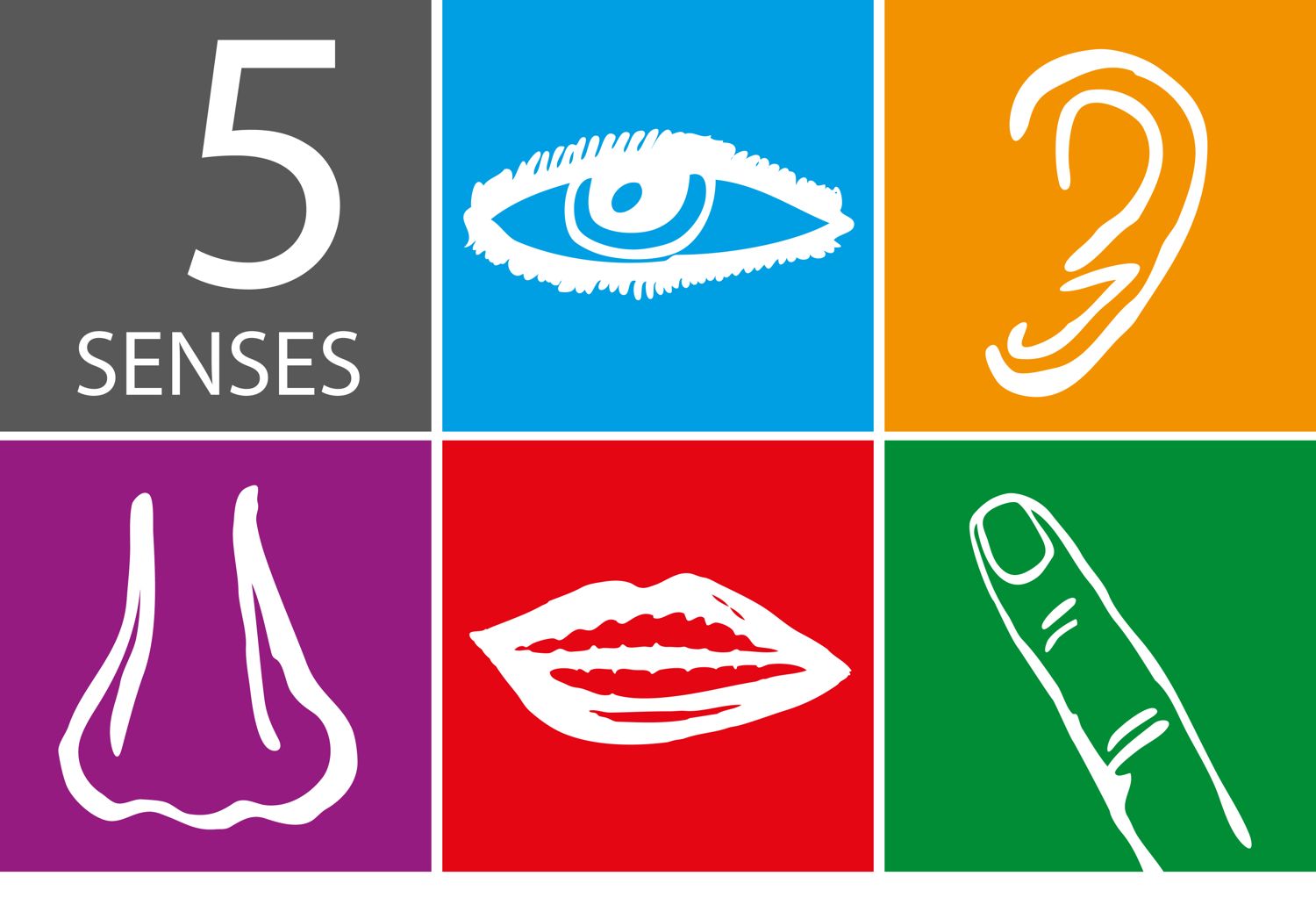
Which of the following senses are most closely related:
touch and smell
smell and taste
taste and hearing
hearing and smell

The nerves associated with smell are referred to as the:
olfactory receptor cells
smell cells
gustatory receptor cells
umami cells

Which of the following is NOT a primary taste sensation?
bitter
salty
sweet
peppery
receptor of gustation; sweet, salty, sour, bitter, umami
cones
olfactory receptors
hair cells
taste buds
Sense of being upright and balanced- receives feedback from the semi-circular canals.
Olfactory Sense
Kinesthesis
Vestibular Sense
Gustatory Sense
the system for sensing the position and movement of individual body parts
kinesthesis
common fate
stroboscopic motion
vestibular sense
The lens of the eye is responsible for
allowing enough light to enter the eye
processing an image
keeping objects in focus
carrying visual input to the brain
The coiled, fluid filled tube in which sound waves trigger nerve impulses is called...
retina
rods and cones
olfactory bulb
cochlea

Partial or total loss of memory is known as:
Cramnesia
Amnesia
Forgetfulness
Loss of marbles

Most commonly, memory is discussed in the following two ways:
Short Term Memory and Long Term Memory
Old Memory and New Memory
Correct Memory and Incorrect Memory
False Memory and True Memory

If a person hits their head hard enough, they may have to learn how to talk and walk again:
True
False

A person could have something travel through their brain and still live:
True
False

TBI is also known as:
To Be Informed
Tonight Be It
To Be Included
Traumatic Brain Injury

People who suffer a concussion are no more likely to get another concussion in the future:
True
False

People with a brain injury may not be able to hold a conversation, but may be able to sing or mouth the words to a song:
True
False

What lobe is yellow?
Frontal
Temporal
Parietal
Occipital
What lobe is in the back of the head?
Frontal
Temporal
Parietal
Occipital
What lobe is on the side of the head?
Frontal
Temporal
Parietal
Occipital
During a school football match, Michael accidentally bumped his head against the goal post. His friend Maya noticed that he seemed a bit disoriented. What should Evelyn, their team coach, do next if she suspects a concussion?
Give him over-the-counter painkillers
Seek medical evaluation
Let him continue playing
Wait for the symptoms to disappear

