Worksheets
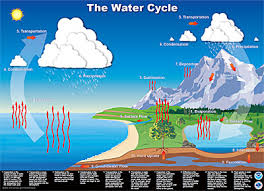
The hydrologic cycle
Total questions: 15
Worksheet time: 18mins
___________________ is the process by which water changes from a liquid to a gas or vapor. __________________ is the primary pathway that water moves from the liquid state back into the water cycle as atmospheric water
Transpiration
Deposition
Percolation
Evaporation
____________________ is the process by which water on the ground surface enters the soil. ________________ rate in soil science is a measure of the rate at which soil is able to absorb rainfall or irrigation.
Infiltration
Percolation
Deposition
Condensation
_____________________ is water released from clouds in the form of rain, freezing rain, sleet, snow, or hail. It is the primary connection in the water cycle that provides for the delivery of atmospheric water to the Earth. Most ________________ falls as rain.
Snowmelt runoff
Precipitation
Surface runoff
Evaporation
__________________ is the process by which water vapor in the air is changed into liquid water. ________________ is crucial to the water cycle because it is responsible for the formation of clouds.
Transportation
Percolation
Condensation
Plant Uptake
__________________ is the process by which moisture is carried through plants from roots to small pores on the underside of leaves, where it changes to vapor and is released to the atmosphere. ______________ is essentially evaporation of water from plant leaves.
Transpiration
Percolation
Infiltration
Plant Uptake
Water that flows across the land and enters rivers and streams. It eventually flows into lakes and the ocean.
Snowmelt runoff
Surface Runoff
Deposition
Precipitation