
 Worksheets
Unit 2 Economic Geography and Development
Total questions: 30
Worksheet time: 15mins
If you grew up on a farm in West Texas, would type of economic activities would you most likely participate in?
Primary
Secondary
Tertiary
Quaternary
-Depends on supply and demand
-Common in developed countries
-Farmers raise goods that give the most profit
These factors describe what type of agriculture?
Cottage agriculture
Market agriculture (agribusiness)
Subsistence agriculture
Slash and burn agriculture
This sector of the economy includes major universities and research institutions.
Primary
Secondary
Quaternary
Quinary
This sector of the economy adds value to natural resources by transforming raw materials into valuable products.
Primary
Secondary
Tertiary
Quaternary
This is when company relocates a piece (or all)
of its manufacturing operations to factories in other
countries due to cheaper resources/labor
job shipping
outsourcing
resourcing
layoffs
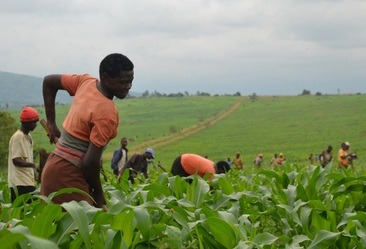
Which level of development is a country where most people work at the subsistence level?
More Developed
Newly Industrialized
Less Developed

Countries in this level of economic development have most of their people living in rural areas.
More Developed
Newly Industrialized
Less Developed

Which level of economic development are countries where people are beginning to move from rural to urban areas in search of factory jobs?
More Developed
Newly Industrialized
Less Developed

One reason some companies choose to participate in outsourcing is
lack of essential servies
opportunity to lower production costs
need to establish labor unions
support for new technology
Which is most responsible for deindustrialization in highly developed countries?
easy capital financing available in developing countries
low wages in developing countries
labor shortages in developed countries
the lack of strong unions in developed countries
the shortage of raw materials in developed countries
Deindustrialization can be defined as:
A decline in the importance of the primary sector
A decline in the importance of the secondary sector
An increase in the importance of the secondary sector
A decline in the importance of the primary and secondary sectors
Deindustrialization is a result of:
Discovery of new natural resources.
Consumers earning a higher income and demanding for better quality and wider choice of products.
A fall in the quality of education.
A rise in the demand for the countries exports of manufactured products.
The process of declining manufacturing in developed economies is known as:
Privatisation
Outsourcing
Deindustrialization
Nationalization
Why do developed countries always have to deindustrialize?
They cannot afford to pay their factory workers as the standard of living increases.
Industrialization must be shared equally be developing countries.
Factory workers are migratory in nature.
Factory workers do not unionize and raise wages.

As in the picture above, most people living in undeveloped countries engage in _________.
Sedentary agriculture
Subsistence agriculture
Shifting agriculture
Commercial agriculture

Businesses set prices, compete, with little government control
capitalism
socialism
marxism
communism

government owns certain businesses and services (healthcare, education); private ownership is allowed
capitalism
socialism
marxism
communism

government owns ALL of the businesses
dictatorship
socialism
democracy
communism
People freely produce and buy what they want.
Socialist (Mixed) Economy
Free Enterprise (Capitalist/Free Market) Economy
Communist (Command) Economy
Traditional Economy
Government provides low-cost or no-cost public services such as child care, health care, primary and secondary education, and college education.
Socialist (Mixed) Economy
Free Enterprise (Free Market/Capitalist) Economy
Communist (Command) Economy
Traditional Economy
1. What should be produced?
2. How should it be produced?
3. Who gets what is produced?
In this economic system, the three fundamental economic questions above are answered by officials in the government.
Socialist (Mixed) Economy
Free Enterprise (Free Market/Capitalist) Economy
Communist (Command) Economy
Traditional Economy
There is little government interference or regulation.
Socialist (Mixed) Economy
Free Enterprise (Free Market/Capitalist) Economy
Communist (Command) Economy
Traditional Economy
Unlike the UK and US, a significant proportion of the shares on the stock exchanges of China and Russia are of state-owned enterprises.
Which judgement about China and Russia can be made from this information?
their distribution of income and wealth
their level of development
their stages of production
their type of economic system
China, the world’s second largest economy, is becoming more like a market economy. Which policy would contribute directly to such a change?
abolishing state control completely
encouraging consumers to spend more and save less
reducing exports and encouraging more imports
transferring wealth from the state sector to the private sector

