wayground logo

Free Printable Worksheets

NEW

Font size

S
M
L
XL
Worksheets

Unit 4 Review: Atomic Theory & Structure

Total questions: 76

Worksheet time: 51mins
Name
Class
Date
1.
the central region of an atom where its neutrons and protons are is its 
a)
nucleus 
b)
electron cloud
c)
core 
d)
center 
2.
an atom with atomic number 6 would have how many protons 
a)
6
b)
12
c)
3
d)
cannot be determined 
3.
A particle that moves around the nucleus is a(n)...
a)
Proton
b)
Neutron
c)
Electron
d)
Quark
4.
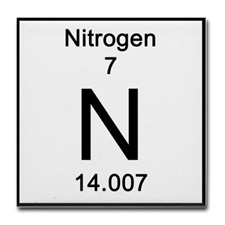
What is the number of protons that the element in this image contain?
a)
14
b)
7
c)
15
d)
18
5.

If an atom has 12 protons, which of the following must it also have to be considered a neutral atom?

a)

12 neutrons

b)

12 electrons

c)

12 protons

d)

24 protons and neutrons

6.
If an atom has 10 protons, 10 neutrons, and 10 electrons, what is the mass of the atom?
a)
10
b)
20
c)
30
7.

What charge does an atom have when it GAINS electrons?

a)

Positive

b)

Negative

c)

Neutral

8.

What two particles determine the mass number?

a)

Protons and electrons

b)

Electrons and neutrons

c)

Protons and neutrons

9.

When an atom loses an electron, it becomes a(n) _____________ ion.

a)

positive

b)

negative

c)

neutral

d)

polyatomic

10.

If the mass number of this chlorine atom is 36, how many neutrons does it have?

a)

17

b)

18

c)

19

d)

can't be determined

11.

What is the atomic number of this atom shown in the Bohr model?

a)

11

b)

12

c)

13

d)

can't be determined

12.

What is the mass number of the atom shown in the Bohr model?

a)

11

b)

12

c)

23

d)

Can't be determined

13.

Most of the mass of an atom is found in the ______.

a)

nucleus

b)

proton

c)

electron cloud

d)

isotope

14.
An atom with an unequal number of protons and electrons is said to have (a) ___.
a)
no charge
b)
balance
c)
charge
d)
unbalance
15.
Two atoms of the same element but with different mass numbers are called________
a)
electrons
b)
isotopes
c)
variables
d)
electron cloud
16.
Atoms have no electric charge because they...
a)
have an equal number of charged and non charged particles
b)
have neutrons in their nuclei
c)
have an equal number of electrons and protons
d)
have an equal number of neutrons and protons
17.

JJ Thomson discovered what subatomic particle

a)

nucleus

b)

neutron

c)

proton

d)

electron

18.

Rutherford discovered what part of the atom

a)

nucleus

b)

neutron

c)

electron

19.

First person to propose the concept of an atom

a)

Rutherford

b)

Democritus

c)

Dalton

d)

Bohr

20.

Which of the following shows the correct order of Atomic Theory Timeline we have learned so far?

a)

Rutherford, Dalton, Democritus, Thomson

b)

Democritus, Thomson, Rutherford, Dalton

c)

Dalton, Thomson, Rutherford, Democritus

d)

Democritus, Dalton, Thomson, Rutherford

21.

Thomson Experimented with ______

a)

Gold Foil

b)

alpha particles

c)

cathode rays

d)

protons

22.
James Chadwick discovered the ________.
a)
proton
b)
neutron
c)
electron
d)
nucleus
23.

Subatomic particles with a negative charge

a)

Electrons

b)

Neutrons

c)

Protons

d)

Quarks

24.
Subatomic particles with a positive charge
a)
neutrons
b)
atomic mass
c)
protons
d)
isotopes
25.
Subatomic particles that are neutral in charge
a)
Neutrons
b)
Protons
c)
Nucleus 
d)
Electrons
26.
A tiny but very dense, positively charged portion of the atom that holds most of the atomic mass
a)
Electron Shells
b)
Orbitals
c)
Electron Cloud
d)
Nucleus
27.

He claimed that matter was made of small, hard particles that he called “atomos.”

a)

Democritis

b)

Dalton

c)

Moseley

d)

Einstein

28.

The scientist responsible for discovering the nucleus is:

a)

Bohr

b)

Rutherford

c)

Schroedinger

d)

Einstein

29.

John Dalton stated:

a)

Atoms are tiny, invisible particles.

b)

Atoms of one element are all the same.

c)

Atoms of different elements are different.

d)

Compounds form by combining atoms.

e)

All of the statements listed.

30.
What scientist is best known for his "Plum Pudding" model of the atom?
a)
J.J. Tomson
b)
Ernest Rutherford
c)
John Dalton
d)
Democritus
31.
Rutherford concluded that the atom
a)
has a nucleus with a positive charge
b)
has a nucleus with a negative charge 
c)
is a small mass with negative and positive charges
d)
contains a nucleus without a charge
32.
Discoverer of the neutron?
a)
Jimmy
b)
Chadwick
c)
Charleston
d)
Rutherford
33.
Which scientist saw the atom as a solid sphere?
a)
Dalton
b)
Thomson
c)
Rutherford
d)
Bohr
34.
An atom's overall charge is ________.
a)
positive 
b)
depends
c)
neutral 
d)
negative 
35.
Which scientist disagreed with the idea that atoms existed?
a)
Democritus
b)
Aristotle
c)
Rutherford
36.
This contains most of the mass of an atom
a)
Electron Cloud
b)
Nucleus
c)
Electron
d)
Isotope
37.
Which word would closely define the term "atomos"?
a)
Incredible
b)
Indivisible
c)
Indelible
d)
Independent
38.
How many neutrons does the isotope of lithium have?
a)
8
b)
3
c)
4
d)
5
39.

If X is the symbol for an element, which of the following two symbols represent isotopes of the same element?

I. 7735X

II. 7733X

III. 8137X

IV. 8135 X

a)

I and II

b)

III and IV

c)

I and IV

d)

I and III

40.

What experiment did JJ Thomson use?

a)

gold foil experiment

b)

cathode ray tube experiment

41.

John Dalton wrote postulates to make the idea of the atom useful. Which postulate below was proven wrong?

a)

All elements are made up of tiny indivisible particles called atoms.

b)

The atoms of one element are different from the atoms of another element.

c)

Atoms of different elements chemically combine to form chemical compounds.

d)

During chemical reactions, atoms are rearranged.

42.

The number of protons is equal to the number of electrons for an atom. This means an atom is-

a)

electrically neutral

b)

electrically positive

c)

electrically negative

43.

What determines the identity of the atom?

a)

protons

b)

neutrons

c)

electrons

d)

isotopes

44.
An atom has 10 protons and a mass of 18. It has __ neutrons
a)
10
b)
18
c)
28
d)
8
45.

The mass number of an element that has 18 protons, 18 electrons, and 19 neutrons is _____.

a)

12.5

b)

13

c)

25

d)

37

46.
How many neutrons does uranium-239 have
a)
92
b)
147
c)
239
d)
331
47.
How many neutrons will an atom have it has an atomic number of 26, an atomic mass of 58 and a charge of +3?
a)
26
b)
58
c)
32
d)
3
48.
How many electrons are in an atom that has an atomic number of 34, an atomic mass of 74 and a charge of -2?
a)
34
b)
36
c)
2
d)
40
49.
How many protons are in an atom with an atomic number of 20, an atomic mass of 45, and a charge of +2?
a)
20
b)
10
c)
2
d)
18
50.
Whose model of an atom is displayed in the picture?
a)
Thomson
b)
Rutherford
c)
Dalton
d)
Bohr
51.
Why has the model of an atom changed over time?
a)
Scientists discovered new information about atoms over time.
b)
Scientists couldn't agree on what the atom looked like.
c)
Atoms today are different than they were for Democritus in Greece.
d)
Atoms are always changing and may be different in the future.
52.
What contribution did John Dalton make to atomic theory? 
a)
He discovered that every atom was positively charged. 
b)
He discovered that every element consisted of one type of atom that couldn't be divided. 
c)
He discovered that atoms had nuclei. 
d)
He discovered that atoms could be divided into smaller parts. 
53.
How did each model of the atom help to develop the atomic theory? 
a)
Each model provided opinions that were added.
b)
Each model showed different properties of the same structure. 
c)
Each model showed new particles that had been discovered.
d)
Each model built upon the other to show new particles or properties of previously discovered particles. 
54.
In a correctly written symbol what would be located in the "A" position?
a)
number of neutrons
b)
atomic number
c)
number of electrons 
d)
mass number
55.
How many protons are in this element?
a)
79
b)
196
c)
117
d)
Cannot be determined
56.

An isotope contains 19 protons and 21 neutrons. The name of it is _____________.

a)

Potassium-21

b)

Potassium-40

c)

Calcium-20

d)

Calcium-40

57.

An isotope of carbon contains 7 neutrons. What is it's mass number?

a)

7

b)

12

c)

6

d)

13

58.

How many neutrons are in Lithium-7?

a)

4

b)

3

c)

7

d)

5

59.

How many protons are in Carbon-14?

a)

6

b)

8

c)

14

d)

12

60.

Ancient civilizations believed that all matter was made up of 4 basic “elements”, which were defined as:

a)

air, fire, earth, water

b)

carbon, hydrogen, oxygen, nitrogen

c)

hydrogen, oxygen, water, air

d)

earth, wind, fire, steel

61.

Ernest Rutherford used _______ to discover the existence of the nucleus in an atom.

a)

a microscope

b)

alpha particles

c)

a spectrophotometer

d)

a cathode ray tube

62.

When you have a negative ion of an atom, O-2 for example, do you have a higher number of protons or electrons?

a)

Number of protons

b)

Number of electrons

63.

How many electrons will Argon have if it is neutral?

a)

18 electrons

b)

40 electrons

c)

22 electrons

d)

21.9 electrons

64.

How many protons does an Argon atom have?

a)

18 protons

b)

40 protons

c)

22 protons

d)

21.9 protons

65.
All atoms of a particular element have the same number of these
a)
electrons
b)
neutrons
c)
protons
66.
Most of the volume an atom is made of this
a)
the nucleus
b)
the protons
c)
the neutrons
d)
empty space
67.

What is the atomic number of the atom shown in the diagram?

a)

5

b)

6

c)

11

d)

16

68.

What is the mass number of the atom shown in the diagram?

a)

5

b)

6

c)

11

d)

16

69.

Lithium has an atomic number of 3 and a mass number of 7. How many electrons are there in a lithium atom?

a)

3

b)

4

c)

7

d)

10

70.

Lithium has an atomic number of 3. A lithium ion has a +1 charge, which of the following is true?

a)

It has 1 proton.

b)

It has 4 protons.

c)

it has 3 electrons.

d)

it has 3 protons.

71.

Fluorine has 9 protons, 10 neutrons and 9 electrons. What is the mass number of a fluorine atom?

a)

9

b)

18

c)

19

d)

28

72.

How many protons are in the nucleus of an atom with an atomic number of 15 and an atomic mass of 31.

a)

15

b)

16

c)

31

d)

46

73.

What is the charge of an atom with 15 protons and 18 electrons?

a)

+15

b)

-3

c)

0

d)

+3

74.

Fluorine has 9 protons, 10 neutrons and 10 electrons. What is its charge?

a)

+1

b)

-1

c)

+9

d)

0

75.

If a chlorine ion forms a -1 charge, how many electrons will it have

a)

17

b)

18

c)

16

d)

can't be determined

76.

If a lithium ion forms a +1 charge, how many electrons does it have?

a)

2

b)

3

c)

4

d)

cannot be determined