
 Worksheets
Concept 3 Energy Flow Through Ecosystems
Total questions: 22
Worksheet time: 1hrs 6mins
All energy on Earth comes from
food.
the sun.
chemicals.
non-living things.
An autotroph can also be called a
animal.
consumer.
heterotroph.
producer.
An example of a producer is a
fungus.
animal.
plant.
person.
Deep sea vent bacteria get their energy from
eating other bacteria.
releasing sulfur.
photosynthesis.
chemosynthesis.
Consumers breakdown the macromolecules of the organisms they have eaten to release ATP in a process called
photosynthesis.
chemosynthesis.
cellular respiration.
ATP liberation.
The levels of nourishment in a food chain are called
pyramids of numbers.
trophic levels.
food phases.
biomagnitudes.
Because energy flows from organism to organism and is used for metabolism or is converted to heat the next organism in the chain only receives 10% of the energy from the previous level. This is known as the
Heat Regulation.
Energy Loss Directive.
Heat Transfer Rule.
Rule of 10.

In the picture, which organism is the primary consumer?
plant
snake
mouse
bird

which number on the diagram below sows the level of secondary consumers?
3
2
1
in an energy pyramid, which way does the energy transfer?
from top of the pyramid to the bottom
from the bottom of the pyramid to the top
all of these
none of these
which consumer gets the most benefit from the sun's energy?
mouse
mushroom
snake
hawk
the series of steps in which a large fish that eats a small fish that has eaten an algae is a...
the food chain
the pyramid of numbers
the pyramid of biomes
food web
in many ecosystem the amount of energy that is transferred from one trophic level to the next is about
90% to 100%
50%
33.3%
10%



What does the graph tell you about biodiversity between 1600 and 1959?
biodiversity has increased
biodiversity had decreased
biodiversity has remained about the same
not enough information to tell
Which kind of organism is an autotroph?
consumer
producer
decomposer
herbivore
Why are mushrooms important to the food chain?
They recycle nutrients into the ecosystem.
They produce food energy for other living things.
They recycle oxygen into the atmosphere.
They consume excess herbivores in the ecosystem.

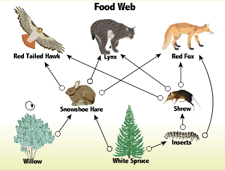
What is this an example of?
Food chain
Food web
Energy pyramid
Energy web

Which organism is the primary consumer?
Phytoplankton
Gulls and terms
osprey
herbivorous duck

