
 Worksheets
Geometry Semester 1 Final Practice Test 2020
Total questions: 100
Worksheet time: 2hrs 40mins

If m∠SQR = (2x + 6)°, m∠PQR = (10x - 5)° and m∠SQP = 61°. Find m∠SQR and m∠PQR.
m∠SQR=45° and m∠PQR=16°
m∠SQR=10° and m∠PQR=51°
m∠SQR=51° and m∠PQR=10°
m∠SQR=16° and m∠PQR=45°

Name an angle complementary to ∠BOC.
∠COD
∠BOE
∠DOE
∠AOB

What is the measure of the exterior angle?
9
52
28
15

Which coordinate notation represents the translation?
(x, y)→(x−5,y−7)
(x, y)→(x+6,y+4)
(x, y)→(x+5,y+7)
(x, y)→(x−4,y−6)

Solve for x
19
6
38
32

Find the value of x.
10
29
23
35
Which of the following sets of angle measures could be the 3 interior angles of a triangle? Choose all that apply.
75°, 80°, 25°
40°, 40°, 90°
30°, 60°, 90°
10°, 20°, 150°

Find m∠2
9°
17°
50°
82°

Which of the following statements is correct?
The lines are parallel because the angles are equal.
The lines are parallel because the angles are supplementary
The lines are not parallel because the angles are not equal
The lines are not parallel because the angles are not supplementary

29°
61°
34°
47.5°

Use the figure to write and solve an equation for x.
5
6
7
8

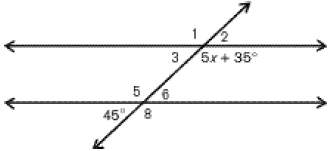


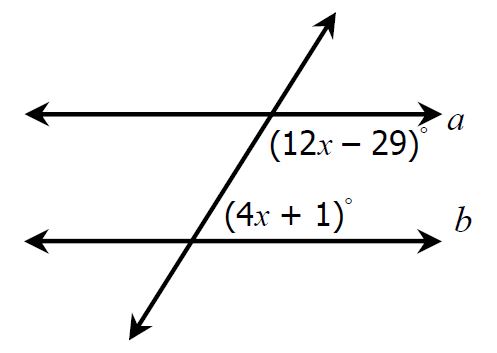


Find the value of x and y.
x = 10, y = 20
x = 28, y = 152
x = 28, y = 128
x = 20, y = 20
x = 30.67, y = 14.1

Find the values of x and y.
x = 30, y = 120
x = 120, y = 60
x = 60, y = 60
x = 120, y = 30
x = 60, y = 120
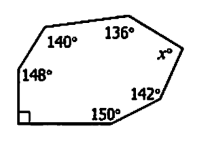

What is the degree of rotational symmetry of the figure?
30°
60°
72°
120°

Based on the information given, which of the following would prove that quadrilateral ABCD a parallelogram.
AB≅CD
AD≅BC
AB≅CD and AD≅BC
∠A≅∠C and ∠B≅∠D
Which of the following angle types cannot be used to prove two lines are parallel?
corresponding
alternate interior
vertical angles
same side interior

Line r is parallel to Line s. If ∠ABC=3x−2 and ∠FED=40° find x.
8.67
40
12.67
14

If a∥b and c∥d , select all angles that are NOT congruent to angle 1.
2
6
9
12
3
The point (3,1) is translated (x,y)→(x+2, y−3) and then reflected across the line x=4 .
use graph paper to solve
(3,-2)
(5,-2)
(-3, 2)
(-5, 2)
Point A is located at (-1, 4). The point is reflected over the y-axis and translated according to the rule: (x,y)→(x+4, y−3) . What is the location of A''?
*use graph paper to solve*
(-1, -4)
(3,-7)
(3, 1)
(4, 1)
(5, 1)

Describe the compostions of transformations.
First the triangle was rotated 180° about the origin, then reflected over the x-axis.
First the triangle was reflected over the y-axis, then rotated 90° about the origin.
First the triangle was translated (x-5,y), then reflected over the x-axis.
First the triangle was reflected over the y-axis, then reflected over the x-axis.
First the triangle was rotated 90° counterclockwise about the origin, then reflected over the x-axis.


Enlargement or reduction? Find the scale factor!
It's a reduction; the scale factor is 2.
It's an enlargement; the scale factor is 2.
It's an enlargement; the scale factor is 1/2.
It's a reduction; the scale factor is 1/2.
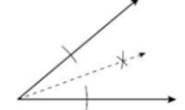
The drawing shows a compass and straight edge construction of...what?
the bisector of a given angle
a perpendicular to a given line at a point on the line
a perpendicular to a given line from a point NOT on the line
an angle congruent to a given angle
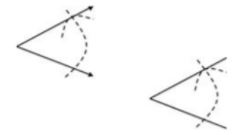
The given diagram is what kind of construction?
Perpendicular bisector
Congruent angles
Angle bisector
Congruent line segments
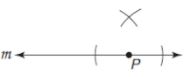
What is being constructed in the figure?
the perpendicular bisector of line m
the line perpendicular to line m through a point on the line
the line parallel to line m through a point NOT on the line
an angle that has line m as its bisector
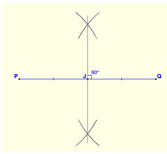
What type of construction do you see?
midpoint
angle bisector
perpendicular bisector
altitude
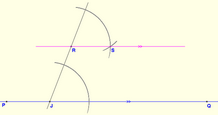
In the image, line RS is _______ to line JQ.
parallel
congruent
similar
perpendicular
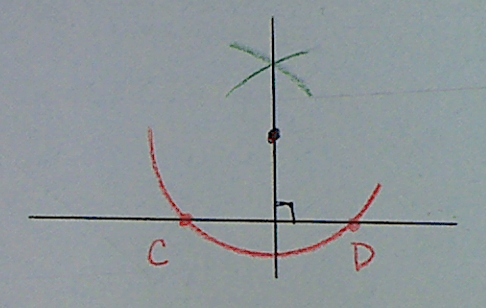
Name the construction.
midpoint
perpendicular through a point on the line
perpendicular through a point NOT on the line
Circumcenter of a right triangle


Eric was attempting to construct a perpendicular bisector to the segment AB with a compass and straight edge. Which of the below statements explains what Eric may have done wrong?
Eric should have started by putting the compass needle point at the midpoint of the segment AB.
On the second step, Eric should have placed the compass needle point where the first arc intersected the segment AB.
Erick just needed to open the compass more to create arcs that have a radius of more than half the length of the segment AB.
Erick didn’t do anything wrong he just needs to connect the opposite endpoints of each arc to finish the construction.

The steps shown are a part of the construction of which figure?
square
rectangle
equilateral triangle
regular hexagon

Connecting the points where the arcs intersect the circle will finish the construction of what polygon?
isosceles triangle
square
hexagon
rectangle


Assume the angle of
∠YAB
135°
180°
90°
85°

Assume the angle of
∠BAC22.5°
45°
65°
85°

Name that shape.
square
square
rhombus
quadrilateral
parallelogram
rhombus
quadrilateral
parallelogram
square


Find the missing angle.
65°
85°
75°
70°


Solve for x.

The figure is a parallelogram.
Solve for x.
7
2
0
4
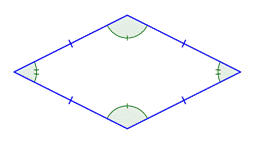

a trapezoid is a quadrilateral with...
2 pairs of parallel sides
4 right angles
4 equal sides
1 pair of parallel sides
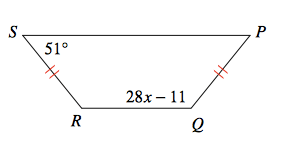


Given trapezoid ABCD with median (labeled as shown).
Find EF.
8
14
17
19

Given parallelogram ABCD with
m∠B = 5x and m∠C = 3x+4.
Find the number of degrees in ∠D.
70
110
73
115

Choose the following images that are a polygons.
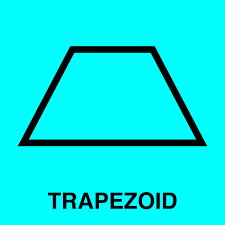
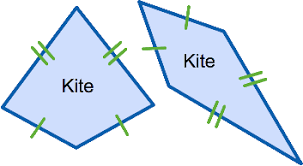

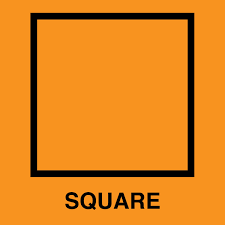

Choose all the properties of a square
its a rectangle
its a rhombus
its a parallelogram
its a quadrilateral


Find the value of y.
125
135
140
110
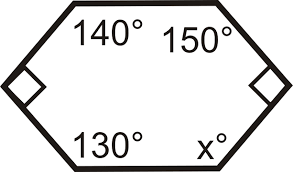
Find the value of y.
110
90
130
120

Identify the transformation from ABC to A'B'C'.
90o clockwise rotation
90o counter clockwise rotation
Reflection across the y-axis
Reflection across the x-axis
Translation (x, y-2)

Identify the transformation from ABCD to A'B'C'D'.
Translation (x-7,y)
Reflection across the y-axis
Reflection across the x-axis
90o counter clockwise Rotation
Translation (x+7,y)

What is the rule for the dilation pictured below?
(x, y) → (½x, ½y)
(x, y) → (x + 2, y + 2)
(x, y) → (x + ½, y + ½)
(x, y) → (2x, 3y)
(x, y) → (2x, 2y)

Identify the transformation from C to D. Check ALL that apply
90o Clockwise Rotation
180o Rotation
270o Clockwise Rotation
270o Counter-Clockwise Rotation
90o Counter-Clockwise Rotation

An office supply store sells index cards in two different sizes. The large size is an enlargement of the small size. Both sizes are shown. Find the scale factor of the enlargement.
2
3
1/2
1/3
Not enough information

Which of the following describes the sequence of transformations shown?
Reflect across the x-axis and then rotate 90 degrees clockwise around the origin
Rotate 90 degrees clockwise around the origin and then translate down.
Reflect across the x-axis and then reflect across the y-axis.
Translate up and then rotate 90 degrees counter-clockwise about the origin.
Reflect across the x-axis and then rotate 90 degrees counter-clockwise around the origin

Choose the correct transformations
rotate 90 degrees counter-clockwise around the origin, and then reflect over the x-axis
right 1, down 4, and then reflection over the y-axis
right 6, and then reflection over the x-axis
reflection over the line y=x, and then translate up 4, right 2
reflect over the x-axis, and then left 6

Choose the correct transformations
rotate 90 degrees counter-clockwise around the origin, and then reflect over the x-axis
right 1, down 4, and then reflection over the y-axis
right 6, and then reflection over the x-axis
reflection over the line y=x, and then translate up 4, right 2
reflect over the y axis, and then left 1 and up 4

Describe the transformations that map ABC onto A"B"C"
translate 5 up and 1 left then reflect over y
translate 5 down and 1 left, then reflect over y
reflect over y=x then translate left 8
reflect over x then rotate 90 clockwise
reflect over the x-axis then translate 4 to the right

What is the rule for the following reflection?
Reflection across y = −2
Reflection across x = −2
Reflection across x = 2
Reflection across y = 2
Reflection across y = x

Which of the following transformation will map the regular pentagon onto itself, choose ALL that apply?
x axis reflection
y axis reflection
90 degree rotation
180 degree rotation
72 degree rotation around the origin

Which transformation will map the parallelogram onto itself?
reflection x axis
reflection y axis
refection across the green line
reflection over the line y=x
none of these above

Which of the following transformations will NOT map the regular hexagon onto itself?
270 degree rotation about the origin
x axis reflection
y axis reflection
180 degree rotation about the origin
120 degree rotation about the origin

Select each answer choice that will map the regular polygon onto itself?
36 degree rotation
90 degree rotation
180 degree rotation
252 degree rotation
270 degree rotation
Which description of a figure and its image match the transformation described by (x,y)→(x,3y)
The figure and it image are similar and the image has been translated 3 units up.
The figure and its image are similar and the image has been translated 3 units to the right.
The figure and its image are congruent and the image has been stretched horizontally.
The figure and its image are are neither similar nor congruent, and the image has been stretched horizontally.
The figure and its image are neither similar nor congruent, and the image has been stretched vertically.
Which transformation or set of transformations will map a point (x,y) onto the point (2x+1, 2y)
a dilation with a scale factor of 2 through the origin followed by a translation of right 1 unit
a dilation with a scale factor of 2 through the origin followed by a translation of up 1 unit
a dilation of scale factor 2 through the point (1,0)
a dilation of scale factor 2 through the point (0,1)
a dilation of scale factor 1 through the point (2,2)

What is a ray?
Part of a line with 2 endpoints
Part of a line with 1 end point and goes on forever
Part of a line with 0 endpoints
Part of a line with 5 endpoints
A line that has 2 points and extends forever


∠K
∠RKW
∠TKW
∠WKR

Which postulate or theorem would prove x || y?
Corresponding Angles
Consecutive Interior Angles
Alternating Interior Angles
Alternating Exterior Angles
Cannot prove the line are parallel



