Wayground logo

Free Printable Worksheets

Font size

S
M
L
XL
Worksheets

9 Week Assessment Review

Total questions: 25

Worksheet time: 13mins
Name
Class
Date
1.
Which biomolecule has sugars and starches?
a)
Lipids
b)
Proteins
c)
Carbohydrates
d)
Nucleic Acid
2.
Which biomolecule functions include enzymes­ which speeds the rate of chemical reactions, structural components in cells, mechanical functions in muscles and cytoskeleton, cell signaling, and immune response; provides structure and helps with chemical reactions 
a)
Protein
b)
Lipids
c)
Carbohydrate
d)
Nucleic Acid
3.
Lipids are made up of which of the following?
a)
glycerol and fatty acids tails
b)
glycerol and monolipids
c)
fatty acids and phosolipids
d)
amino acids and nucleotides
4.
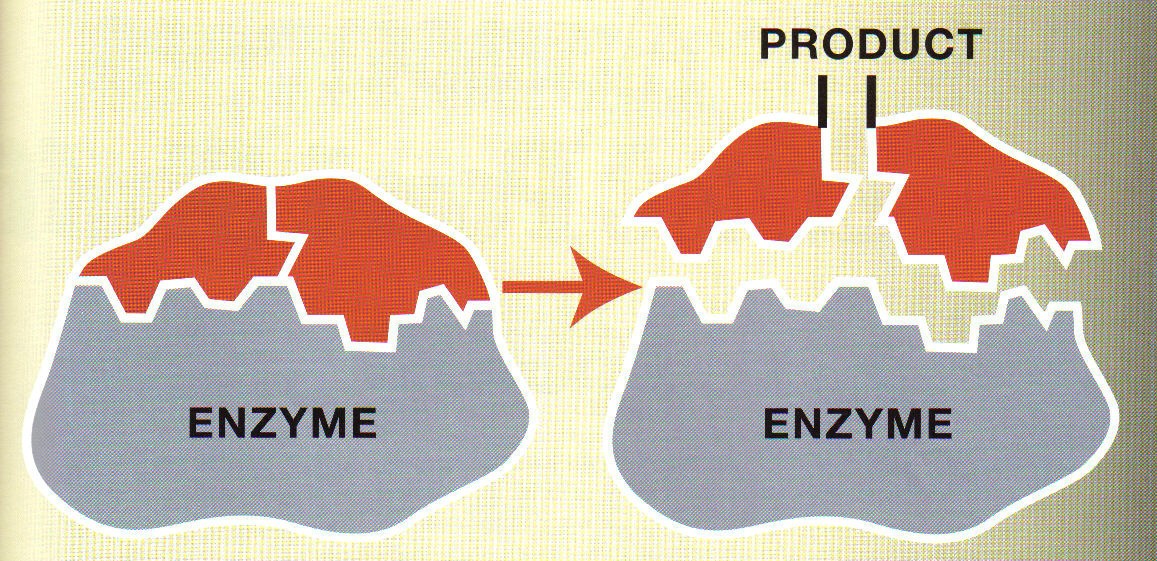
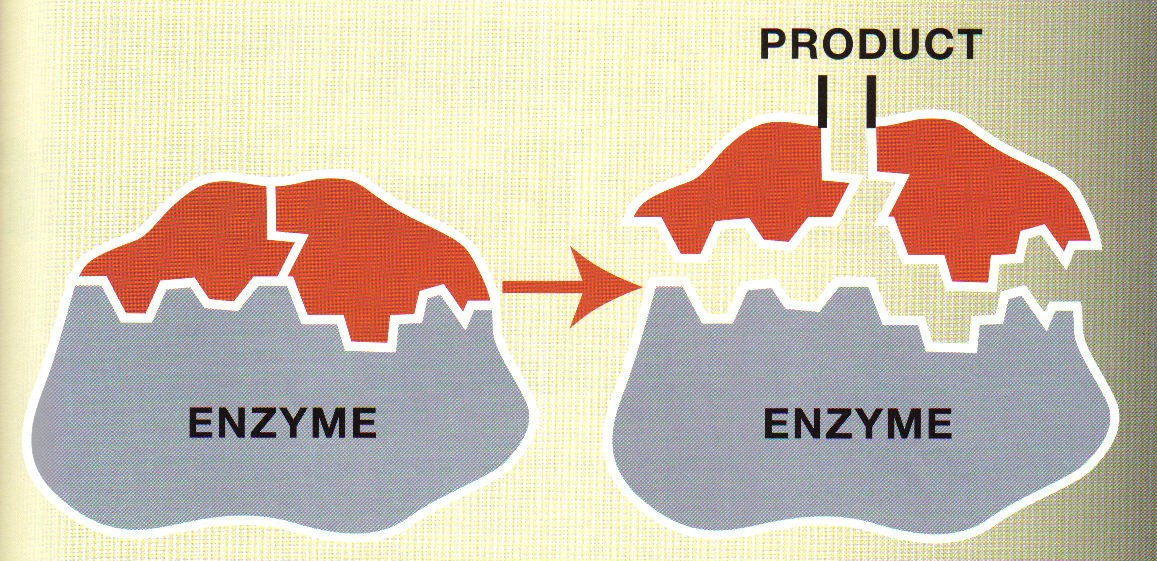
The area that the substrate fits into on the enzyme is called the:
a)
Active Site
b)
Allosteric Site
c)
DiSulphide Bridge
d)
β-Pleated Sheet
5.
Enzymes speed up reaction rates by changing:
a)
Activation Energy
b)
pH
c)
Hydrogen Bonds
d)
Kinetic Energy
6.
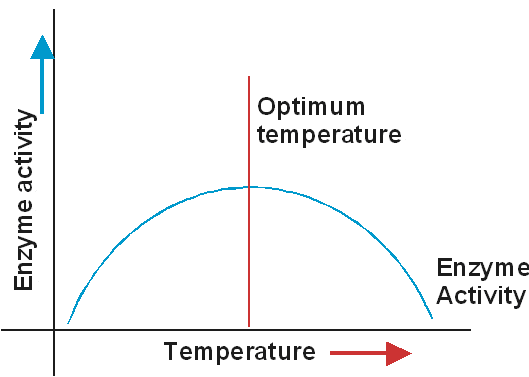
At high temperatures enzyme activity declines because of:
a)
Denaturation
b)
Decreased Kinetic Motion
c)
Increased H-Bonding
d)
Dissociation of Ionic Compounds
7.
Where is the DNA found in a eukaryotic cell? 
a)
floating around in the cytoplasm 
b)
in the nucleus 
8.
Which type of cell?
a)
Prokaryote
b)
Eukaryote
9.
All eukaryotes and prokaryotes are surrounded by a _____.
a)
cell wall
b)
cell membrane
c)
cell envelope
d)
loving, supportive family
10.

What does the cell membrane monitor?

a)

What comes in and out of the cell.

b)

What leaves the cell.

c)

What is inside the cell.

d)

What is outside the cell.

11.

What is the job of the ribosome?

a)

They have no job

b)

They are the power house of the cell.

c)

To make amino acids into polypeptides

12.

What is the job of the lysosome?

a)

It is the power house of the cell

b)

It turns cell waste into building material

c)

It stores the cell's DNA

13.
Which of these pictures shows a plant under a microscope?
a)
A
b)
B
c)
C
d)
D
14.
The picture shows cells under a microscope. Which of the following statements is true?
a)
The cells have cytoplasm so they are animal cells. 
b)
The cells have a nucleus so they are bacteria. 
c)
The cells have membranes so they must be plant cells. 
d)
The cells have chloroplasts so they are plant cells. 
15.

What makes plant vacuole different from an animal vacuole?

a)

plant vacuoles are small and animal vacuoles are large

b)

Plant vacuoles are large and and animal vacuoles are small

c)

plant vacuoles are specialized, such as contractile vacuoles

d)

Animal vacuoles store large amounts of water. Plant vacuoles store food.

16.
A phospholipid has 2 parts. What are they called? 
a)
Hydrophilic Head, Hydrophobic Tail 
b)
Hydrophobic Head, Hydrophilic Tail 
17.
Controls the passage of materials inside and outside of the cell. 
a)
Cell Membrane
b)
Lipid Cleric Layer
c)
Membrane Gate
d)
Protein Receptors 
18.
All living things want to remain in...
a)
chaos
b)
homeostasis
c)
limbo
d)
plasmolysis
19.
If the sodium concentration inside a cell is greater than outside the cell, how can a cell take in more sodium?
a)
osmosis
b)
diffusion
c)
active transport
d)
passive transport
20.
if you put a plant in salt water it will ...
a)
swell because water diffuses into the cells
b)
swell because water diffuses out of the cell
c)
shrivel because water diffuses out of the cell
21.
The diffusion of water across a selectively permeable membrane is called 
a)
active transport
b)
facilitated diffusion
c)
osmosis
d)
phagocytosis
22.
Which of the following is the correct equation for PHOTOSYNTHESIS?
a)
CO2 + light + H2O --> O2 + Sugar
b)
CO2 + sugar + H2O --> O2 + light
c)
O2 + light + H2O --> CO2 + Sugar
d)
CO2 + O2 + H2O --> Light+ Sugar
23.
What process occurs when light energy is captured in autotrophs and converted into sugar?
a)
Photosynthesis
b)
Cellular Respiration
24.

Oxygen (O2) is a reactant material of which process?

a)

Photosynthesis

b)

Cellular Respiration

25.
What are the two reactants of cellular respiration?
a)
C6H12O6 & 6CO2
b)
6 CO2 & 6H2O
c)
C6H12O6 & 6O2
d)
6CO2 & 6O2