
 Worksheets
Gravitation
Total questions: 30
Worksheet time: 7mins

Newton said that any two masses will...
combine into a larger mass.
attract each other.
create gravitational fields.
push each other apart.
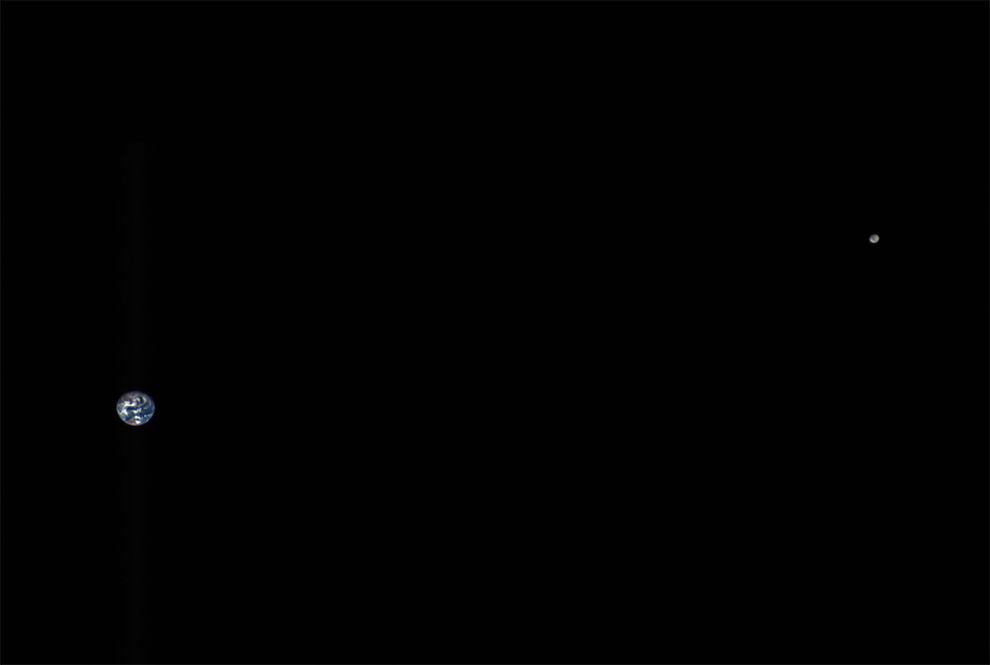
According to Newton's law of gravitation, the Earth and the Moon are gravitationally attracted to each other. The more massive Earth attracts the Moon with...
a stronger force than the Moon attracts the Earth.
a weaker force than the Moon attracts the Earth.
the same force as the Moon attracts the Earth.
a force that is sometimes stronger and other times weaker than the Moon attracts the Earth.
Name the force that causes acceleration of an object moving along a circle and keeps the body moving.
centripetal force
centrifugal force
repulsive force
attractive force
Mass is a .........quantity.
Vector
Scalar
A massive object and a less massive object exert a gravitational force on each other. Which of the following picture correctly shows the magnitude and direction of the forces involved in this interaction?


Calculate the gravitational force between two objects when they are 0.750m apart. Each object has a mass of 5.00kg.
2.96x10⁻⁷N
3.00x10⁻⁶N
2.22x10⁻⁹N
2.23x10⁻⁸N

An apple is placed in the Earth's gravitational field. Which of the following best explains why the apple falls to the ground?
The field exerts a gravitational force upon the apple.
The Earth exerts a gravitational force upon the apple.
Masses attract each other.
On Earth, all objects fall with acceleration 9.8 m/s².
what is the unit for Gravitional Field strength, ag =r2GM
N kg −1
J kg −1
m s −2
m s −1

Given the image, “r” refers to
The distance between the objects
The square of the distance between the centers of the objects
The distance between the centers of the objects
The distance between the square of the center objects
The center between the distance of the objects square
How far from the surface of the Earth does an astronaut need to go to not experience the force of gravity from the earth?
An astronaut will always experience a force of gravity.
An altitude of 100 miles
An altitude of 200 miles
Any distance above the atmosphere, as long as they are in freefall.
Centripetal force, created by swinging something in a circle, acts in a direction--
along the path of motion
away from the center of the circle
toward the center of the circle
tangent to the circle
A 10kg car travels at a constant speed of 20.0 m/s around a horizontal circular track. Which diagram correctly represent the direction of the car's velocity (v) and the direction of the centripetal force (Fc) acting on the car at a particular moment?


a car going around a curve - identify the centripetal force:
friction
tension
force normal
force weight

Kepler's Third Law states
objects attract other objects with a force that is directly proportional to the product of their masses
the square of the ratio of the periods of any two planets revolving around the Sun is equal to the cube of the ratio of their average distance from the Sun
An imaginary line joining a planet and the sun sweeps out an equal area of space in equal amounts of time.
Planets move about the Sun in an elliptical orbit with the Sun at one of the foci.

When in orbit around the Earth, what is true about the relationship between a satellite's distance from the Earth's surface and its velocity in order for the satellite to stay in its orbit?
A satellite's distance and velocity are inversely proportional; that is, the satellite must travel more quickly to stay in orbit.
A satellite's distance and velocity are directly proportional; that is, the satellite must travel less quickly to stay in orbit.
A satellite's velocity is not affect by its distance from the Earth's surface.
The distance from the Earth's surface is only dependent upon the mass of the satellite.
State the definition of Gravitational field strength
Gravitational force per unit time acting on a body at a point in a gravitational field
The force between two bodies of mass M and m is directly proportional to the product of their masses
Gravitational force per unit mass acting on a body at a point in a gravitational field
A satelite is at a distance, r from the centre of Earth. by using Newton's Second Law of Gravitation, determine the speed, v of the satelite motion
v =mGMf
v = rGMm
v=2π GMr3
v = rGM

What causes tidal waves in the sea ?
Gravitaton effect on the earth by the moon .
Gravitational effect on the earth by the sun .
The atmospheric impact on the earth .
None of these

As the Earth pulls on the ball with force magnitude mg,
The ball also pulls on the Earth with force magnitude mg
The ball also pulls on the Earth with a much lesser force magnitude
The ball doesn't pull on the Earth at all.
The ball pulls with a much greater force on the Earth
Which graph shows the correct relationship
between the gravitational force, F on a point mass
at a distance r from another point mass?


Which single condition enables Newton’s universal law of gravitation to be used to predict the force between the Earth and the Sun?
The Earth and the Sun both have a very large radius.
The distance between the Earth and the Sun is approximately constant.
The Earth and the Sun both have a very large mass
The Earth and the Sun behave as point masses.
The mass of the satellite is increased. In order to maintain the same orbital period, its distance from the earth must
Increase
Decrease
Remain constant
None of the above

