
 Worksheets
Urbanization
Total questions: 55
Worksheet time: 1hrs 23mins

Is this rural or urban?: Dominated by natural or managed features such as grasslands, forests, crop fields
Urban
Rural

Is this rural or urban?: dominated by human structures such as office buildings, skyscrapers, bridges, & roads
Urban
Rural
Is this rural or urban?: Low population density
Rural
Urban
The average number of people per square mile is called _________.
birth rate
land area
population density
population
Things that attract people to a new place are called
Push factors
Pull factors
An example of a pull factor is...
A natural disaster
Lack of access to education
Lack of resources
A new job opportunity
Something that makes people want to leave where they are is called a...
Push factor
Pull factor
The movement of people from rural areas into cities is called..
Industrialization
Urbanization
Globalization
City moving

This population pyramid shows...
Rapid growth
Slow growth
Negative growth
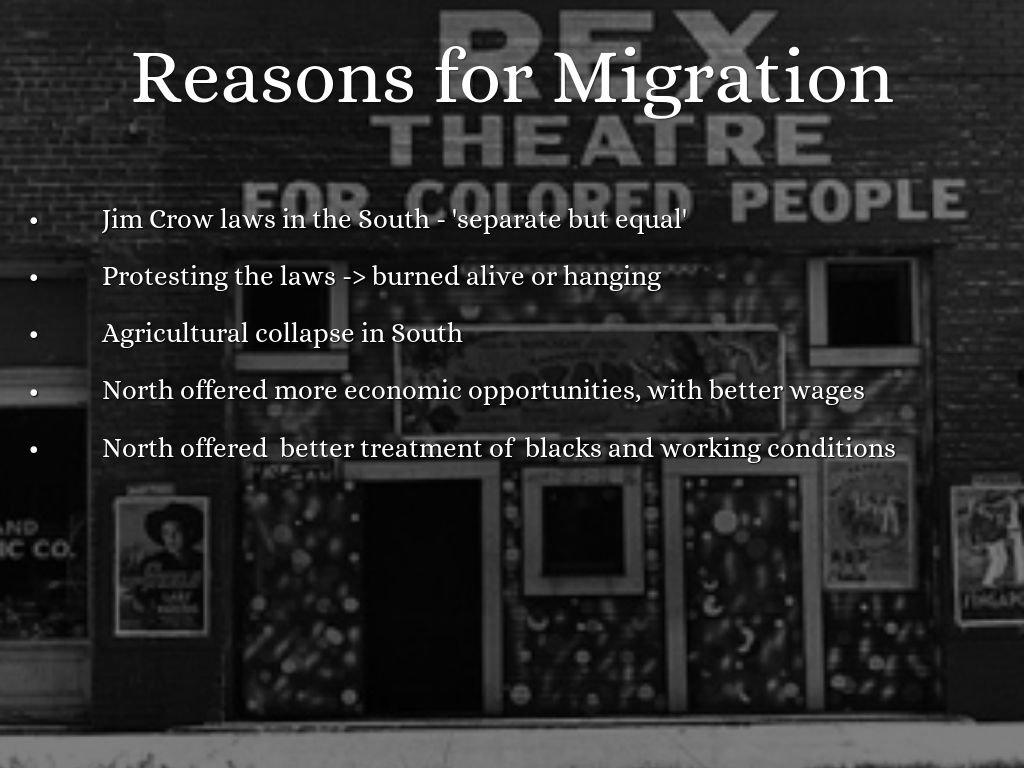
What two (2) things were African-Americans looking for when they did move?
Segregation and a Better Life
Lost Family and A Better Life
Discrimination and More Opportunities
More Opportunities and a Better Life
What laws in the south tried to maintain something like slavery after the Civil War?
Jim Crow
Black Codes
Great Migration
Civil Rights
when millions of African Americans moved north to get away from the Jim Crow Laws.
Jim Crow
Black Codes
Great Migration
Civil Rights
What was the landmark case that said segregation was based on race was legal? (1896)
Dred Scott v. Sandford
Plessy v Ferguson
Brown v. Board of Education
The Civil Rights Act
The following events are in the correct chronological order:
US Revolutionary War, US Civil War, Reconstruction, the Great Migration of African Americans to Northern cities
US Civil War, US Revolutionary War, Black Codes, Segregation
Black Codes, Slavery, US Civil War, Urbanization
Urbanization, US Civil War, Slavery, Colonization

“Long ago it was said that "one half of the world does not know how the other half lives." That was true then. It did not know because it did not care. The half that was on top cared little for the struggles, and less for the fate of those who were underneath, so long as it was able to hold them there and keep its own seat.
- Jacob Riis, How The Other Half Lives
Which group of people is the above quote and image MOST LIKELY referring to?
African American sharecroppers
Immigrants living in urban tenements
Chinese and Irish railroad workers living in tent villages
Populist protestors camped outside the White House
What impact did the increased use of electricity have on factory workers in America?
Increased productivity and longer working hours
Decreased productivity and safer working conditions
Increased productivity and shorter working hours
A decrease in the need of immigrant labor
Which conditions are most characteristic of urban slums in the 1890s?
crowded tenements, sweatshops, lack of sanitation
brownstone townhouses, horse stables, public drinking fountains
large department stores, paved sidewalks, train stations
high rise apartment buildings, trolley service, public parks
Where did most immigrants to the USA come from (1880-19200)?
Southern & Eastern Europe
Northern & Western Europe
Latin America
Asia
The entry point for immigrants into the USA in New York City.
Immigrant Island
Jekyll Island
Ellis Island
Angel Island
Where did most immigrants live when they came to America?
Trenton
Tenements
Subburbs
Rural towns
The belief that some races are innately superior to others.
discrimination
Racism
assimilation
progressive
What is the rapid growth of cities called?
What is one of the primary factors that draws people from rural areas to urban areas?
less pollution
more jobs
more open space
heat islands
communities that surround urban areas
urban
suburban
rural
Which image is of a rural area?


A period of time when products go from home-made to machine made in factories.
agricutlure
industrialization
mathamatics
environmentalism

What was Ellis Island?
An amusement park
A vacation spot
An immigration center in New York
The first capital of the United States

multi-family apartments, usually dark, crowded, and barely meeting minimal living standards
tenure
tenement
skyscraper
graft

How was the mass production and use of the assembly line for products a good thing?
Made it easier to own companies & build corporations
It organized labor in the factories
Made products cheaper & more available
Made communication easier

Inventions helped fuel industrialization because...
More jobs were available for inventors and also for processing patents
Innovations led to better technology in order to produce goods faster and cheaper
Factories were able reduce the emissions from pollution
Inventors served as advisors to the industrial capitalists
Before the Civil War the U.S Economy was...
Industrial
agricultural
Non-existent
Urban
The Industrial Revolution caused people to move from ________to __________.
Rural to urban
Urban to rural
U.S to Europe
Mexico to Canada
Because of the Industrialization the number of people living in urban areas
decreased
stayed the same
increased
went down
Many immigrants came to the U.S
To work on farms
for a better life and job opportunities
To escape reality
to travel on boats
Most immigrants worked on
farms
sweatshops
airports
great conditions and wages
Most Immigrants lived in
Basements
rural areas
Mansions
tenements
Who is often credited with inventing the assembly line, although he wasn't really the first to use the method of production - he just used it DIFFERENTLY for vehicles?
Alexander Bell
Henry Ford
Thomas Edison
John Rockefeller
Who invented the light bulb?
Andrew Carnegie
Thomas Edison
Thomas Hefferson
Henry Ford
Who invented the telephone?
Thomas Edison
Henry ford
Andrew Carnegie
Alexander Bell
Who was the captain of the oil industry?
Rockefeller
Ford
Vanderbilt
Carnegie
Who was the captain of the automobile industry?
Carnegie
Ford
Rockefeller
Vanderbilt
Who was the captain of the steel industry?
Vanderbilt
Rockefeller
Thomas Edison
Carnegie

