
 Worksheets
Topic 3: Modelling
Total questions: 10
Worksheet time: 5mins

Which of the following best describes a model that shows exactly how a product could look but not function?
Mock-up model
Prototype model
Realistic model
Aesthetic model

A Surface model contains no data about the interior of the part.
True
False
Annotated sketches help...
Identify problems
Clarify obscurity
Explain variations
Record thoughts
All of the above
Physical models promote the visualisation of internal relationships within a structure or external relationships of the structure to the environment.
True
False
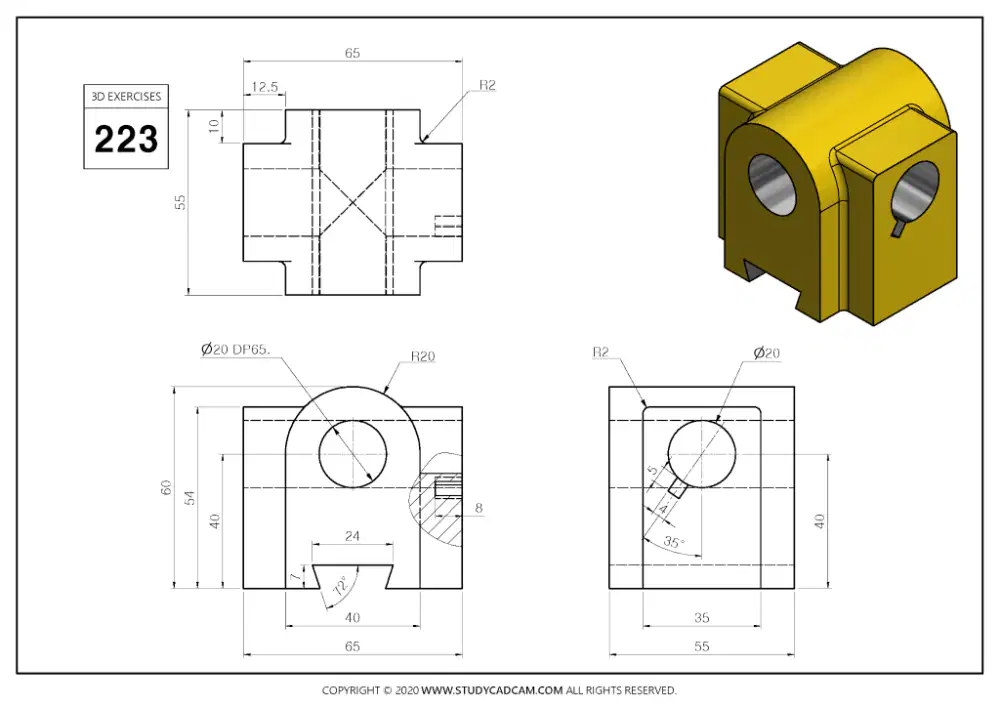
Orthographic projection is useful especially when a design has been developed to a stage whereby it is almost ready to manufacture.
True
False
Which of the following modelling methods would be used to validate a design before committing to detailed development?
Conceptual Modelling
Graphical Modelling
Virtual Prototyping
Data Modelling
Which of the following modelling techniques would most likely be used to understand how well a new concept functions?
Aesthetic model
Mock-up
Scale model
Prototype
Graphical models are useful for engineers, manufacturers, designers and clients, and vary depending on the context. Which of the following graphical models is most appropriate in the context of an architectural design to present to a client?
Assembly drawing
Perspective drawing
Isometric drawing
Orthographic projection
What type of prototype is designed to collect quantitative data to help inform development?
Mock up
Aesthetic model
Instrumented model
Scale model
What type of graphical model would likely be part of the instructions for flat pack furniture, usually shown in an exploded form?
Perspective drawings
Assembly drawings
Orthographic drawings
Scale drawings

