
 Worksheets
Ch. 4-2: Covalent Bonds
Total questions: 20
Worksheet time: 21mins
Name
Class
Date
1.
In an electron dot diagram, two pairs of shared electrons represents a ...
a)
single bond
b)
double bond
c)
triple bond
d)
quadruple bond
2.
A Nitrogen molecule (N2) has one triple bond. How many electrons do the nitrogen atoms share?
a)
1
1
1
b)
3
c)
4
d)
6
3.
Compared to ionic compounds, molecular compounds generally have...
a)
good conductivity
b)
greater densities
c)
more chemical bonds
d)
a low boiling point
4.
Compared to ionic compounds, molecular compounds generally have...
a)
stronger chemical bonds
b)
poor conductivity
c)
a high melting point
d)
lower densities
5.
In a(an) POLAR bond, one atom pulls on the shared electrons more than the other atom.
a)
True
b)
False
6.
How do covalent bonds form?
a)
Donating & receiving valence e- between atoms.
b)
Opposite slight charges attract each other between compounds.
c)
Scientists are still not sure how they form.
d)
Sharing valence e- between atoms.
7.

What two types of atoms make a covalent bond?
a)
2 Nonmetals
b)
1 Nonmetal and 1 Metal
c)
2 Metals
d)
2 Noble Gases
8.
Which of the following is NOT formed by a covalent bond?
a)
K2S
b)
H2O
c)
I2
d)
CO2
9.
What do we call a covalent bond where electrons are shared UNEVENLY or UNEQUALLY?
a)
Ionic
b)
Polar Covalent
c)
Nonpolar Covalent
d)
Van der Waals Force
10.
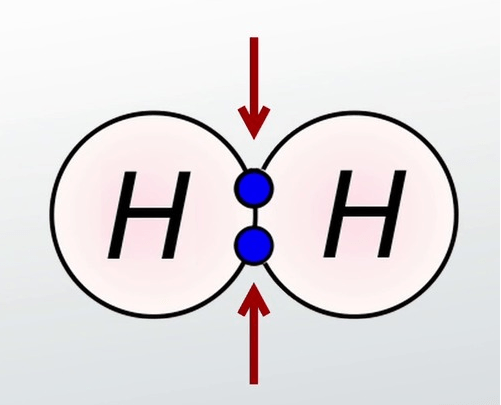
Which of the following is NOT considered a diatomic element?
a)
Carbon
b)
Nitrogen
c)
Chlorine
d)
Iodine
11.
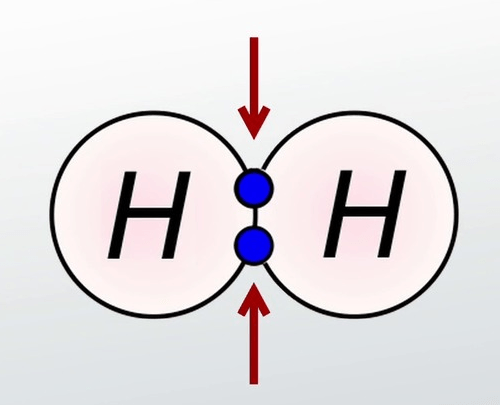
Diatomic elements are defined as IDENTICAL elements that bond with each other (i.e. Oxygen with Oxygen). What do we call it when this forms?
a)
Compound
b)
Molecule
c)
Atom
d)
None of the above
12.
Is hydrogen considered a metal or a non-metal?
a)
A metal
b)
Nonmetal
c)
Metalloid
13.
Ionic or covalent?
H2O
H2O
a)
Ionic
b)
Covalent
14.

What type of bond is the strongest?
a)
single
b)
Double
c)
James
d)
triple
15.
An atom with 3 valence electrons "wants" a full shell, so it can either gain 5 or lose 3. Which is more likely to occur?
a)
Gain 5
b)
Lose 3
c)
Nothing
16.
Covalent compounds can have (select all that apply)
a)
Single Bonds
b)
Double Bonds
c)
Triple Bonds
d)
Quadruple Bonds
17.
What is a molecule?
a)
The structure that results when atoms are joined together by covalent bonds
b)
when atoms share a pair of ele
c)
positively and negatively charged atoms
18.

Hydrogen gains stability as the H2 molecule by forming the noble-gas configuration of ________.
a)
oxygen
b)
helium
c)
neon
d)
xenon
19.
Which of the following is a pure substance that contains two or more elements? (Sodium chloride is an example of this.)
a)
compound
b)
ion
c)
molecule
d)
solution
20.
Ionic or covalent?
NaBr
NaBr
a)
Ionic
b)
Covalent
100 %

