wayground logo

Free Printable Worksheets

Font size

S
M
L
XL
Worksheets

particulate nature of matter

Total questions: 18

Worksheet time: 18mins

Name
Class
Date
1.
Particles of all matter are in constant random motion.
a)
True
b)
False
2.

Which statements describe the arrangement of particles in solids?

a)

particles are moving in all directions

b)

Particles are arranged in an orderly manner

c)

particles can slide over one another.

d)

particles vibrate about their positions

3.

Which statement about liquids is correct?

a)

They have a fixed shape and a fixed volume.

b)

They have a fixed shape but not a fixed volume.

c)

They have no fixed shape but they do have a fixed volume.

d)

They have no fixed shape and no fixed volume.

4.

These particles are held together by very strong forces of attraction

a)

Solid

b)

Liquid

c)

Gas

d)

Plasma

5.

The diagram represent the arrangement of particles in ____________.

a)

gas

b)

liquid

c)

solid

6.

The diagram represent the arrangement of particles in ____________.

a)

gas

b)

liquid

c)

solid

7.
During osmosis
a)
water moves from high to low concentration
b)
large or oddly shaped molecules move across a cell membrane
c)
water moves when energy is used
d)
proteins are built
8.
The picture below is an example of _________________.
a)
osmosis
b)
isotonic
c)
diffusion
d)
active transport
9.
Osmosis
a)
diffusion of water molecules through a semi-permeable mebrane from an area of low concentration to an area of high concentration
b)
the diffusion of particles from an area of high concentration to an area of low concentration
c)
diffusion of water molecules through a semi-permeable membrane from an area of high concentration to an area of low concentration
d)
the diffusion of particles from an area of low concentration to an area of high concentration
10.

What is diffusion?

a)

When molecules move from a low concentration to a high concentration

b)

When molecules move from a high concentration to a low concentration.

c)

When there is no movement of molecules

d)

When molecules move everywhere regardless of concentration

11.
Where is there a low concentration of perfume?
a)
in the bottle
b)
on the hand
c)
in the room
d)
in the top
12.

Which gummy bear was left overnight in salt water?

a)

Larger bear

b)

Smaller bear

13.
If you are stranded at sea why is it safer to drink urine than sea water?
a)
One cup of sea water has enough sodium to poison you.
b)
Sea water is hypertonic to your cells and will only further dehydrate you.
c)
Sea water is too isotonic to your cells and you will absorb too much water.
d)
The salt will cause high blood pressure and you will die from a stroke.
14.
In which case would a cell most likely shrink?
a)
when placed in a solution containing a high salt concentration
b)
when placed in a isotonic solution
c)
when placed in a solution containing a low pH
d)
when placed in a solution containing distilled water
15.
Where is there a high concentration of bbq smoke?
a)
In the bbq pit
b)
In the house
c)
Two streets over
d)
In the atmosphere
16.
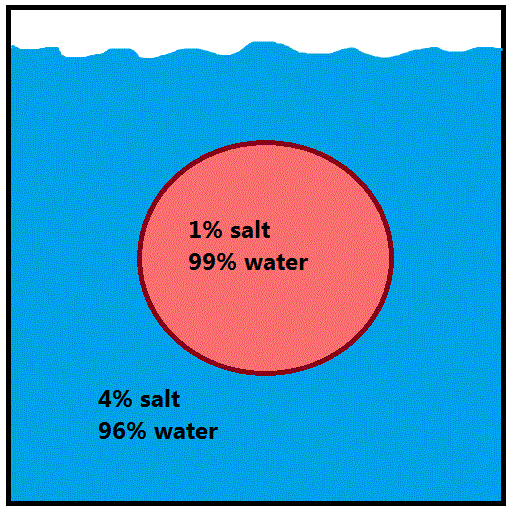
The cell is 99% water. The surrounding is salty. Where will the water go?
a)
Into the cell
b)
Out of the cell
c)
Equally in & out 
17.
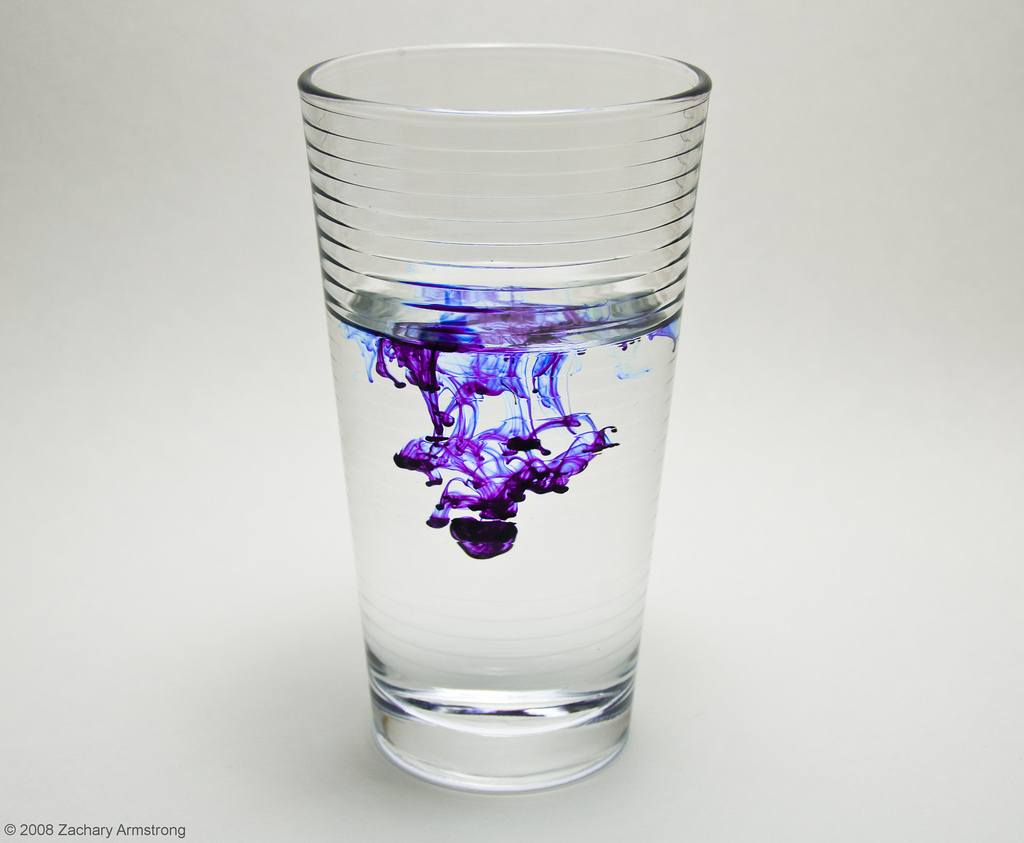
Where is there a low concentration of dye?
a)
at the bottom of cup
b)
in the color
c)
at the top of cup 
d)
no concenteraion gradient
18.
What is diffusion?
a)
when molecules move 
b)
when molecules move from a high concentration to a low.
c)
no movement 
d)
molecules move everywhere