
 Worksheets
Cells Chapter Review
Total questions: 50
Worksheet time: 32mins

What organelles transport proteins in the cell?
vacuoles
DNA
vesicles
mitochondrion
_______ is the liquid part of the cell inside of the cell membrane.
eukaryotic cell
cell wall
cytoplasm
mitochondria

The _______ is the smallest unit of life.
homeostasis
organism
cell
protein
_____ do not have a nucleus or other membrane-based organelles.
prokaryotic cell
eukaryotic cell
cell wall
cytoplasm
Who used a compound microscope to see chambers within cork and named them cells?
Anton Van Leeuwenhoek
Matthias Schleiden
Rudolf Virchow
Robert Hooke
Which is NOT a part of the cell theory?
All living things are made of cells
All cells come from other cells
Cells are the basic unit of life
Cells are either prokaryotic or eukaryotic
Which type of cell LACKS a nucleus?
prokaryotic
eukaryotic
they both have nuclei
neither contain nuclei
Where is the DNA of a eukaryotic cell?
Nucleus
Mitochondria
Ribosome
Endoplasmic Reticulum
Which organelle captures energy from the sunlight in order to use it to produce food in plant cells?
Chloroplast
Chromatin
Cytoplasm
Cell Membrane
How does a cell maintain homeostasis?
Regulating what enters and exits the cell.
Only allowing substances to move into the cell and not out of the cell.
Maintaining the correct amount of cholesterol
By forming a protective barrier around each cell.
Which of the transport mechanisms moves molecules against a concentration gradient -low to high- using energy?
Diffusion
Osmosis
Facilitated Diffusion
Active Transport
Which transport method will be used with water?
passive - osmosis
passive - diffusion
passive - facilitated diffusion
active
Which term means water-loving?
hydrophobic
hydrophilic
This type of cell transport involves the taking in of substances by the cell membrane.
Simple Diffusion
Osmosis
Facilitated Diffusion
Endocytosis
A group of cells that do a job together is called ____________.
cell
kingdom
organ
tissue
Tissues group together to form a(n) ____________.
cell
kingdom
organ
tissue
What is the ultimate source of energy for all living things?
The moon
The ocean
the Sun
water
Who coined the term "cell" by looking at cork?
Hooke
Leeuwenhooke
Schwann
Virchow
Which is NOT a part of the cell theory
All organisms are composed of one or more cells.
The cell is the basic unit of structure and organization in organisms.
All cells come from preexisting cells.
The invention of the microscope allowed scientist to investigate plant and animal cells.
An __________ is a tiny cell structure within a cell that carries out a specific function.
organism
organelle
unicellular
cell
When an organism is made up of more than one cell it is called ____________.
unicellular
organelle
multicellular
organism
The basic unit that makes up all living things is called ____.
cells
unicellular
organelle
organism
What is the name of the scientist who studied animal cells and realized all animals are made of cells?
Leeuwenhooke
Schwann
Virchow
Hooke
_________ is an instrument that makes small objects look larger.
cell
organisms
microscope
bacteria
A single celled organism is called _____.
cell
unicellular
organelle
multicellular
How did the microscope influence the development of cell theory?
Let to them asking more questions and making more discoveries.
Allowed scientist to investigate plants and animals in their world.
Realized that living things are made of cells.
All of the above.
A cell without a true nucleus
Prokaryotic
Eukaryotic
A cell that has a true nucleus
Prokaryotic
Eukaryotic
Bacteria is an example of a(n)
prokaryotic cell.
eukaryotic cell.
Plants and animal cells are examples of ___ cells
prokaryotic cells
eukaryotic cells
both eukaryotic and prokaryotic
neither

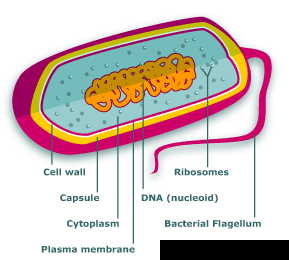

Prokaryote or Eukaryote?
Unicellular or Multicellular?
Orange Tree
Prokaryote
Unicellular
Eukaryote
Unicellular
Eukaryote
Multicellular

