
 Worksheets
Chem Periodic Table Practice Quiz
Total questions: 39
Worksheet time: 27mins
their atoms have the same number of valence electrons
What type of elements tend to have fewer valence electrons and GIVE those electrons away?
Metals
Nonmetals
Metalloids
What group in the periodic table has metals, nonmetals AND metalloids, and all of those elements are solid at room temperature?
Group 1A
Group 3A
Group 4A
Group 6A
Vertical columns on the periodic table are called ___?
groups
periods
rows
families

Which color on the image of the periodic table corresponds with the halogens.
red
black
blue
orange
Which color on the image of the periodic table corresponds with the noble gases.
red
black
blue
orange
Which color on the image of the periodic table corresponds with the lanthanides.
red
black
blue
orange
Which color on the image of the periodic table corresponds with the transition metals.
red
black
blue
orange
Which color on the image of the periodic table corresponds with the metalloids.
bright yellow
gold
teal
light blue
Which color on the image of the periodic table corresponds with the alkaline earth metals.
yellow
dark yellow
blue/green
teal
Mendeleev first ordered the periodic table of elements by increasing
atomic number
atomic mass
atomic symbol
atomic weight
Horizontal rows on the periodic table are called ___?
groups
periods
rows
families
The periodic table is mostly comprised of what type of element?
Metals
Nonmetals
Metalloids
Found in group two of the periodic table; highly reactive
period
Alkali Earth Metals (Group 2)
metalloids (semimetals)
alkali metals (group 1)
The electrons in the outermost shell (main energy level) of an atom; these are the electrons involved in forming bonds
alkali metals (group 1)
Halogens (Group 17)
atomic number
valence electrons
Elements that occur in vertical columns on the periodic table.
Neutron
metalloids (semimetals)
groups
Proton

What group and period does this element belong in? *
period 1 and group 3
period 3 and group 1
period 2 and group 3
period 3 and group 2

How many valence electrons does the element have?
1
2
3
4
This element has two valence electrons and two energy levels?
Beryllium (Be)
Lithium (Li)
Zinc (Zn)
How many valence electrons and energy levels does (Pb) lead have?
4 valence electrons and 6 energy levels (orbitals)
6 valence electrons and 4 energy levels (orbitals)
5 valence electrons and 5 energy levels (orbitals)
5 valence electrons and 10 energy levels (orbitals)
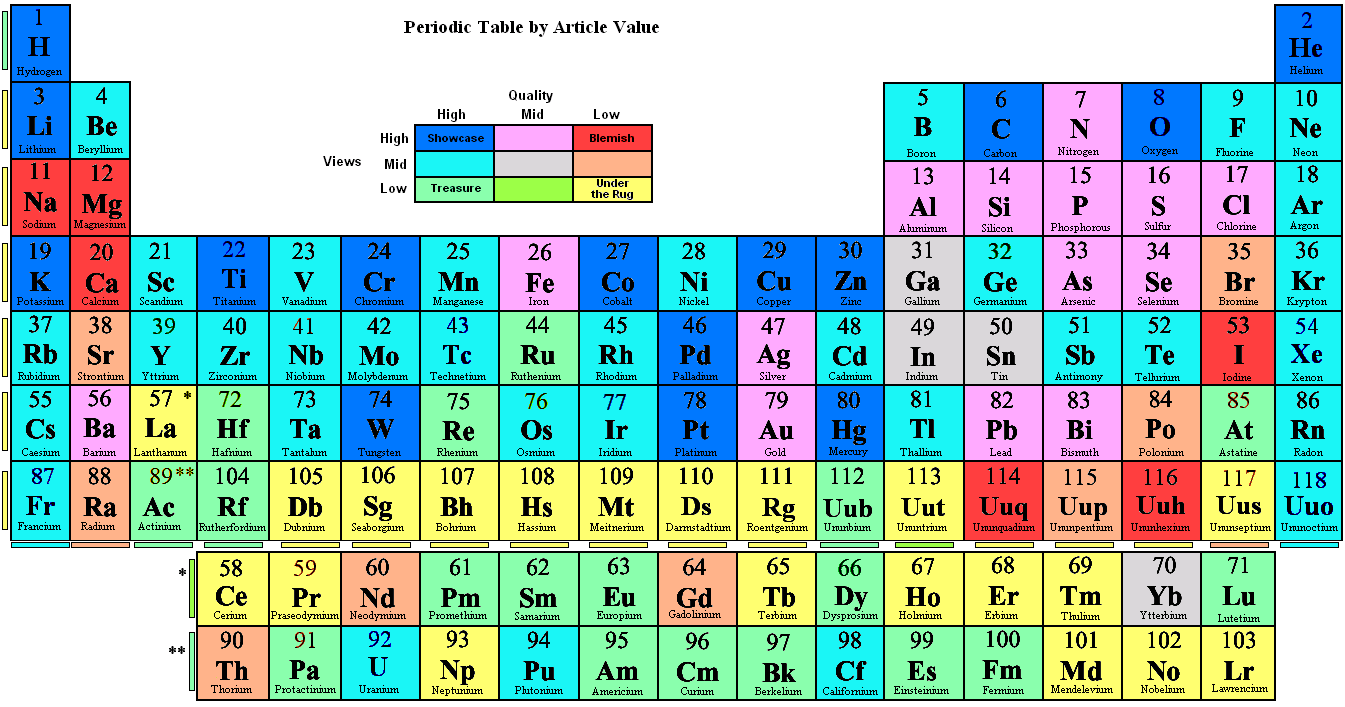
What category is silicon (Si) a part of?
Metal
Nonmetal
Metalloid
Halogens
What Element is in period 4, group 5A?
Antimony
Arsenic
Tin
Germanium

Mendeleev was the first person to arrange the elements into a table. How did he arrange the rows?
Mendeleev was the first person to arrange the elements into a table. How did he arrange the columns?
state of matter
similar properties
Which of the following will have similar properties?
O, S, Se
O, F, Ne
N, Ne, Na
H, K, P


How many periods are on the periodic table?
5
6
7
8
Representative Elements in the same group have : (2 correct answers)
Similar chemical properties
Similar names
Same number of outer (valence) electrons)
The same number of protons
Manganese is shiny, conducts heat and electricity, and can be hammered into thin sheets. What is is?
Nonmetal
Metal
Metalloid
None of the above
Use your Periodic Table to help you. Boron would be classified as a...
Metal
Nonmetal
Metalloid
Conductivity
how an object reflects light
can be hammered into a shape
transfers heat and/or electricity
____________is the ability of a substance to be drawn out into a wire.
Conductivity
Ductility
Mass
Luster

