
 Worksheets
STORY ELEMENT - QUIZ
Total questions: 85
Worksheet time: 1hrs 9mins
Characterization is
the central message in a story
the problem in a story
the process by which a writer reveals a character's personality and qualities
In indirect characterization....
the writer describes the character
the character's personality is directly described by the author
the writer reveals the character through STEAL
In direct characterization....
the writer describes the character
the writer reveals the character through STEAL
the writer doesn't care how you learn about the character
The character who stands out at the center of attention; most of the story revolves around this character, who is usually likeable is
antagonist
protagonist
The character who creates a problem for the protagonist is a
antagonist
protagonist
A character who doesn't change throughout the story is a
CHECK ALL THAT APPLY
static character
round character
flat character
dynamic character
A character who changes or grows over the course of the story is a
CHECK ALL THAT APPLY
dynamic character
round character
static character
flat character

What type of conflict is shown in the picture?
Character vs Environment
Character vs Character
Character vs Society
Character vs Self

What type of conflict is the picture?
Character vs Character
Character vs Environment
Character vs Self
Character vs Society
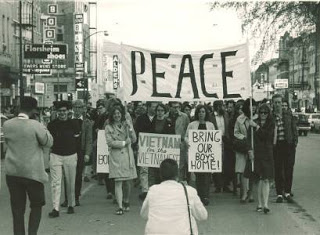
Character vs Character
Character vs Nature
Character vs Society
Character vs Self

What is the definition of plot?
The lesson of a story
The sequence of events in a story
The turning point of a story
The conflict of a story


Which list shows the plot elements in the correct order?
exposition, falling action, climax, rising action, resolution
exposition, falling action, rising action, climax, resolution
exposition, rising action, climax, falling action, resolution
rising action, falling action, exposition, climax, resolution
The story's time and place is the...
tone
plot
setting
voice

Which part of the story follows the climax and begins to resolve the conflict?
setting
falling action
resolution
force
Exposition
Setting and background info
Turning point
The end
Events after the climax
Rising Action
Events leading to the climax
Events after the climax
Setting and background
Point that hooks the reader's attention
Climax
Events leading to the resolution
Point that grabs the reader's attention
Turning point where the protagonist makes a tough decision
All conflicts are resolved and the story is over
The highest point of tension in a plot is the
Climax
Conflict
Plot
Inciting Incident
Exposition
The problem or struggle is the
Resolution
Theme
Conflict
Resolution
Climax
Where the majority of the action takes place
Conflict
Rising Action
Narration
Climax
Falling Action
The term for the events that make up a story
Conflict
Exposition
Resolution
Theme
Plot
What is the purpose of the falling action?
It sets the plot in motion.
The characters and setting are being introduced.
The events start to build toward a climax.
Loose ends are being tied up and the conflict is being resolved.
The ending of a plot is called the
Climax
Conflict
Rising Action
Theme
Resolution
Which is NOT a type of plot?
Linear (Chronological)
Flashback / Flash-Forward
Media Res
Bate and Switch
The type of plot that occurs in order from beginning to end?
Linear (Chronological)
Flashback / Flash-Forward
Media Res
Bate and Switch
The type of plot that is interrupted by going ahead and back in time?
Linear (Chronological)
Flashback / Flash-Forward
Media Res
Bate and Switch
Setting is defined as the _______and _______ of the story.
tone and place
tone and plot
time and place
time and plot
Why is the setting important in a story?
Because my teacher said it was important
It tells us the ending.
It helps us visualize what the land and characters look like in a story.
The setting can affect a character's mood in a story.
True
False
Setting can give you clues about a story's __________.
conflict
tone
mood
all of the above
If that passage below were set at Lena's birthday party, what could you infer?
Lena laughed loudly. "I can't believe you did that!" she said, smiling.
Lena might have received an unexpected present.
Lena might be mad at her best friend.
Lena might be a very selfish character.
Lena might be talking to her uncle.
If the passage below were set in a snowy park where children were playing, what could you infer?
Lena laughed loudly. "I can't believe you did that!" she said, smiling.
Lena might be playing a board game or card game.
Lena might have been gently hit by a snowball.
Lena might be talking to herself.
Lena might be lost.
What advice would help an author write a setting for their story?
Copy the setting of a famous story.
Try to describe all 5 senses.
Make sure to paraphrase in your own words.
What is the meaning of point of view?
Point of view describes when and where a story takes place.
Point of view describes the conflict in the story.
Point of view is the perspective from which the story is told or who is telling the story
Point of view describes the turning point of the story.
In 3rd person limited, you get to know the thoughts and feelings of...
1 character
none of the characters
2 characters
all of the characters
Unlike the topic of literature, a theme ...
can be expressed in one word
always shows the setting
is always stated directly in the text
cannot be just one word
What does theme add to a story?
A sense of location.
An important message.
Motivation for the characters.
Dialogue for the characters.
Where can a reader find the theme?
It stated directly in the text.
A character tells you.
The reader must understand what the character has learned.
Books or movies do not have themes.
Read the passage and determine if it is direct characterization or indirect characterization: "But I am so much more than that! I am a musician, and a swimmer, and a person able to make my own decisions."
Direct characterization
Indirect characterization
Read the passage and determine if it is direct characterization or indirect characterization: "Heck kid" - he grinned wolfishly - "them boys at the station know me by now."
Direct characterization
Indirect characterization
John is a doctor working against the clock to find a cure for a disease that is threatening the human race. Despite all odds, he meets the challenge. John is the
protagonist
antagonist
static character
minor character
Keith must find a way to earn $100 before the end of the month if he wants to go on an expensive field trip at school. His brother, who is jealous of him, tries to thwart his efforts to earn money. His brother is most likely the_____________.
Dynamic character
Antagonist
Protagonist
Flat character


"You must be sitting in your seat before the bell rings," ____________ Mrs. Walker.

"Today is going to be a beautiful day," ______________ Mrs. Golec.

"Quit tapping your pencil or I am throwing it out the window," shouted Mrs. Herman.


What is the point of view based off the passage below?
I couldn’t help but think something was going on. Beth was acting strange, making weird excuses why I needed to be out of the house. She had me run to the store for scissors. I knew we had scissors. When I returned to the house and walked through the door I had the biggest surprise of my life! All of my friends and family were in my house yelling “Surprise!” and “Happy birthday!”
The passage is written in third person limited.
The passage is written in second person point of view.
The passage is written in third person objective.
The passage is written in first person point of view.
From what point of view is the text below written in?
If you are confused about something in class, don't wait. Raise your hand and ask for help immediately. Do it while your teacher is still explaining the material. Your teacher will probably be happy that you are taking an active part in your education and should attempt to explain the material in a different way. If you are still confused, ask your teacher if he or she is available after class to give you additional instruction. You are worth it. Don't give up on yourself.
What is the point of view?
Third person omniscient.
second person.
first person.
third person limited.
Brandon stepped to the pitcher's mound. He held the ball in his mitt and adjusted his fingers on the seams. He could feel the pressure of the moment. It was the ninth inning. His team was up by one. The bases were loaded. "You can do it," Brandon thought to himself, but he felt hesitation in his heart. He stared at the batter. His name was Jimmy. Jimmy could sense Brandon's hesitation. He was going to capitalize on it. Jimmy knew that Brandon was going to throw it down the middle. He couldn't wait to take a swing. This was Jimmy's chance to be a hero and he had no intentions of blowing it.
What is the point of view?
first person
second person
third person limited
third person omniscient
The Land of Candy spread before me. I licked my lips as chocolate bunnies bounded through the peanut butter fields. I heard the songs of the sour gummy birds in the taffy trees. My tummy rumbled when I saw caramel cobwebs spun by sugar spiders in rock candy caves. I wanted to eat everything that I saw, but Mr. Travis had warned me against that. He said that the elders would view me as a monster if
word got out that I was ravaging the Land of Candy to appease my sweet tooth.
What is the point of view?
first person
second person
third person limited
third person omniscient
Read the sentence below. Choose the best answer(s) that is/are an element of setting.“The moon was shining brightly as the fox slowly crept toward the chicken coop.”
Fox slowly crept
Chicken coop
Moon was shining brightly
Which of the following might describe the setting of a story?
a frog and a witch
happy and loving
a high school in 1956
love is stronger than fear
Can songs, shows and movies on TV have themes?
No, only books can.
TV shows and movies don't fit into any themes.
They can have themes just like books can.
They are the only literary works that can have themes.
Which is an example of theme?
Inequality
Hope
Justice
Your past does not define you.
In a spell of dry weather, when the Birds could find very little to drink, a thirsty Crow found a pitcher with a little water in it. But the pitcher was high and had a narrow neck, and no matter how he tried, the Crow could not reach the water. The poor thing felt as if he would die of thirst. Then an idea came to him. Picking up some small pebbles, he dropped them into the pitcher one by one. With each pebble the water rose a little higher until at last it was near enough so he could drink.
What is the theme(s)?
be persistent
be honest
always share with others
respect your family
A Dog, to whom the butcher had thrown a bone, was hurrying home with his prize as fast as he could go. As he crossed a narrow bridge, he looked down and saw his reflection in the quiet water as if in a mirror. But the greedy Dog thought he saw a real Dog carrying a bone much bigger than his own. If he had stopped to think he would have known better. But instead of thinking, he dropped his bone and sprang at the Dog in the river, only to find himself swimming for dear life to reach the shore. At last he managed to scramble out, and as he stood sadly thinking about the good bone he had lost, he realized what a foolish Dog he had been.
What is the theme(s)?
Be honest.
Don't be greedy.
Always share your things with others.
Be respectful to others.
One summer's day, a merry Grasshopper was dancing, singing and playing his violin with all his heart. He saw an Ant passing by working hard to store food for the winter. “Come and sing with me instead of working so hard,” said the Grasshopper “Let’s have fun together.” “I must store food for the winter,” said the Ant,“ and I advise you to do the same.” “Don’t worry about winter, it’s still very far away,” said the Grasshopper, laughing at him. But the Ant wouldn’t listen and continued to work. When winter came, the starving Grasshopper went to the Ant’s house and humbly begged for something to eat. “If you had listened to my advice in the summer you would not now be in need,” said the Ant. “I’m afraid you will have to go without supper,” and he closed the door.
What is the theme(s)?
share with your neighbor
work before you play
be respectful
don't be greedy

