
Font size
 Worksheets
Module 2 Climate and Meteorology
Total questions: 37
Worksheet time: 19mins

Which of the following is an example of precipitation?
sleet
hail
snow
all of the above
What is the process called when water vapor turns to liquid water?
evaporation
condensation
precipitation
transpiration

What process is show by letter A in the diagram?
condensation
evaporation
accumulation
precipitation

What is shown by letter D in the diagram?
runoff
groundwater
melting
vapor

What process is shown by letter B in the diagram?
condensation
transpiration
evaporation
precipitation

What would most likely happen if letter B stopped.
the water cycle would end
there would be more clouds
water would freeze
animals in the ocean would die


When plants use their roots to get water from the ground, which 2 spheres are interacting? (choose 2)
Geosphere
Hydrosphere
Atmosphere
Biosphere

When a river deposits sediment, which 2 spheres are interacting? (choose 2)
Geosphere
Hydrosphere
Atmosphere
Biosphere

When lake water evaporates, the interaction is between the __________ and the _____________.
atmosphere and hydrosphere
biosphere and geosphere
hydrosphere and geosphere
atmosphere and biosphere

Which of these statements is most likely true for Location 2?
It is the most populated location
It is very far away from the ocean
Its people would depend on rivers for water
Its people would leave and migrate to other locations
The state of matter that has particles close together and vibrating.
liquid
solid
gas
water
The state of matter where particles are very spread out and moving quickly.
gas
liquid
solid
Helium
The phase change when a gas becomes a liquid.
condensation
evaporation
deposition
sublimation
The phase change when a liquid becomes a gas.
melting
boiling
sublimation
evaporation

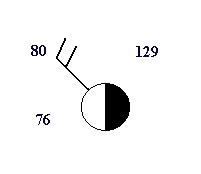
What is the temperature for the following station model?
4 ºF
76 ºF
80 ºF
129 ºF
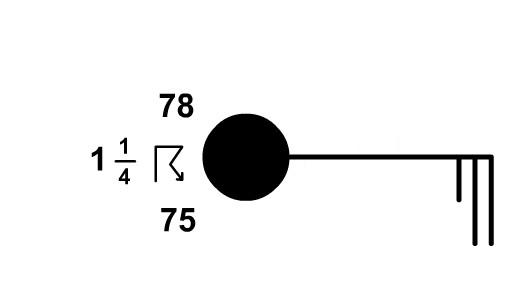
What is the present weather for the following station model?
rain
thunderstorms
drizzle
fog
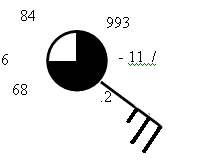
What is the amount of cloud cover for the following station model?
25%
50%
75%
100%


What is the air temperature?
75 degrees F
61 degrees F
987 degrees F
11 degrees F

The diagram shows the movement of energy in the water cycle. Which terms best fit in the empty cells?
Atmosphere, Ocean, Land
Evaporation, Condensation, Transpiration
Clouds, Earth, Gas
Solid, Liquid, Gas
The biosphere includes plants and animals that live
on land
on land and in the water
on land, in water, and in the air
in water
Oceans, rain, and glaciers belong to this sphere.
Atmosphere
Biosphere
Hydrosphere
Which other spheres interact with the geosphere?
Only the atmosphere
Only the atmosphere and the biosphere
Only the hydrosphere and the biosphere
The atmosphere, biosphere and hydrosphere
Why is water important in the formation of hurricanes?
water produces the winds that move the hurricanes
warm water allows for evaporation which produces the winds to fuel the hurricanes
cold water produces the moisture that creates water vapor and energy to fuel the hurricane
warm water produces the moisture that produces water vapor which in turn releases heat energy to fuel the hurricane

