
 Worksheets
SOL Review 2
Total questions: 15
Worksheet time: 40mins
Name
Class
Date
1.
What is the process in which humans breed organisms for certain traits?
a)
natural selection
b)
inheritance
c)
artificial selection
d)
descent withOUT modification
2.
Mutations are important because they bring about
a)
death of the organism in which they develop
b)
genetic variation needed for a population to evolve
c)
benefits for the individual, not for the population
d)
Hardey-Weinberg equilibrium within a population
3.
All plants are made of cells. This was discovered by....
a)
Matthias Schleiden
b)
Rudolf Virchow
c)
Robert Hooke
d)
Aristotle
4.
All cells have a:
a)
Nucleus
b)
Plasma membrane
c)
Cell wall
d)
chloroplast
5.

The invention of the microscope made it possible for people to discover and learn about
a)
Plants
b)
Skin
c)
Animals
d)
Cells
6.

Which of the following scientists was the first to observe bacteria?
a)
Anton
van Leuwenhoek
b)
Matthais
Schleiden
c)
Robert
Hooke
d)
Theodor Schwann
7.
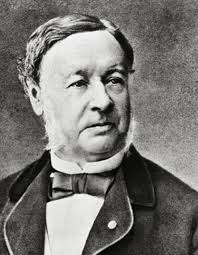
Which of the following scientists concluded that all animals are made of cells?
a)
Rudolf
Virchow
b)
Matthais
Schleiden
c)
Robert
Hooke
d)
Theodor
Schwann
8.

What is a major difference between prokaryotes and eukaryotes?
a)
Prokaryotes have no nucleus.
b)
All prokaryotes cause disease.
c)
Eukaryotes contain more mitochondria.
d)
Nucleic acids are founds only in eukaryotes.
9.
The site of photosynthesis in a plant cell is the
a)
ribosome.
b)
chloroplast.
c)
mitochondrion.
d)
endoplasmic reticulum.
10.

A scientist performs an experiment to see if acids have an effect on the health of a particular type of plant. Three sets of plants were treated with acidic solutions of known pH while the control set was treated with a solution of neutral pH
Which is the best conclusion for this experiment?
Which is the best conclusion for this experiment?
a)
Acid has no effect on the health of this type of plant
b)
High acidity is helpful to this type of plant.
c)
Low acidity is helpful to this type of plant.
d)
High acidity is harmful to this type of plant.
11.

Based on this graph, which of the following statements is true?
a)
the anole weighs 2.5 grams after 3 days of observation
b)
the mass of the anole increased by 2.5 grams in 3 days
c)
the anole weighs 2.3 grams after 3 days
d)
the mass of the anole increased by 2.7 grams during the experiment
12.
A bird-watcher sees an unusual bird at a feeder. He takes careful notes on the bird's color, shape, and other physical features and then goes to a reference book to see if he can identify the species. What aspect of scientific thinking is most apparent in this situation?
a)
Observation
b)
Inference
c)
Hypothesis Formation
d)
Controlled Experiment
13.
What variable goes on the x-axis on a graph?
a)
Independent
b)
Dependent
14.

A water strider can skate along the top of a pond because:
a)
covalent bonds result in water cohesion
b)
hydrogen bonds result in water cohesion (surface tension)
c)
water striders have adapted to take advantage of water cohesion
d)
low surface tension of water
15.

Why can water have no net charge but have slight charges in different parts of the molecule?
a)
The oxygen end is slightly negative and the hydrogen end is slightly positive
b)
The hydrogen end is slightly negative and the oxygen end is slightly positive
c)
The hydrogen and oxygen ends change in polarity
d)
Because it is hydrophobic
100 %

