
 Worksheets
CHAPTER 4 CHEMICAL BONDING
Total questions: 50
Worksheet time: 32mins
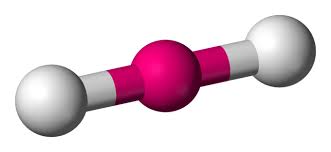
What is the hybridization of a linear molecule?
sp
sp2
sp3
sp3d

The hybridisation of the carbon atom is?
sp
sp2
sp3
sp3d
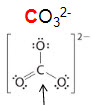
The hybridisation of the carbon atom is?
sp
sp2
sp3
sp3d
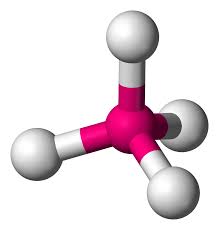
What is the hybridization of this molecule shown.
sp
sp2
sp3
sp4
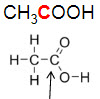
What is the hybridization of the Carbon atom indicated by the arrow?
sp hybridization
sp2 hybridization
sp3 hybridization
dsp3 hybridization

The hybridisation of the carbon atom is?
sp hybridization
sp2 hybridization
sp3 hybridization
sp3d hybridization

The hybridisation of the sulfur atom is?
sp hybridization
sp2 hybridization
sp3 hybridization
sp3d hybridization
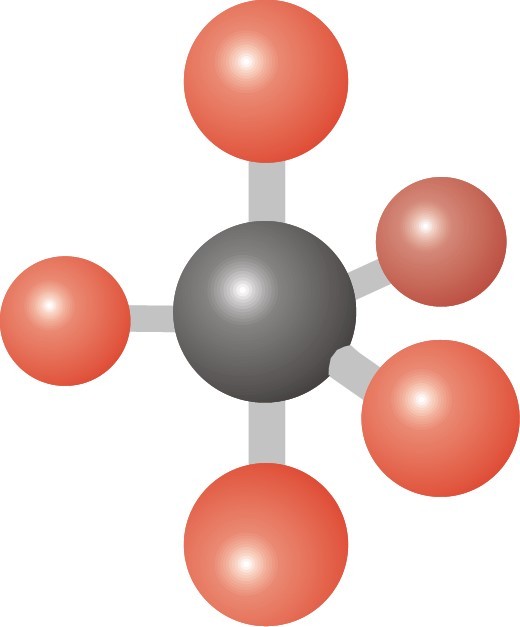
What is the hybridization of PF5?
sp3
sp3d
sp2d2
sp2

Xe atom undergo
sp hybridization
sp2 hybridization
sp3 hybridization
sp3d hybridization
The force of attraction between nonpolar molecules:
Hydrogen Bonding
Dipole - Dipole Forces
Londan Dispersion Force (LDF)
Ionic Forces
The bond formed between atoms of the same element:
nonpolar covalent
polar covalent
ionic bond
hydrogen bond
Intermolecular forces are attractions between ______.
Cations and anions
Atoms within a molecule
Neighboring molecules
Protons and electrons
Which of the following might cause a hydrogen bond to form?
Carbon
Phosphorus
Sulfur
Oxygen
covalent bond
London forces
hydrogen bond
dipole-dipole attraction
What do you call a bond that forms when electrons are transferred from one atom to another?
Compound Bond
Ionic Bond
Crystal Bond
Atom Bond
This consists of two or more atoms joined together.
Molecule
Covalent Bond
Electron-Dot Diagram

What is the correct Lewis structure for BF3?
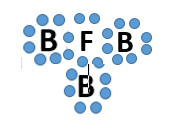
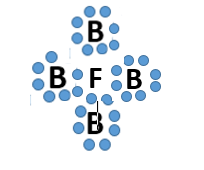

BF3 (The formula is the Lewis Structure)
AlCl3
Element X is in group 2, and element Y is in group 7, of the periodic table. Which ions will be present in the compound formed when X and Y react together?
X+ and Y-
X2+ and Y-
X+ and Y2-
X2- and Y+
Which molecule is non-polar?
H2CO
SO3
NF3
CHCl3
What happens when sodium and oxygen combine together?
Each sodium atom gains one electron
Each sodium atom loses one electron
Each oxygen atom gains one electron
Each oxygen atom loses one electron
Which statement best describes the attraction present in metallic bonding?
the attraction between nuclei and electrons
the attraction between positive ions and electrons
the attraction between positive ions and negative ions
the attraction between protons and electrons
When the following bond types are listed in decreasing order of strength (strongest first), what is the correct order?
covalent > hydrogen > van der Waals'
covalent > van der Waals' > hydrogen
hydrogen > covalent > van der Waals'
van der Waals' > hydrogen > covalent
Which fluoride is the most ionic?
NaF
CsF
MgF2
BaF2
Which substance is most similar in shape to NH3?
GaI3
BF3
FeCl3
PBr3
What intermolecular forces are present in gaseous hydrogen?
Hydrogen bonds
Covalent bonds
Dipole-dipole attractions
Van der Waals' forces
What are responsible for the high electrical conductivity of metals?
Delocalized positive ions
Delocalized valence electrons
Delocalized atoms
Delocalized negative ions
Electrons that are free to move in metals are called ..
delocalized electrons
oxidation number
chemical bond
salts
Why do metals conduct electricity and heat? Because ..
They are shiny
The electrons are held tightly within the lattice
The electrons are delocalised and able to move
The electrons are shared between two metal ions
Why do metallic compounds conduct electricity as solids?
core electrons are mobile, allowing electricity to flow through the metal
valence electrons are mobile, allowing electricity to flow through the metal
protons are mobile, allowing electricity to flow through the metal
the metal cations are mobile, allowing electricity to flow through the metal
The force of attraction between nonpolar molecules:
Hydrogen Bonding
Dipole - Dipole Forces
Londan Dispersion Force (LDF)
Ionic Forces
Based on electronegativity values, which bond is the most polar?
B-C
C-O
N-O
O-F
Typically, atoms are more stable when they are
bonded together
apart from each other

