

wayground logo

Free Printable Worksheets

NEW

Font size

S
M
L
XL
Worksheets

ANIMAL TISSUES

Total questions: 28

Worksheet time: 17mins
Name
Class
Date
1.
Used in places where diffusion needs to occur, such as blood vessels and air sacs in the lungs
a)
Cuboidal
b)
Columnar
c)
Simple Squamous
d)
Stratified Squamous
2.
Lines ducts and glands
a)
Columnar
b)
Cuboidal
c)
Simple Squamous
d)
Transitional
3.
Absorbs nutrients in the digestive tract
a)
Columnar
b)
Cuboidal
c)
Simple Squamous
d)
Pseudostratified
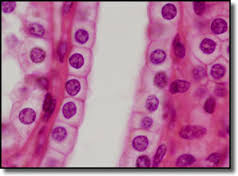
4.
Identify:
a)
Pseudostratified
b)
Simple cuboidal
c)
Transitional
d)
Simple Squamous
5.

Stratified epithelium is typically used for

a)

excretion

b)

secretion

c)

protection

d)

absorption

6.

What type of muscle is/are voluntary?

a)

smooth and cardiac

b)

smooth

c)

skeletal and smooth

d)

skeletal

7.

What type of muscle(s) is involuntary?

a)

skeletal and smooth

b)

cardiac and skeletal

c)

smooth and cardiac

d)

skeletal

8.

Moving food through the digestive tract and emptying the bowels and bladder are examples of “housekeeping” activities normally handled by _____ muscles.

a)

skeletal

b)

smooth

c)

cardiac

9.
Nervous tissue
a)
Tissue that is responsible for lining, covering, and glandular tissue
b)
Tissue responsible for protecting, supporting, and binding together other body tissues
c)
Tissues that contracts and shortens to produce movement
d)
Tissue that receives and conducts electrochemical impulses from one part of the body to another
10.
Neurons have a nucleus.
a)
true
b)
false
11.
Which cell transmits an impulse from the brain to the muscles in order to respond to a situation?
a)
sensory neuron
b)
motor neuron
c)
axon neuron
d)
dendrite neuron
12.

The connective tissue has an extracellular matrix.

a)

True

b)

False

13.
Name this tissue
a)
Bone
b)
Cartilage
c)
Blood
d)
Adipose
14.
Name this tissue
a)
Bone
b)
Cartilage
c)
Blood
d)
Adipose
15.

Cells that can build bone matrix.

a)

Osteoblasts

b)

Osteoclasts

c)

Canaliculi

d)

Lamellae

16.
Identify the part of the neuron
a)
axon
b)
axon terminal
c)
dendrite
d)
Node of Ranvier
17.
Which connective tissue contains a gel-like matrix and is found in the nose, ear, and at the end of bones.
a)
Bone
b)
Cartilage
c)
Blood
d)
Adipose
18.
This tissue carries nutrients, waste, respiratory gases, and many other substances throughout the body.
a)
Bone
b)
Cartilage
c)
Blood
d)
Adipose
19.
Connective tissue is
a)
The tissue that protects, supports, and binds together other body tissue
b)
Tissue that is the lining, covering, and glandular tissue of the body
c)
Tissue that contracts and shortens to produce movement
20.

Group of dividing tissues are called

a)

Permanent tissues

b)

meristematic tissues

c)

Vascular tissues

21.

Which of the following consists of a single layer of cells covering the surface of our body or several layers lining body cavities and organs?

a)

Connective Tissues

b)

Epithelial Tissues

c)

Muscle Tissues

d)

Nervous Tissues

22.

What is a type of epithelial tissue which may just look stacked because of varying height and functions as a lining of respiratory tract?

a)

Psuedostratified columnar

b)

Simple squamous

c)

Stratified cuboidal

d)

Simple columnar

23.

In what part of your body you can mostly find the stratified squamous tissues?

a)

Intestines

b)

Kidneys

c)

Lungs

d)

Skin

24.

Adipose tissue is an example of what type of connective tissue?

a)

Fibrous connective tissue

b)

Loose connective tissue

c)

Cartilage

d)

Blood tissue

25.

Which connective tissue is shown on the picture?

a)

Ligament

b)

Tendon

c)

Bone tissue

d)

Cartilage

26.

Erythrocytes are one of the aggregates of what type of tissue?

a)

Blood tissue

b)

Bone tissue

c)

Cartilage

d)

Loose connective tissue

27.

Some of the leukocytes have granules in their cytosol that consist of a variety of chemicals involved in defending the body. Which of the following cells typically do NOT contain granules?

a)

Basophils

b)

Eosinophils

c)

Neutrophils

d)

Monocytes

28.

What type of epithelial tissue is in the picture?

a)

Squamous

b)

Cuboidal

c)

Columnar

d)

Transitional
